How to Select the Right Nitrate for Your Industrial Application
Introduction to Nitrates in Industrial Applications
Nitrates play a critical role across a wide range of industrial sectors, from fertilizers and chemical synthesis to food processing, metallurgy, and energy storage. While the nitrate ion (NO₃⁻) itself is chemically simple, the choice of nitrate compound can significantly influence process efficiency, product quality, safety and regulatory compliance. Selecting the right nitrate is therefore not merely a purchasing decision - it is a technical and strategic one. Understanding the fundamental nature of nitrates and the implications of their selection is the first step toward optimizing industrial performance and minimizing operational risks.
What Are Nitrates?
Nitrates are inorganic salts or esters derived from nitric acid, characterized by the presence of the nitrate anion (NO₃⁻). In industrial chemistry, they are valued for their high solubility, oxidizing properties, and ability to deliver nitrogen in a controlled and reactive form.
Common nitrate compounds used in industry include potassium nitrate, sodium nitrate, calcium nitrate, ammonium nitrate, and various specialty or high-purity grades tailored for specific applications. Each compound differs in terms of solubility, thermal behavior, hygroscopicity, impurity profile, and regulatory classification.
Why Nitrate Selection Matters
Choosing the appropriate nitrate directly affects process performance, reaction efficiency, and end-product consistency. An unsuitable nitrate can lead to safety hazards, equipment corrosion, or unwanted by-products, while the right choice can improve yield and operational stability.
Beyond performance, nitrate selection also impacts cost control, supply reliability, and compliance with environmental, food-grade, or industrial regulations, making informed selection essential for sustainable and efficient operations.
Common Types of Industrial Nitrates
Industrial nitrates are available in several chemical forms, each offering distinct physical, chemical, and regulatory characteristics. Understanding these differences is essential when selecting a nitrate that aligns with process requirements, safety standards, and end-use expectations.
Ammonium Nitrate
Ammonium nitrate (NH₄NO₃) is one of the most widely used nitrate compounds in industry due to its high nitrogen content and strong oxidizing properties. It is a white, crystalline solid with excellent water solubility, making it easy to handle in solution-based processes. However, it is also hygroscopic and thermally sensitive, requiring strict control during storage and transport.
Its primary industrial use is in fertilizers, where it serves as an efficient nitrogen source for agriculture. Beyond fertilizers, ammonium nitrate is a key component in industrial explosives, particularly in mining, quarrying, and construction, where it is valued for its predictable detonation characteristics when properly formulated. Due to its potential hazards, ammonium nitrate is subject to strict safety, storage, and regulatory controls in most jurisdictions.
Potassium Nitrate
Potassium nitrate (KNO₃) is a stable, non-volatile nitrate known for its relatively low hygroscopicity and good thermal stability compared to ammonium nitrate. It provides both potassium and nitrate nitrogen, making it versatile in applications that require controlled reactivity and consistent composition.
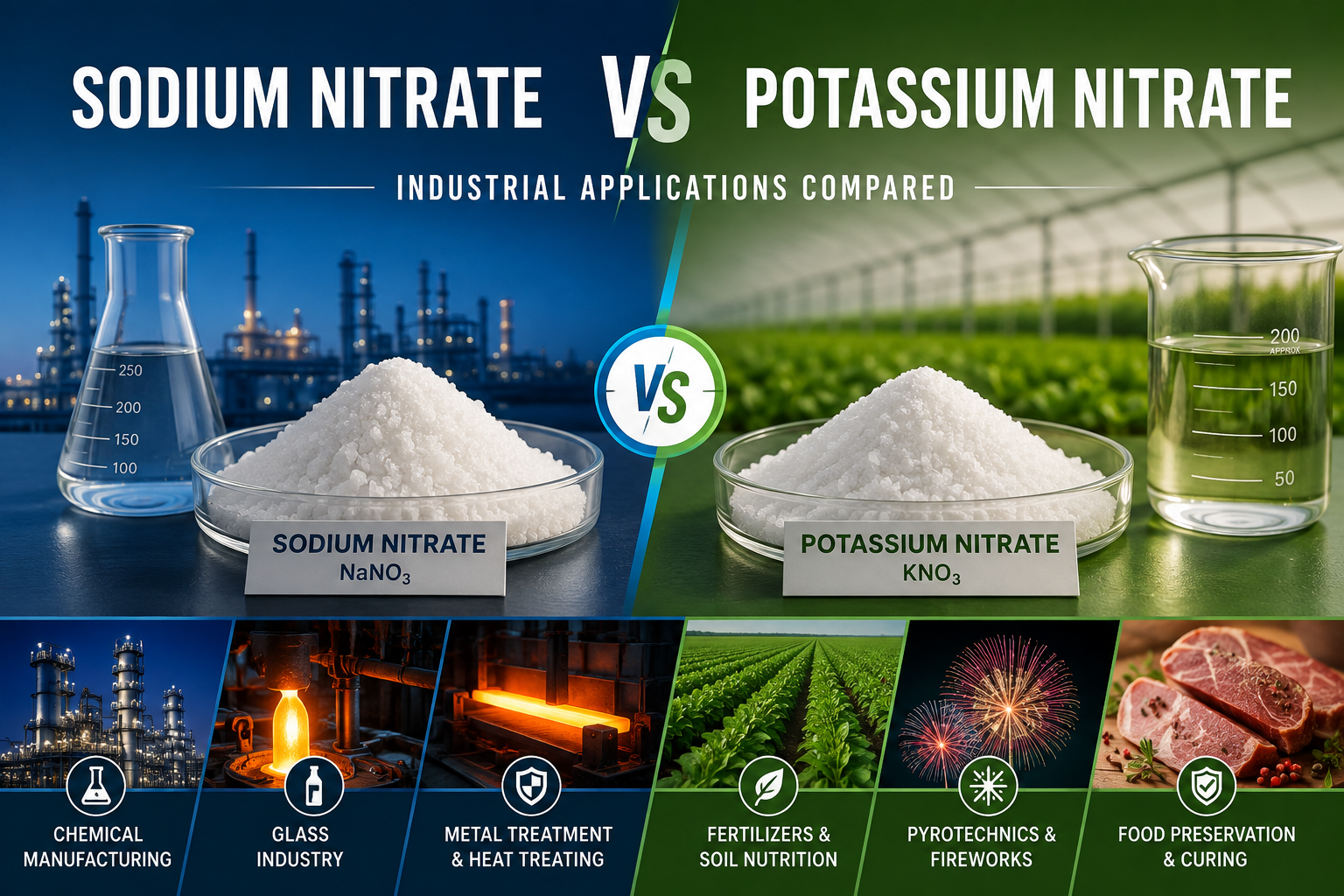
In food processing, potassium nitrate is used in specific curing and preservation applications, where high purity and compliance with food-grade regulations are essential. It is also widely used in glass manufacturing, where it helps improve glass strength and optical properties by reducing internal stresses. Additionally, potassium nitrate plays a key role in pyrotechnics and specialty formulations, where its reliable oxidizing behavior and predictable performance are critical.
Sodium Nitrate
Sodium nitrate (NaNO₃) is characterized by high solubility in water and strong oxidizing capability. It is thermally stable and less sensitive to shock than ammonium nitrate, making it suitable for a range of industrial environments. Its chemical behavior is well understood, which contributes to its broad adoption.
In metallurgy, sodium nitrate is commonly used in heat treatment and metal processing to facilitate oxidation reactions and improve surface quality. In the food industry, it has a long history as a curing and preservation agent, subject to strict dosage and regulatory limits. Sodium nitrate is also an important intermediate in chemical manufacturing, serving as a raw material for other nitrate-based or nitric acid–derived products.
Calcium Nitrate
Calcium nitrate [Ca(NO₃)₂] stands out for its exceptional water solubility and low tendency to crystallize in solution, even at higher concentrations. This makes it particularly suitable for liquid formulations and continuous dosing systems.
Industrially, calcium nitrate is widely used in wastewater treatment to control odors and support biological processes by providing readily available nitrate. It is also applied in construction as a concrete setting accelerator, where it enhances early strength development and improves performance in low-temperature conditions.
Key Factors to Consider When Selecting the Right Nitrate
Selecting the appropriate nitrate for an industrial application requires balancing technical performance, regulatory obligations, and commercial practicality. While different nitrate compounds may appear interchangeable at first glance, subtle differences in properties, purity, and supply conditions can have a significant impact on process reliability and long-term costs.
Application Requirements
The first step in nitrate selection is understanding the specific technical demands of the application. Thermal stability is particularly important in processes involving elevated temperatures, such as glass manufacturing, metallurgy, or energy-related applications. Some nitrates decompose more readily when heated, releasing gases or losing effectiveness, which can compromise safety and product quality.
Solubility and reactivity are equally critical. Highly soluble nitrates are preferred for liquid formulations, continuous dosing, and wastewater treatment, where rapid and uniform distribution is required. Reactivity must also be carefully matched to the process - an overly reactive nitrate may introduce safety risks or unwanted side reactions, while insufficient reactivity can reduce efficiency and increase consumption rates.
Industry-Specific Standards
Regulatory compliance is a non-negotiable factor when selecting nitrates, especially in highly regulated industries. Occupational safety frameworks such as OSHA define handling, labeling, and exposure requirements, while environmental regulations enforced by agencies like the EPA govern emissions, effluents, and waste disposal.
In the European market, REACH compliance ensures that nitrates are properly registered, evaluated, and traceable throughout the supply chain. For food and feed applications, FDA and EU food safety regulations dictate permissible nitrate types, purity levels, and maximum usage limits. Choosing a nitrate that meets the relevant regulatory framework helps avoid compliance risks, production delays, and potential legal penalties.
Purity and Grade Selection
Nitrates are available in various grades, including industrial, technical, feed, and food grade, each defined by specific purity thresholds and impurity limits. Industrial-grade nitrates are typically suitable for applications where trace impurities do not affect performance, such as mining or certain chemical processes.
Technical-grade nitrates offer tighter specifications and more consistent composition, making them suitable for sensitive industrial reactions. Food-grade nitrates, on the other hand, must meet the strictest purity, traceability, and documentation requirements to ensure consumer safety. Selecting a higher grade than necessary can increase costs, while choosing an insufficient grade can lead to process failures or regulatory non-compliance.
Cost and Supply Chain Reliability
Beyond chemistry, practical considerations such as cost, availability, and logistics play a decisive role. Bulk availability and packaging options should align with consumption volumes and storage capacity. Some nitrates require controlled storage conditions due to hygroscopicity or regulatory restrictions, affecting warehousing and insurance costs.
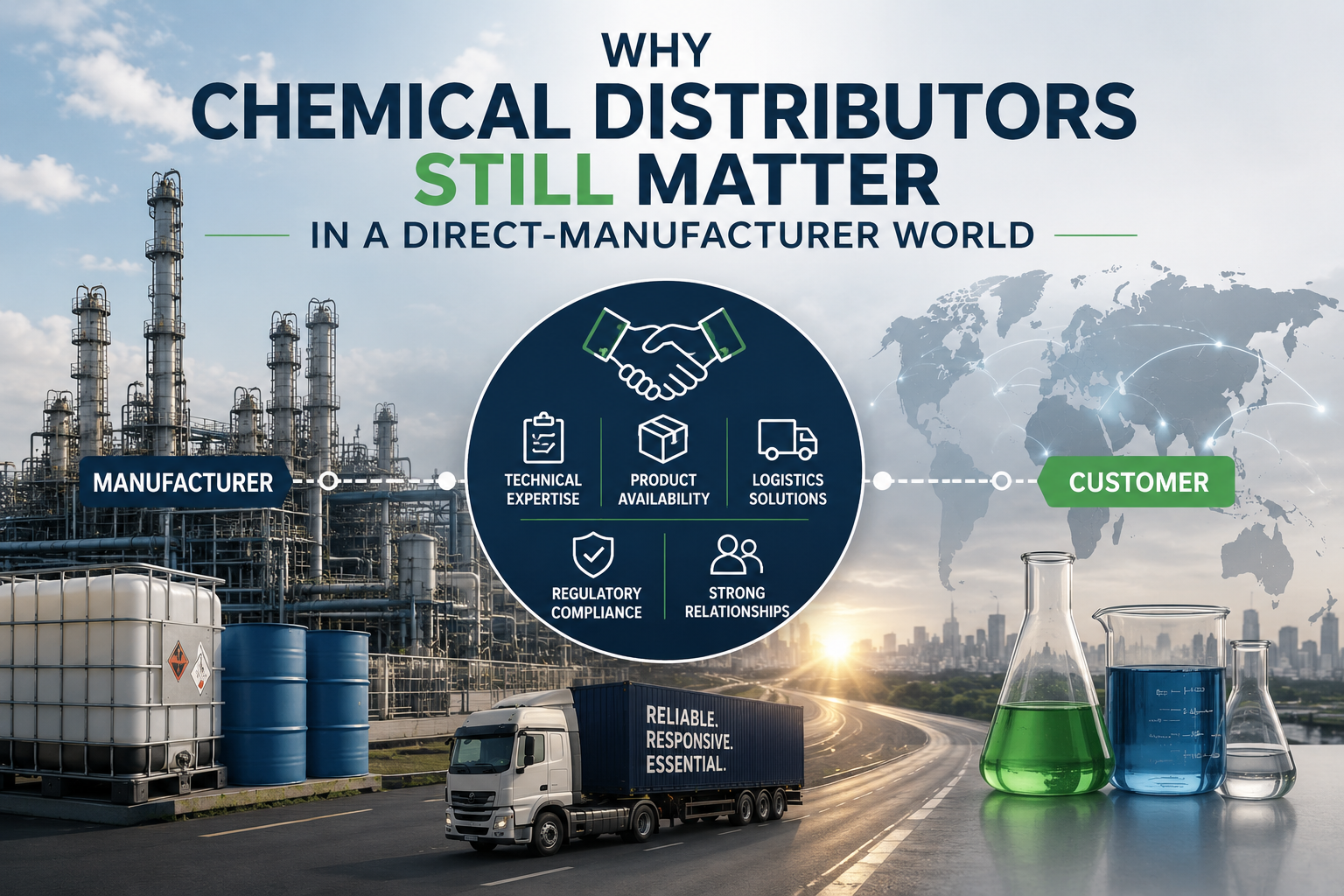
Reliable suppliers with consistent quality, robust documentation, and dependable delivery schedules help reduce operational risks. A stable supply chain ensures uninterrupted production and predictable long-term costs, making supplier selection just as important as the nitrate itself.
Safety and Handling Considerations for Industrial Nitrates
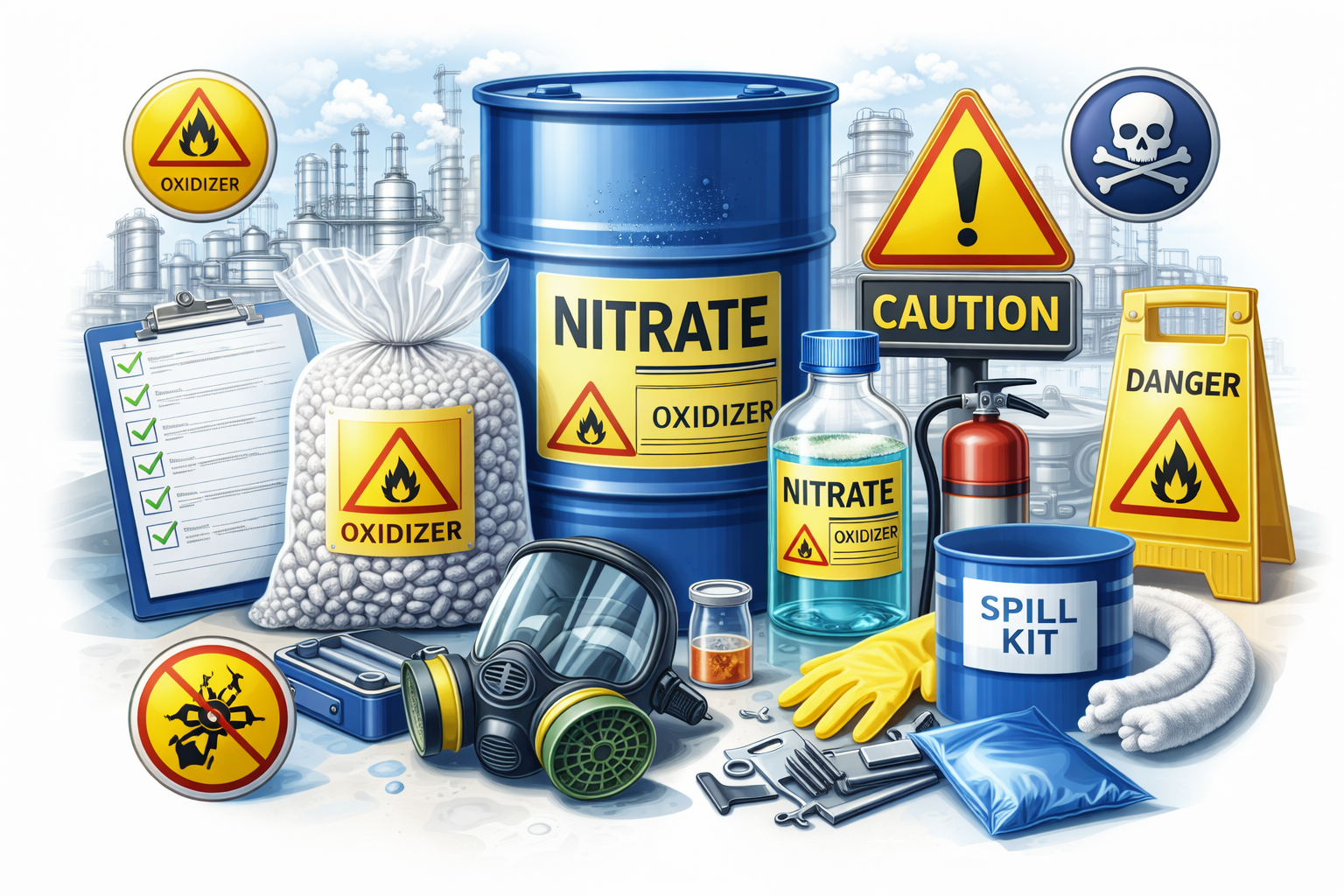
Industrial nitrates are highly effective chemical materials, but their oxidizing nature requires careful attention to safety, storage, and environmental responsibility. Proper handling practices not only protect personnel and facilities but also ensure regulatory compliance and long-term operational sustainability.
Storage Requirements
Correct storage is essential to maintain nitrate stability and reduce safety risks. Most nitrates should be stored in cool, well-ventilated areas away from direct heat sources and combustible materials. Temperature control is particularly important for nitrates with lower thermal stability, as excessive heat can accelerate decomposition or increase reactivity.
Moisture control is equally critical. Many nitrates are hygroscopic and readily absorb water from the air, leading to caking, reduced flowability, or unintended reactions. Dry storage conditions, sealed packaging, and appropriate humidity control help preserve product quality and prevent handling difficulties. Storage areas should be clearly labeled, secured, and designed to prevent cross-contamination with incompatible substances such as fuels, organic materials, or reducing agents.
Handling and Transportation Safety
During handling, strict adherence to safety procedures minimizes the risk of accidents. Personnel should use appropriate personal protective equipment (PPE), including gloves, eye protection, and dust masks where applicable. Dust generation should be minimized, as fine nitrate particles can increase fire or explosion risks in certain environments.
Transportation safety is especially critical for nitrates with oxidizing or explosive potential. Containers must be properly sealed, labeled, and compliant with local and international transport regulations. Preventing contamination during loading and unloading is essential, as contact with oils, organic matter, or other reactive substances can significantly increase hazard levels.
Environmental and Disposal Guidelines
Responsible nitrate management extends beyond storage and use to proper disposal and environmental protection. Waste nitrates should never be discharged uncontrolled into soil or waterways, as excessive nitrate levels can contribute to eutrophication and groundwater contamination.
Waste management practices should follow applicable environmental regulations, including controlled neutralization, recovery, or disposal through licensed waste handlers. From a sustainability perspective, optimizing dosage, reducing waste, and selecting suppliers committed to environmental compliance and responsible production help minimize the overall environmental footprint of industrial nitrate use.
Industry-Specific Nitrate Selection Guide
While nitrates share a common chemical foundation, their suitability varies greatly across industries. Selecting the right nitrate requires aligning chemical properties, purity, and regulatory compliance with the specific demands of each sector.
Mining and Explosives Industry
In mining and quarrying, nitrates are primarily valued for their oxidizing power and predictable energy release. Ammonium nitrate is the dominant choice, particularly in explosive formulations, due to its high nitrogen content and cost efficiency. However, safety considerations are paramount. Only nitrates that meet strict regulatory and quality standards should be used, with close attention paid to storage stability, contamination risks, and traceability. Consistent particle size and moisture control are critical to ensuring reliable performance and minimizing hazards.
Agriculture and Fertilizer Manufacturing
For fertilizer production, nitrates must deliver nutrients efficiently while maintaining compatibility with blending, granulation, or liquid formulation processes. Ammonium nitrate, calcium nitrate, and potassium nitrate are commonly selected depending on crop requirements and application methods. Solubility, nutrient balance, and impurity levels directly affect product quality and plant uptake. Regulatory compliance related to environmental impact and safe nitrogen application also plays a key role in nitrate selection within this sector.
Food Processing and Preservation
In food applications, nitrate selection is driven by purity, safety, and strict regulatory compliance. Only food-grade nitrates with controlled impurity profiles and full documentation are acceptable. Potassium nitrate and sodium nitrate are used in specific curing and preservation processes, where consistent composition and precise dosing are essential. Even minor deviations in quality can affect flavor, safety, or regulatory compliance, making supplier reliability particularly important.
Chemical and Pharmaceutical Manufacturing
Chemical and pharmaceutical processes often require nitrates with tightly controlled specifications. Technical or high-purity grades are typically selected to ensure predictable reactions and minimize unwanted by-products. Trace metal content, moisture levels, and batch-to-batch consistency are critical parameters. In regulated pharmaceutical environments, comprehensive documentation, validation support, and adherence to international quality standards are mandatory.
Wastewater Treatment and Environmental Applications
In environmental and wastewater treatment applications, nitrates are selected for their high solubility and ability to support biological processes. Calcium nitrate is commonly used to control odors and optimize denitrification. Here, reliable solubility, ease of dosing, and environmental compliance outweigh other factors. Selecting nitrates that enable efficient treatment while minimizing environmental impact supports both regulatory requirements and sustainability goals.
Common Mistakes to Avoid When Choosing Industrial Nitrates
Selecting an industrial nitrate may seem straightforward, but overlooking key factors can lead to operational issues, safety risks, and unexpected costs. Being aware of common mistakes helps ensure that nitrate selection supports both short-term performance and long-term reliability.
One of the most frequent errors is selecting a nitrate based on cost alone. While lower-priced materials may appear attractive, they can carry hidden costs related to inconsistent quality, higher impurity levels, or limited technical support. These issues may result in reduced process efficiency, increased consumption, or even production downtime, ultimately outweighing the initial savings.
Ignoring purity specifications is another critical mistake. Using an industrial-grade nitrate in applications that require technical or food-grade material can lead to contamination, equipment fouling, or non-compliance with industry standards. Conversely, specifying unnecessarily high purity can inflate costs without delivering tangible benefits. Matching the nitrate grade precisely to application requirements is essential for optimal performance.
Overlooking regulatory compliance can have serious consequences. Nitrates are subject to strict regulations covering safety, environmental impact, and end-use restrictions. Failing to verify compliance with frameworks such as REACH, OSHA, or food safety regulations can result in legal penalties, shipment delays, or forced product recalls. Proper documentation and supplier transparency should never be treated as optional.
Finally, improper storage planning is often underestimated. Nitrates that are not stored under appropriate temperature and moisture conditions can degrade, cake, or become hazardous. Inadequate storage facilities can also increase safety risks and insurance costs. Effective nitrate selection must therefore include a clear plan for safe storage and handling throughout the product’s lifecycle.
FAQs: Selecting the Right Nitrate for Industrial Use
Which nitrate is safest for industrial applications?
There is no single “safest” nitrate for all applications - safety depends on how the nitrate is used, stored, and handled. Some nitrates, such as calcium nitrate and sodium nitrate, are generally considered more stable under normal industrial conditions due to their lower sensitivity to heat and shock. Others, like ammonium nitrate, require stricter controls because of their strong oxidizing properties. Selecting the safest option means matching the nitrate’s chemical behavior to the process conditions and implementing appropriate storage, handling, and regulatory safeguards.
How do I know which nitrate grade I need?
The required nitrate grade depends on your industry, application sensitivity, and regulatory obligations. Industrial-grade nitrates are suitable for applications where trace impurities do not affect performance, such as mining or basic chemical processing. Technical-grade nitrates offer tighter specifications for more controlled reactions. Food and pharmaceutical applications require food-grade or higher-purity nitrates that meet strict safety, traceability, and documentation standards. Reviewing process requirements and applicable regulations is the best way to determine the appropriate grade.
Are nitrates environmentally harmful?
Nitrates are not inherently harmful, but improper use or disposal can cause environmental issues. Excessive nitrate release into water systems can contribute to eutrophication and groundwater contamination. When used responsibly - through controlled dosing, proper waste management, and regulatory compliance - nitrates can be safely applied in industrial and environmental processes, including wastewater treatment.
What regulations apply to industrial nitrates?
Industrial nitrates are regulated under multiple frameworks depending on the region and application. These may include workplace safety regulations, environmental protection laws, chemical registration systems such as REACH, and food safety standards where applicable. Transport and storage regulations also apply, particularly for oxidizing or explosive nitrates. Ensuring full compliance requires working with suppliers who provide complete and up-to-date documentation.
Can one nitrate be used across multiple industries?
In some cases, yes - but rarely without compromise. Certain nitrates, such as sodium or potassium nitrate, can serve multiple industries due to their versatility. However, differences in purity requirements, regulatory standards, and performance expectations often require industry-specific grades or formulations. Evaluating each application individually helps avoid safety, compliance, and performance issues.
Conclusion and Final Recommendations
Selecting the right nitrate for industrial applications requires careful consideration of multiple factors, including chemical properties, solubility, thermal stability, purity, regulatory compliance, and supply chain reliability. Understanding the specific demands of your process and the industry standards applicable to your application is essential for ensuring safety, efficiency, and consistent performance. Avoiding common mistakes, such as prioritizing cost over quality or neglecting storage requirements, can prevent costly disruptions and operational hazards.
Expert consultation can be invaluable in navigating the complexities of nitrate selection. Working with knowledgeable suppliers or technical advisors ensures that the chosen nitrate meets both performance expectations and regulatory requirements, while also aligning with sustainability and environmental goals.
For businesses seeking reliable industrial nitrates, sourcing responsibly from reputable suppliers is critical. By prioritizing quality, compliance, and long-term supply stability, companies can optimize processes, safeguard personnel, and support sustainable operations. Thoughtful nitrate selection is not just a procurement decision - it is a strategic choice that enhances productivity, safety, and competitive advantage.