Decoding Safety Data Sheets (SDS): What End-Users Should Look For
Safety Data Sheets (SDS) are standardized documents designed to communicate essential information about the hazards, safe handling, storage, and emergency measures related to chemical products. Their primary purpose is to protect people, processes, and the environment by ensuring that anyone who uses or comes into contact with a chemical understands its risks and how to manage them responsibly.
Historically, these documents were known as Material Safety Data Sheets (MSDS). With the introduction of the Globally Harmonized System (GHS), MSDS evolved into SDS, bringing a unified 16-section format and consistent hazard classification worldwide. This shift reduced confusion across borders and industries, making chemical safety information clearer and more comparable.
While SDS are often viewed as compliance paperwork handled by regulatory or EHS teams, their real value lies with end-users. Operators, technicians, warehouse staff, and procurement professionals rely on SDS to make informed decisions that directly impact safety, product performance, and operational reliability.
Why Decoding an SDS Matters for End-Users
For end-users, understanding a Safety Data Sheet goes far beyond meeting legal obligations. Regulations require employers to make SDS accessible, but true workplace safety depends on how well the information is understood and applied. Misinterpreting hazard classifications, exposure limits, or handling instructions can lead to unsafe practices, regulatory non-compliance, and costly operational disruptions.
Decoding an SDS helps prevent accidents by clearly outlining risks such as toxicity, flammability, or reactivity, as well as the conditions that can trigger them. It also provides guidance on proper storage, personal protective equipment (PPE), and incompatibilities with other substances—critical details that reduce the risk of exposure, spills, and misuse during daily operations.
In emergencies, the SDS becomes a frontline tool. Firefighters, medical personnel, and internal response teams rely on it for first-aid measures, firefighting instructions, and spill containment procedures. Beyond emergencies, SDS plays a key role in training programs, ensuring that employees understand not only what to do but also why specific safety measures are required when working with chemical products.
Who Should Read an SDS?
An SDS is essential reading for operators and maintenance staff who handle chemicals directly, as well as warehouse and logistics teams responsible for storage and transport. Supervisors and safety officers should also regularly review SDS to assess risks, develop procedures, and ensure that training and workplace practices align with the documented hazards and safety recommendations.
Understanding the Standard 16 Sections of an SDS
Every Safety Data Sheet follows a standardized 16-section format defined by the Globally Harmonized System (GHS). This structure ensures that critical safety, health, and environmental information is presented in a consistent order, regardless of the supplier or country of origin. Sections range from product identification and hazard classification to handling and storage, exposure controls, physical and chemical properties, and emergency measures such as first aid and firefighting instructions.
For end-users, knowing this layout makes an SDS easy to navigate. Need to confirm hazards? Go directly to Section 2. Looking for PPE or exposure limits? Section 8 provides the answer. Emergency responders focus on Sections 4, 5, and 6. By understanding where specific information is located, users can quickly extract what matters most, saving time while improving safety and decision-making.
Key SDS Sections End-Users Should Focus On
Section 1 – Identification
The Identification section provides the product name, manufacturer or supplier details, and emergency contact information. This ensures that users can quickly confirm they are referencing the correct SDS for the chemical they are handling. It also lists recommended uses and restrictions, helping prevent accidental misuse. For end-users, checking this section first is critical, especially when chemicals are stored in similar containers or repackaged, ensuring both safety and regulatory compliance.
Section 2 – Hazard(s) Identification
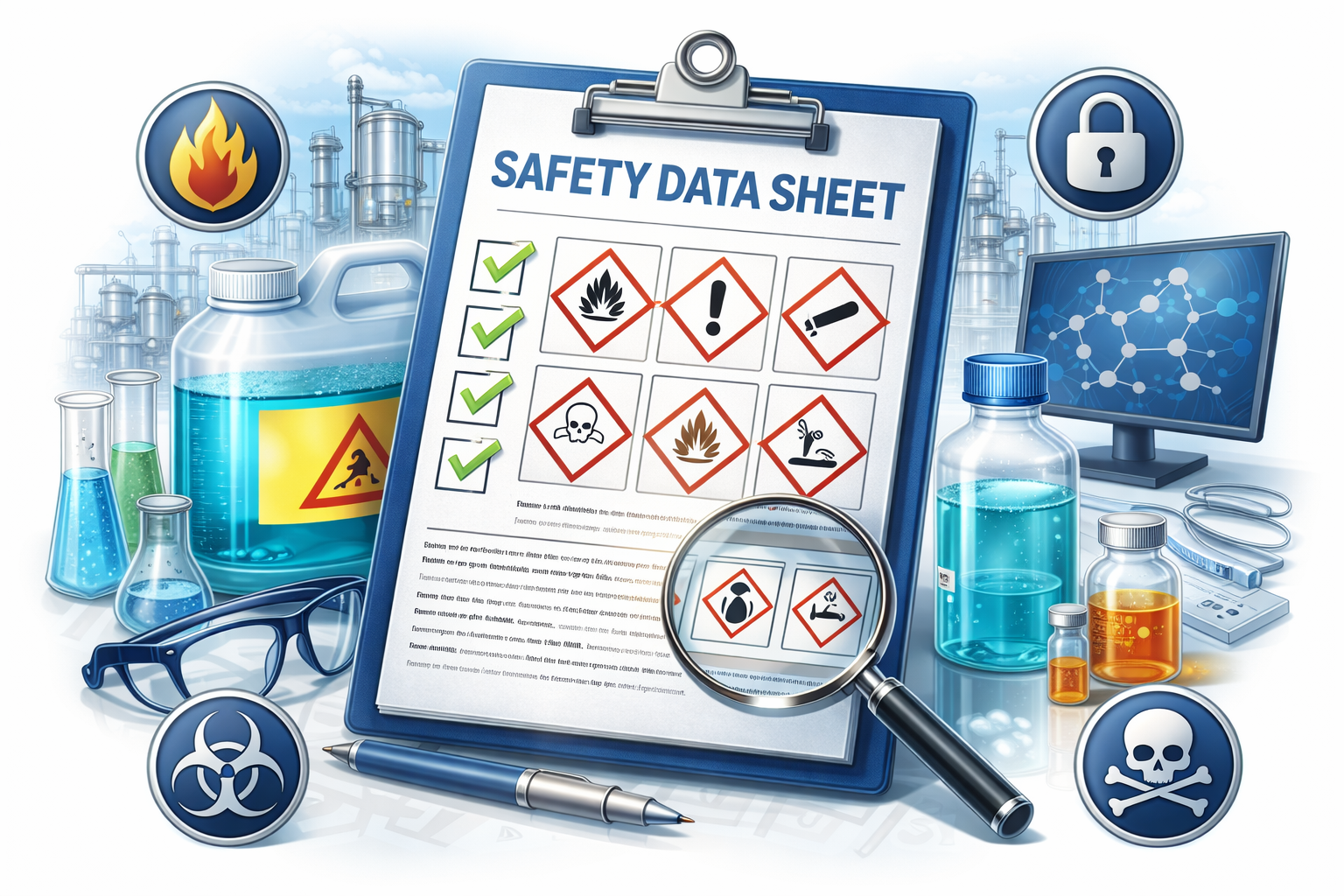
Section 2 communicates the specific hazards of a chemical. It includes hazard classifications such as flammability, toxicity, or environmental danger. Signal words like Danger or Warning quickly convey the severity of the hazard, while standardized pictograms visually reinforce these risks. Hazard statements describe the potential effects of exposure, including short- and long-term health impacts. By reviewing this section, end-users can understand the immediate risks, recognize unsafe conditions, and implement appropriate precautions before handling the chemical.
Section 4 – First-Aid Measures
This section outlines immediate steps to take in case of exposure, such as inhalation, skin contact, eye contact, or ingestion. Clear instructions reduce the risk of severe injury or long-term harm, emphasizing the importance of rapid and correct response. End-users benefit from knowing exactly how to act while waiting for medical assistance or while containing an incident in the workplace.
Section 7 – Handling and Storage
Section 7 provides guidance on safe handling practices, including proper procedures to minimize spills, splashes, or accidental releases. It also details storage requirements and incompatibilities with other substances, helping prevent chemical reactions, degradation, or dangerous conditions. For end-users, following these guidelines ensures daily operations remain safe and compliant with regulatory standards.
Section 8 – Exposure Controls & Personal Protection
This section specifies the protective measures necessary when working with the chemical. It includes recommended personal protective equipment (PPE) such as gloves, goggles, or respirators, tailored to the chemical’s hazards. Exposure limits, such as OSHA PELs or ACGIH TLVs, provide benchmarks for acceptable airborne concentrations. Understanding Section 8 enables end-users to implement engineering controls, select appropriate PPE, and monitor exposure levels, reducing the risk of acute or chronic health effects.
Section 10 – Stability and Reactivity
Section 10 describes conditions that may compromise chemical stability, including heat, light, or incompatible substances. It also details hazardous reactions that could occur, such as polymerization, combustion, or gas evolution. End-users benefit from knowing these risks to prevent unintended reactions during storage or use. Proper attention to this section is crucial for maintaining a safe working environment and preventing potentially hazardous incidents.
Section 13 – Disposal Considerations
Safe disposal of chemicals is covered in Section 13. It includes guidance on neutralization, containment, and methods to minimize environmental impact. Compliance with local, national, and international regulations is emphasized to prevent legal or ecological issues. End-users must understand proper disposal procedures to protect the environment and maintain regulatory compliance, especially when dealing with hazardous or reactive chemicals. Proper disposal practices also prevent contamination of waste streams and reduce overall workplace risk.
Common SDS Mistakes End-Users Make
Even with a clear SDS, end-users can make mistakes that compromise safety. One common error is ignoring updated SDS versions. Chemical formulations, hazard classifications, and regulatory requirements can change over time. Relying on an outdated SDS may result in insufficient precautions, inappropriate handling, or non-compliance with legal standards. Regularly checking for the latest version ensures end-users have accurate and reliable safety information.
Another frequent mistake is misinterpreting hazard symbols and statements. Pictograms, signal words, and hazard codes are standardized for quick recognition, but unfamiliarity can lead to underestimating risks. For example, confusing a Warning with a Danger signal can affect the level of caution applied, potentially causing accidents or exposure incidents.
Finally, overlooking PPE requirements is a critical error. Section 8 of the SDS specifies personal protective equipment necessary for safe handling. Ignoring these guidelines - such as not wearing gloves, goggles, or respiratory protection - can result in direct exposure to toxic or corrosive chemicals. End-users must pay close attention to these recommendations to protect themselves and their colleagues, maintaining a safe and compliant workplace.
How to Quickly Review an SDS Before Using a Chemical
Before handling any chemical, taking a few minutes to review its SDS can prevent accidents and ensure proper precautions. A quick, structured review helps end-users focus on the most critical safety information without getting lost in technical details. By following a consistent approach, you can immediately identify hazards, determine the necessary protective measures, and confirm emergency procedures. This process is particularly useful in busy workplaces where chemicals are handled frequently, allowing staff to act confidently while maintaining safety and compliance.
5-Step SDS Quick-Check for End-Users
- Confirm product name: Ensure the SDS matches the chemical you are about to use.
- Identify hazards: Review Section 2 for hazard classifications, signal words, and pictograms.
- Check PPE: Refer to Section 8 to determine required gloves, goggles, or respiratory protection.
- Review first aid: Note emergency steps from Section 4 for immediate response to exposure.
- Verify storage: Consult Section 7 to ensure proper storage conditions and that incompatibilities are considered.
Following these steps helps end-users quickly grasp the essential safety information, reducing risks and promoting a culture of proactive chemical safety in the workplace.
SDS Accessibility and Workplace Compliance
Employers play a critical role in ensuring that Safety Data Sheets are accessible and understood by all personnel who handle chemicals. Legal regulations require that SDS be readily available in the workplace, but accessibility alone is not enough - employees must also be trained to interpret and apply the information effectively.
Today, SDS can be provided in both digital and physical formats. Digital access allows quick searching, version control, and remote availability, while physical copies ensure immediate access in areas where electronics may not be practical. Both formats should be kept up-to-date and organized for easy reference.
SDS training best practices include regular refresher sessions, hands-on demonstrations, and scenario-based exercises that help employees practice responding to chemical incidents. Emphasizing key sections (hazards, PPE, handling and first aid) ensures that workers not only know where to find information but also understand how to act on it. Proper SDS management fosters compliance, reduces risk, and strengthens overall workplace safety culture.
Frequently Asked Questions (FAQs)
What is the difference between MSDS and SDS?
MSDS (Material Safety Data Sheet) was the traditional format for chemical safety information. With the introduction of the Globally Harmonized System (GHS), MSDS evolved into SDS (Safety Data Sheet), which follows a standardized 16-section format. While MSDS documents varied in structure and content depending on the supplier or country, SDS provides consistent, globally recognized information on hazards, handling, storage, and emergency procedures. This standardization improves clarity and helps end-users and emergency responders quickly locate critical safety information.
How often are SDS updated?
SDS should be reviewed and updated whenever there are changes in chemical composition, hazard classification, or regulatory requirements. Many manufacturers update SDS every 3–5 years as a standard practice, even if no major changes occur. End-users should always ensure they are consulting the most recent version to avoid outdated safety guidance, which could lead to improper handling or regulatory non-compliance.
Are SDS mandatory for all chemicals?
Yes, SDS are legally required for hazardous chemicals in most countries. This includes industrial, laboratory, and certain consumer chemicals. The requirement ensures that anyone handling or exposed to these substances has access to information about their hazards, protective measures, and emergency procedures. Even chemicals considered low-risk may have an SDS to provide handling instructions and regulatory information.
Can end-users rely only on labels instead of SDS?
No. While chemical labels provide quick hazard warnings and basic handling instructions, they do not contain the detailed safety, storage, exposure, and emergency information found in an SDS. End-users should always consult the SDS before working with a chemical, using the label as a quick reference but not as a substitute for comprehensive safety guidance.
Final Thoughts – Empowering End-Users Through SDS Knowledge
Safety Data Sheets are far more than regulatory paperwork - they are essential tools that empower end-users to work safely and confidently with chemicals every day. By understanding how to read, interpret, and apply the information in an SDS, employees can prevent accidents, reduce exposure risks, and respond effectively to emergencies.
A proactive approach to SDS use fosters a stronger safety culture, where operators, maintenance teams, and supervisors share responsibility for protecting themselves and their colleagues. Encouraging regular SDS review, proper training, and attention to critical sections transforms these documents from static references into practical guides. Ultimately, SDS knowledge not only ensures compliance but also reinforces a workplace environment where safety is an everyday priority, benefiting both people and operations.