Sustainable Sourcing of Phosphates: What Buyers Should Look For
Global demand for phosphates continues to rise, driven by agricultural intensification, food production, animal nutrition, water treatment, and pharmaceutical applications. Phosphates are essential for crop yields, food preservation, detergents, and a wide range of industrial processes. Yet behind this essential mineral lies a complex supply chain shaped by environmental pressures, geopolitical concentration, and increasing regulatory scrutiny.
Phosphate rock reserves are geographically concentrated, while the extraction and processing of this resource can generate significant environmental impacts. Land disturbance, water use, waste generation, and carbon emissions are now under close examination from regulators, investors, and customers alike. At the same time, ESG reporting standards and green procurement policies are transforming how procurement teams evaluate suppliers.
Sustainable phosphate sourcing is no longer a niche consideration - it is becoming a strategic priority. Buyers across the agricultural, food, pharmaceutical, and industrial sectors must now assess not only price and quality, but also environmental compliance, responsible mining practices, carbon intensity, and traceability.
This article outlines what procurement managers and sustainability officers should evaluate when building a responsible, future-ready phosphate supply chain.
Why Sustainable Phosphate Sourcing Matters
Environmental Impact of Phosphate Mining
Phosphate mining impact can be substantial if not carefully managed. Extraction of phosphate rock often involves open-pit mining, which may lead to land degradation and habitat loss. Sensitive ecosystems can be disrupted, and rehabilitation can take years if not properly planned.
Water contamination is another concern. Improper handling of waste rock or tailings may introduce phosphorus or associated elements into nearby water systems, contributing to eutrophication, excessive nutrient enrichment that harms aquatic life. Processing activities also require significant water use, increasing pressure in water-scarce regions.
Carbon emissions from extraction, beneficiation, and chemical processing contribute to the overall carbon footprint of fertilizers and industrial phosphates. As climate reporting expands, buyers are increasingly responsible for understanding the upstream emissions embedded in their raw materials.
Regulatory & ESG Pressures on Buyers
Sustainable phosphate sourcing is increasingly driven by ESG compliance obligations. Many organizations must report Scope 3 emissions – indirect emissions from purchased goods and services. Phosphates, particularly in fertilizer production, can represent a meaningful portion of this footprint.
Global environmental compliance standards are tightening. Regulations on mining rehabilitation, water discharge, and waste management are becoming more stringent across jurisdictions. Investors are also demanding transparency around responsible mineral sourcing and ethical supply chains.
Procurement teams are therefore not just sourcing a mineral - they are managing regulatory exposure, reputational risk, and long-term sustainability commitments.
Key Sustainability Criteria Buyers Should Evaluate
Responsible Mining Certifications
Certifications provide an initial signal of commitment to phosphate ESG standards. Buyers should look for suppliers with ISO 14001 certification, demonstrating structured environmental management systems.
Participation in frameworks such as the Initiative for Responsible Mining Assurance (IRMA) or alignment with the Responsible Minerals Initiative (RMI) can further indicate adherence to responsible mining practices, social responsibility, and transparent governance.
While certification alone is not proof of sustainability, it provides a structured baseline for evaluating responsible phosphate suppliers.
Environmental Management Practices
Beyond certificates, buyers must assess practical environmental management. Water stewardship programs are critical, particularly in arid regions. Suppliers should demonstrate water recycling systems, reduced freshwater withdrawal, and responsible discharge management.
Waste management systems must address phosphogypsum stacks and tailings storage safety. Robust tailings management plans, emergency response strategies, and independent safety audits are essential to minimize environmental risk.
Land rehabilitation commitments are another indicator of sustainable fertilizer production. Responsible operators progressively restore mined land, reintroduce vegetation, and monitor ecological recovery. Mining rehabilitation plans should be transparent, funded, and measurable.
Environmental compliance documentation should be readily available and regularly updated.
Carbon Footprint & Energy Efficiency
Low-carbon phosphate production is becoming a competitive differentiator. Buyers should request carbon intensity data per metric ton of product and assess whether renewable energy is used in mining or processing operations.
Energy-efficient beneficiation technologies, electrified equipment, and carbon-neutral mining initiatives can significantly reduce emissions. Transparency in reporting, aligned with recognized ESG reporting standards, helps buyers integrate data into their own sustainability disclosures.
Suppliers unwilling to share emissions data may present future compliance risks.
Ethical Labor & Community Engagement
Ethical phosphate sourcing extends beyond environmental factors. Suppliers should adhere to fair labor standards, prohibit forced or child labor, and ensure safe working conditions.
Community development investments, such as local employment, infrastructure support, and stakeholder engagement, indicate long-term social responsibility. Transparent supply chains and open communication strengthen buyer confidence and reduce reputational risk.
Traceability and Supply Chain Transparency
Importance of Supply Chain Visibility
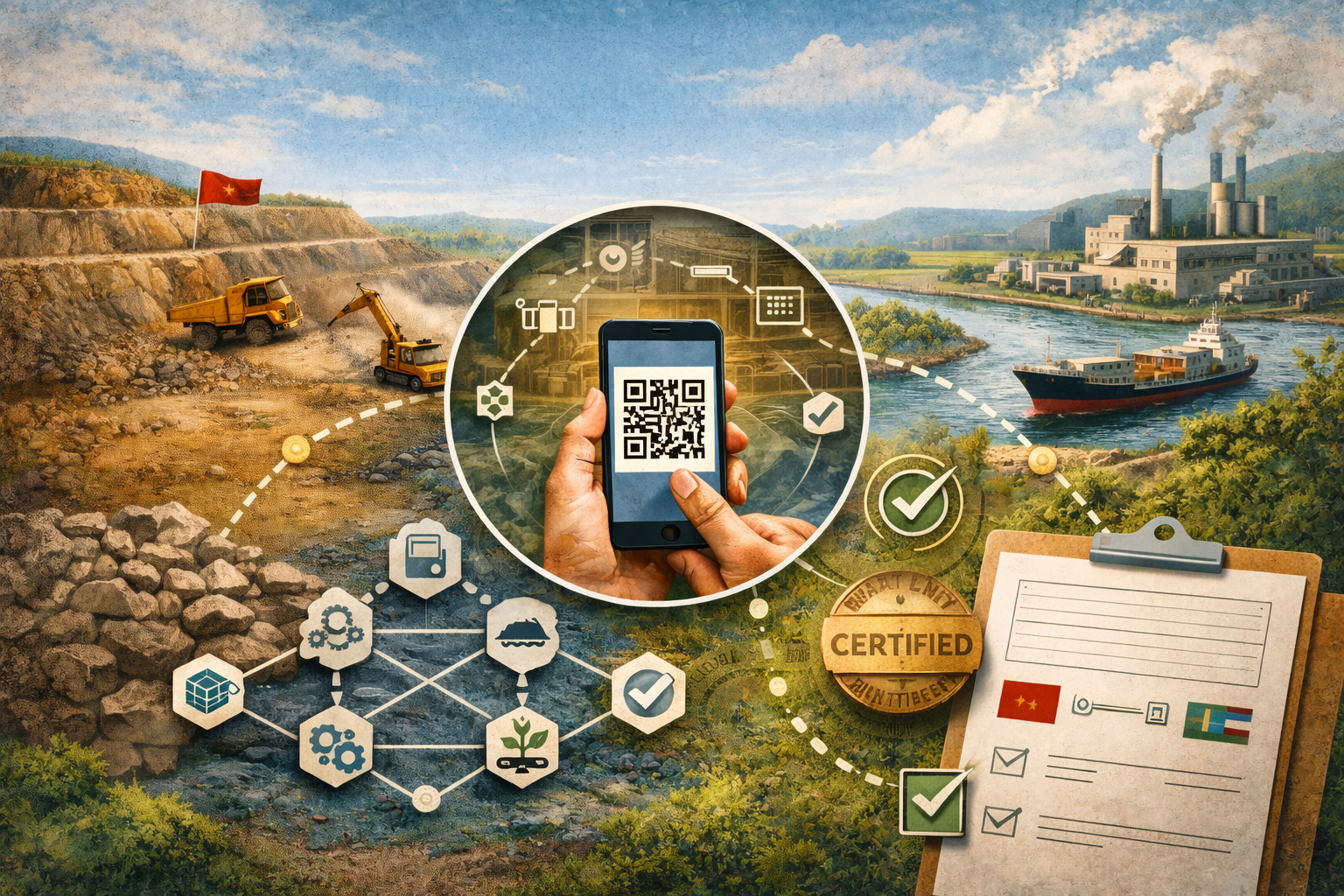
Phosphate supply chain transparency is vital in an era of increased scrutiny. Phosphate rock reserves are heavily concentrated in a few countries, raising country-of-origin risks. Political instability, export restrictions, or shifting trade policies can disrupt supply.
In addition, concerns around fraud, mislabeling, or inconsistent quality highlight the importance of traceable phosphate suppliers. Buyers must know the origin of materials, processing pathways, and compliance status.
Conflict mineral considerations, while more commonly associated with metals, are increasingly applied to broader mineral sourcing. Responsible mineral sourcing requires documented origin and traceable movement across the value chain.
Digital Tools for Traceability
Digital mineral traceability systems are transforming supply chain oversight. Blockchain solutions can record origin data, processing steps, and transport documentation in tamper-resistant systems.
Third-party supply chain audits and independent verification bodies provide added assurance. Digital documentation platforms enable real-time access to certificates, carbon data, and compliance reports.
Procurement teams should prioritize suppliers who invest in traceability infrastructure, as this supports ESG reporting standards and strengthens long-term supply resilience.
Evaluating Supplier Stability and Long-Term Viability
Geopolitical Risk Factors
Phosphate reserves are concentrated in regions such as Morocco, China, and parts of the Middle East. This geographic concentration increases vulnerability to geopolitical shifts, export controls, and price volatility.
Buyers should assess suppliers’ exposure to trade restrictions, transportation chokepoints, and political instability. Diversified sourcing strategies can mitigate these risks and enhance supply continuity.
Resource Longevity & Circular Economy Initiatives
Long-term viability depends not only on existing phosphate rock reserves but also on investment in recycled phosphates and circular nutrient economy solutions.
Phosphate recovery technologies - from wastewater treatment plants, manure processing, and food waste streams - are expanding. Urban mining initiatives aim to extract phosphorus from secondary sources, reducing dependence on virgin extraction.
Suppliers engaged in circular economy fertilizers and nutrient recovery demonstrate forward-looking strategies aligned with sustainable agriculture inputs. Buyers should evaluate commitments to resource longevity and innovation.
Cost vs. Sustainability: Finding the Right Balance
Total Cost of Ownership (TCO) Perspective
Sustainable procurement strategy requires a shift from short-term price focus to total cost of ownership. Low-cost suppliers with weak environmental compliance may create hidden costs, regulatory penalties, supply disruptions, or reputational damage.
Risk mitigation benefits from working with responsible phosphate suppliers include reduced exposure to environmental incidents and improved ESG ratings. Brand value enhancement is increasingly linked to green supply chain management.
When factoring compliance costs, carbon pricing risks, and stakeholder expectations, sustainable phosphate sourcing often delivers stronger long-term financial performance.
Supplier Partnerships Over Spot Buying
Long-term contracts enable collaborative sustainability improvements. Buyers can integrate sustainability-linked procurement clauses tied to emissions reductions or water stewardship targets.
Strategic partnerships encourage transparency, shared investment in innovation, and stable pricing structures. In contrast, spot buying may offer short-term savings but limits influence over supplier practices.
Questions Buyers Should Ask Phosphate Suppliers
A structured phosphate supplier checklist helps standardize evaluation:
- What sustainability certifications do you hold (ISO 14001, IRMA, etc.)?
- Can you provide carbon emissions data per ton of product?
- What water stewardship programs are in place?
- How do you manage tailings waste and phosphogypsum stacks?
- Do you have documented mining rehabilitation commitments?
- What fair labor policies and community engagement initiatives do you follow?
- Do you offer recycled or recovered phosphate options?
- Can you provide full traceability documentation, including the country of origin?
- How do you ensure compliance with international environmental regulations?
- Are you aligned with recognized ESG reporting standards?
Using a responsible mineral sourcing checklist ensures procurement decisions align with corporate sustainability goals.
The Future of Sustainable Phosphate Sourcing
Innovation in Phosphate Recovery
Phosphate recovery innovation is reshaping the industry. Urban mining and nutrient recovery technologies extract phosphorus from wastewater sludge, agricultural runoff, and organic waste.
Advanced precipitation and crystallization processes allow recovery of high-purity phosphates suitable for fertilizer and even industrial applications. These technologies reduce reliance on finite phosphate rock reserves and support the circular nutrient economy.
As regulatory pressure increases on nutrient discharge, recovery solutions may become standard practice in sustainable fertilizer production.
Role of Buyers in Driving Industry Change
Demand-driven sustainability is powerful. When procurement teams prioritize sustainable phosphate sourcing, suppliers respond with investments in cleaner technologies and responsible mining practices.
Green procurement policies can elevate industry standards by requiring emissions transparency, ethical supply chains, and verified environmental compliance.
Buyers are not passive participants - they are catalysts for green mining innovation and the sustainable fertilizer future.
FAQs on Sustainable Phosphate Sourcing
What makes phosphate sourcing sustainable?
Sustainable phosphate sourcing combines responsible
mining practices, environmental compliance, water stewardship, carbon emissions reduction, ethical labor standards, and transparent supply chains. It ensures minimal environmental harm while maintaining long-term resource availability.
Are recycled phosphates as effective as mined phosphates?
In many applications, recovered phosphates can match the performance of virgin materials, particularly in fertilizer production. Quality depends on purification processes and regulatory compliance standards.
Which countries produce the most sustainable phosphates?
Sustainability depends more on individual company practices than on the country alone. Buyers should assess certifications, emissions data, and environmental management systems rather than relying solely on geographic origin.
How can buyers verify ESG claims?
Verification methods include third-party audits, certification schemes (ISO 14001, IRMA), blockchain-based mineral traceability systems, and detailed sustainability reports aligned with recognized ESG reporting standards.
Does sustainable phosphate cost more?
Upfront pricing may be slightly higher, but when evaluated through a total cost of ownership lens, including risk mitigation, regulatory compliance, and brand value, sustainable sourcing often proves financially advantageous.
Conclusion
Sustainable phosphate sourcing is no longer optional - it is a strategic imperative for procurement managers, fertilizer manufacturers, food and pharma ingredient buyers, and ESG decision-makers.
By evaluating environmental management, carbon footprint, ethical labor practices, traceability systems, and long-term resource strategies, buyers can build resilient, responsible supply chains.
In doing so, they not only protect their organizations from risk but also contribute to a circular nutrient economy and a more sustainable future for agriculture and industry.