Why Food-Grade and Technical-Grade Chemicals Must Never Be Interchanged
In modern industry, chemicals are classified into different “grades” based on their intended use, purity and safety requirements. Two of the most commonly misunderstood categories are food-grade and technical-grade chemicals. On paper, they may look similar, sometimes even sharing the same chemical name, but in practice, they are worlds apart.
The confusion often comes from cost pressure, limited technical knowledge in procurement, or the false assumption that “pure is pure.” Some businesses believe that if a technical-grade chemical works chemically, it should also be safe in food or feed applications. That assumption has led to serious consequences: contaminated products, regulatory shutdowns, damaged brands, and in extreme cases, risks to human health.
Interchanging food-grade and technical-grade chemicals isn’t just a technical error - it’s a strategic and ethical failure. Understanding the differences, and why they matter, is essential for anyone involved in
food production, pharmaceuticals, feed, cosmetics, or any sector where chemicals come into contact with people.
What Are Food-Grade Chemicals?
Definition and Purpose
Food-grade chemicals are substances specifically designed and approved for use in food production, processing, packaging, and direct or indirect human consumption. This includes additives, preservatives, acids, minerals, processing aids, and nutrients used in the production of foods and beverages.
Their purpose is not just to perform a technical function (like preserving or stabilizing a product), but to do so safely, without introducing harmful substances into the food chain. Whether it’s phosphoric acid in soft drinks, citric acid in confectionery, or potassium salts in nutrition products, food-grade chemicals must meet strict criteria for purity and safety.
In short, food-grade means: safe for people, under regulated conditions, in controlled amounts.
Purity and Safety Standards
Food-grade chemicals are held to some of the highest purity standards in the chemical industry.
This includes:
- Strict limits are imposed on impurities, including heavy metals (such as lead, mercury, arsenic, and cadmium), residual solvents, and unwanted by-products.
- Defined specifications for identity, assay, moisture, and solubility.
- Batch consistency, meaning every production lot must meet the same quality profile.
- Full traceability, from raw materials to finished product.
Each batch is typically accompanied by a Certificate of Analysis (COA) confirming that it meets food-grade specifications.
Regulatory Oversight
Food-grade chemicals are regulated by national and international authorities, including:
- FDA (USA) – Food and Drug Administration
- EFSA (EU) – European Food Safety Authority
- FSSAI (India) – Food Safety and Standards Authority of India
- Plus Codex Alimentarius and other global frameworks
These bodies define what is allowed in food, in what quantities, and under what conditions. Compliance isn’t optional - it’s mandatory for market access.
What Are Technical-Grade Chemicals?
Definition and Industrial Use Cases
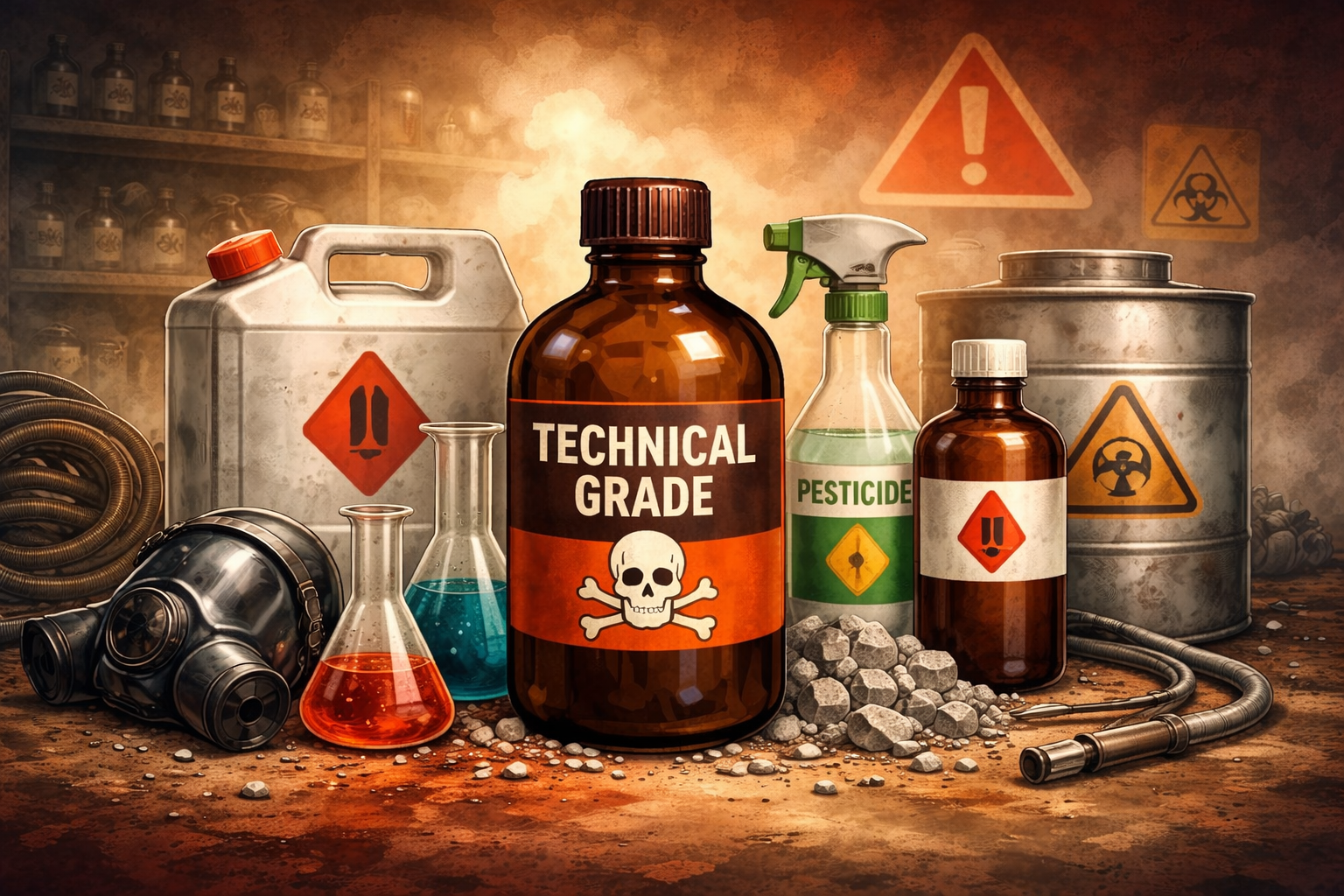
Technical-grade chemicals are designed for industrial, agricultural, or technical applications, not for human consumption. They are widely used in:
- Manufacturing and processing
- Cleaning and surface treatment
- Fertilizer and agrochemical production
- Water treatment and industrial reactions
They are optimized for performance and cost, not for
food safety.
Acceptable Impurity Levels
Unlike food-grade chemicals, technical-grade products allow:
- Higher levels of impurities
- Broader tolerances for by-products
- Less control over trace allergens or toxic elements
These impurities may be irrelevant in industrial processes but become unacceptable - and dangerous - when introduced into food or feed systems.
Why They Are Cheaper
Technical-grade chemicals cost less because:
- They undergo less regulatory testing
- They require simpler manufacturing controls
- They do not need food-safety certifications
- Traceability and documentation are more limited
Lower price often hides higher risk.
Key Differences Between Food-Grade and Technical-Grade Chemicals
Purity Levels
Food-grade chemicals are purified to meet strict human-safety thresholds. Technical-grade chemicals may contain:
- Heavy metals
- Reaction residues
- Industrial contaminants
Manufacturing Controls
Food-grade production requires:
- GMP (Good Manufacturing Practices)
- Hygienic environments
- Controlled raw material sourcing
Technical-grade production focuses on efficiency, not food hygiene.
Regulatory Compliance
Food-grade chemicals must comply with:
- Food laws and additive regulations
- Audits and inspections
Technical-grade chemicals are regulated for industrial safety - not
food safety.
Intended End Use
Food-grade: People and food contact
Technical-grade: Machines, materials and processes
Tip: A comparison table in your internal documents or training materials can greatly improve clarity for procurement and QA teams.
Why Food-Grade and Technical-Grade Chemicals Must Never Be Interchanged
Serious Health Risks
Using technical-grade chemicals in food applications can introduce:
- Toxic contaminants (e.g., lead, arsenic)
- Undeclared allergens
- Harmful residues never evaluated for human exposure
Even small amounts can accumulate in the body over time.
Legal and Regulatory Consequences
Authorities treat grade misuse as a serious violation:
- Product recalls
- Import/export bans
- Heavy fines
- Criminal liability in severe cases
Brand Reputation Damage
One contamination incident can undo decades of trust. Consumers expect safety. Once lost, it’s extremely hard to recover.
Ethical and Corporate Responsibility
Food producers and suppliers have a duty of care. Cutting corners on chemical grades is not just illegal - it’s unethical.
Real-World Examples of Chemical Grade Misuse
Food Contamination Incidents
Across the world, there have been cases where:
- Industrial-grade additives entered food supply chains
- Non-food acids or salts were used in beverages or snacks
- Technical chemicals contaminated raw materials
These incidents led to recalls, factory closures, and lasting damage.
Lessons Learned
- Always verify suppliers
- Never assume “same name = same grade”
- Documentation saves companies
How to Ensure You’re Using the Correct Chemical Grade
Verify Certifications and COAs
Always request:
- Certificate of Analysis
- Food-grade declarations
- Compliance with EU/FDA standards
Work with Reputable Suppliers
Choose partners who:
- Specialize in food-grade chemicals
- Offer full traceability
- Are transparent about production
Train Procurement and QA Teams
Make sure everyone understands:
- Grade differences
- Legal responsibilities
- Internal approval workflows
Conclusion – Safety, Compliance and Responsibility Come First
Food-grade and technical-grade chemicals are not interchangeable - ever. The difference is not just technical; it’s legal, ethical and human.
For companies in food, feed, pharmaceuticals and related sectors, grade integrity must be non-negotiable. Every decision (from sourcing to storage) should prioritize safety and compliance over short-term savings.
In chemical use, doing the right thing is not just good practice. It’s your responsibility.