Don't touch.

We burn.

Chemical reactions are part of us.

Specials:

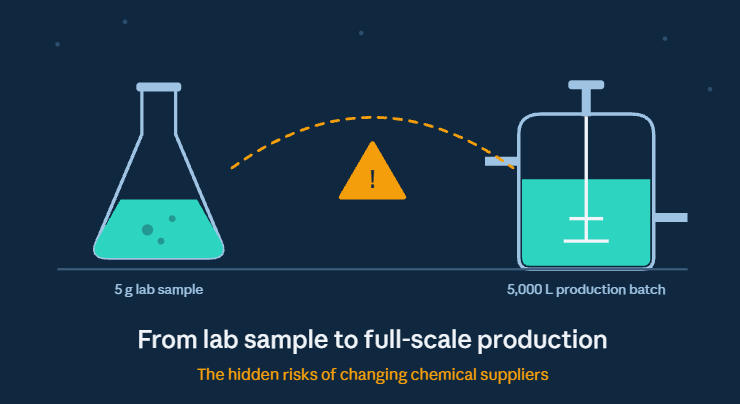
Buying chemicals directly from Chinese manufacturers may seem cost-effective, but the risks are real. Discover the hidden dangers before your next purchase.

Read More

Production/processing phosphoric acid with hard metals removal (TBP, DBP) and others is our main production activity.

This way, we can supply Technical, feed and food grade acid.


We offer Chemical solutions for your business needs!

Main portfolio chemicals

Decachem is specialized in the production and trading of:

  • Phosphoric acid - Tech, feed/food grade
  • Fertilizers / microelements
  • Feed / Food / API goods
  • Organic and Inorganic chemicals -Industrial, technical, API grade

Our roots start from the Agriculture and Fertilizer industry.  We sell Nitrogen, Phosphate, Potash containing fertilizers and Raw materials for their production.

The normal step forward was to supply FEED/FOOD grade Phosphates and Chemicals and then also API grade materials. We sell various Acids, Nitrates, Sulfates, Peroxides, Esters, etc.

DECACHEM specialised in trading chemicals from Asia to Europe and within Europe. We also operate moderately in the Middle East and North Africa.

Our connections, knowledge and business execution capabilities enable us to perform efficiently, quickly, and in the best of quality/price economics.

Products and Services

Alata

Alice

Open Sans

Noto Sans

Bebas Neue

Great Vibes

Rock Salt

Exo

Belgrano

Overlock

Cinzel

Indie Flower

Staatliches

Roboto Slab

Lato

Noto Serif

Open Sans

Montserrat

Ubuntu

Rubik

Delius

Amiri

Montserrat

Our chemicals never overreact!

Our Sales people do... :) 
We're proud to be a Serbian-based business that supplies Organic and Inorganic chemicals GLOBALLY.

About Us
Decachem costumers
Quote1

I can recommend DECACHEM. Their conduct of business is simple and professional: what they contract - they do and deliver, even if it is sometimes with small or no earnings. Respecting their word. That is important to me, more than the big companies' approach...

Jane Strebber

Decachem smile
Quote2

DECACHEM offers good quality products. I'm happy I found the company through web platforms and search for NaNO3, Phosphoric acid and feed additives.

John Vickast

Decachem management
Quote3

DECACHEM has been supplying my business for years, as I have a personal friendship with the owner of the company. To me, doing as agreed - is the most important thing in the world. They do what we agree.

Madelaine Fullbright
July 22, 2026
When people think about wastewater treatment, their minds usually jump to the big, visible infrastructure: aeration basins churning with bacteria, clarifiers settling out sludge, or UV disinfection units zapping pathogens before water is released back into a river. Rarely does anyone think about a simple chemical compound that plays a quiet but critical role behind the scenes — calcium nitrate. Yet this unassuming salt has become an increasingly valuable tool for treatment plant operators, municipalities, and industrial facilities seeking to address one of the wastewater industry's most persistent and unpleasant challenges: controlling hydrogen sulfide odor and corrosion . This post provides a closer examination of calcium nitrate, its working mechanism, its application in real-world treatment systems, and why it warrants more attention than it typically receives. What Is Calcium Nitrate? Calcium nitrate, with the chemical formula Ca(NO₃)₂, is an inorganic salt formed from calcium and nitrate ions. In its purest form, it's a white, crystalline, highly water-soluble compound. It's produced industrially at large scale, most commonly as a byproduct of reacting limestone with nitric acid, and it has a long history of use in agriculture as a fertilizer since it supplies both calcium and nitrogen — two nutrients plants need for healthy growth. Outside of agriculture, calcium nitrate shows up in concrete additives (where it accelerates setting and inhibits corrosion of rebar), in some de-icing formulations, and, increasingly, in wastewater treatment. In this context, the compound is usually sold and applied as a liquid solution rather than a dry crystal, which makes dosing into pipelines and collection systems straightforward. The Problem Calcium Nitrate Solves: Hydrogen Sulfide To understand why calcium nitrate matters in wastewater treatment, you first need to understand the problem it's designed to fight: hydrogen sulfide gas, commonly abbreviated H₂S. Hydrogen sulfide forms in wastewater collection systems — the sewer pipes, lift stations, and force mains that carry sewage from homes and businesses to treatment plants — through the activity of sulfate-reducing bacteria. These microorganisms thrive in anaerobic (oxygen-free) conditions, which are common in long stretches of sewer pipe, especially in force mains where wastewater sits under pressure with little to no dissolved oxygen. The bacteria use sulfate, which is naturally present in wastewater as an electron acceptor for their metabolism, and one of the byproducts of that process is hydrogen sulfide . H₂S is a genuine problem for several reasons: It smells terrible. Even at extremely low concentrations, hydrogen sulfide produces the unmistakable "rotten egg" odor that generates public complaints near treatment plants, pump stations, and manholes. Odor complaints are one of the most common sources of community friction for wastewater utilities, and persistent H₂S odor can damage a utility's relationship with the neighborhoods it serves. It's corrosive. When hydrogen sulfide gas rises above the water line in a sewer pipe, it can be oxidized by certain bacteria into sulfuric acid, which attacks concrete pipe, manhole structures, and metal fittings. This process, known as microbially induced corrosion, is one of the leading causes of premature failure in concrete sewer infrastructure. Replacing corroded sewer pipes is enormously expensive, so anything that slows this degradation has direct financial value for a utility. It's toxic and dangerous. At higher concentrations, hydrogen sulfide is a serious occupational hazard. It's flammable, and at high enough concentrations, it can be lethal to workers who enter confined spaces like wet wells and lift stations without proper precautions. Worker safety programs at treatment facilities take H₂S exposure extremely seriously. Given these three problems — odor, corrosion, and toxicity — it's easy to see why utilities are motivated to control hydrogen sulfide before it ever reaches the treatment plant headworks.
EUBattery
June 30, 2026
Discover which battery chemicals and raw materials will face the biggest supply challenges in Europe by 2030 — and what it means for the clean energy transition.
EU Gigafactories
June 9, 2026
Battery gigafactories are transforming Europe's chemical demand landscape. Learn why supply security is now a top priority for manufacturers and suppliers.