The Hidden Dangers of Buying Chemicals Directly from Chinese Manufacturers
The appeal is understandable. Chinese manufacturers offer competitive prices, broad product portfolios, and the promise of short lead times — all factors that look attractive on a procurement spreadsheet. For companies sourcing industrial or specialty chemicals, cutting out the middleman and going directly to the source can seem like a straightforward way to improve margins.
But the reality on the ground is often far more complicated — and far more costly.
The Illusion of a Simple Transaction
On the surface, direct procurement from Chinese chemical manufacturers looks simple: send an inquiry, receive a quote, place an order, and wait for delivery. In practice, however, this process involves navigating a web of language barriers, unfamiliar business customs, opaque quality systems, and limited legal recourse — all of which can turn what seemed like a smart commercial decision into a costly operational headache.
For companies without long-standing, verified relationships in China, direct cooperation with manufacturers can quickly become unpredictable, time-consuming, and financially draining. The risks are not hypothetical — they are experienced routinely by importers across Europe and beyond.
Execution Risk: Will the Goods Even Arrive?
One of the most fundamental concerns when buying directly from Chinese manufacturers is execution reliability. The core question is deceptively simple: Will you actually receive what you ordered when you were told it would arrive?
Unrealistic lead times are a well-documented problem in direct import relationships. Suppliers sometimes promise delivery windows they know they cannot meet, simply in order to win the order. The intention to deliver may be genuine, but the capacity or materials may not be in place at the time the promise is made. Once the order is placed and the deposit is paid, the buyer's leverage drops considerably.
Delays can cascade. In the chemicals sector, where production schedules, storage logistics, and downstream customer commitments are tightly linked, even a few weeks of slippage can create significant disruption. When the supplier is on the other side of the world and communication is hampered by time zones and language, resolving these issues remotely is rarely straightforward.
In more serious cases, goods are simply not delivered at all — a scenario that is far from unheard of in unverified sourcing relationships and one that leaves foreign buyers with limited options for recourse.
Quality Control: Where Small Differences Have Large Consequences
Even when goods do arrive on time, quality is a second major battleground. Chemical products are not interchangeable commodities in the way that simpler manufactured goods might be. Specification matters — sometimes to a degree that surprises buyers who are new to direct importing.
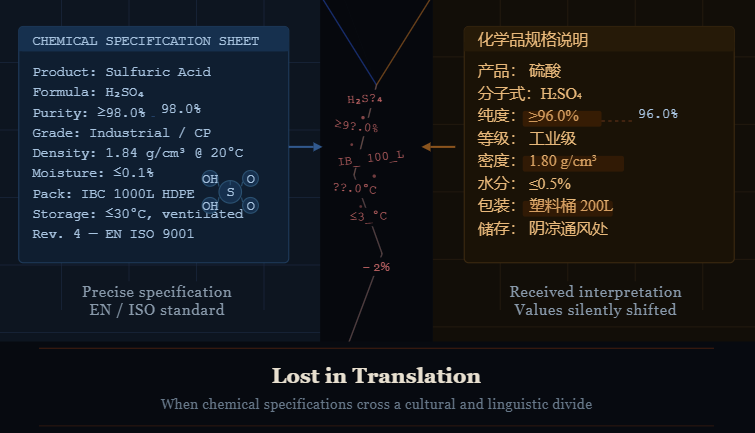
Consider purity. A difference of just 2% in the purity of a chemical compound may sound negligible. But depending on the application, that variation can render the product unusable, cause process failures, or trigger compliance issues with customers or regulators. The cost of such a discovery — after the goods have been shipped, cleared customs, and potentially already introduced into a production process — can far exceed the savings achieved by going directly to the source.
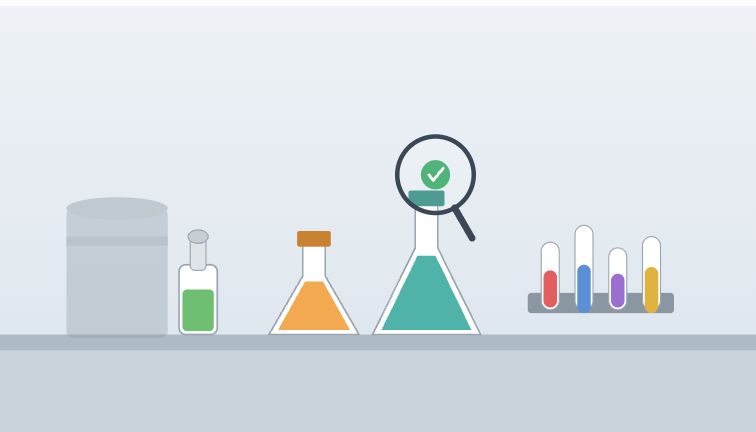
This is why many importers who attempt direct procurement find themselves hiring independent inspection companies to verify the supplier's actual production capabilities and product quality before shipment takes place. These third-party audits and pre-shipment inspections are an added layer of cost and complexity that importers often fail to anticipate when calculating the economics of a direct purchasing arrangement. What initially looked like a cost-saving move begins to erode once inspection fees, travel costs, and administrative overhead are factored in.
And inspections, while valuable, are not a guarantee. They reduce risk — they do not eliminate it.
Specification Mismatches and the Communication Gap
Chemical specifications exist in a precise technical language. When that language must travel across a significant cultural and linguistic divide, the risk of misinterpretation grows substantially.
It is not unusual for buyers to receive products that are technically within the manufacturer's stated parameters, but not within the buyer's actual requirements, because those requirements were never fully communicated or were interpreted differently. Grades, concentrations, packaging specifications, labeling requirements, regulatory documentation, and safety data sheets — each of these is an area where misalignment can occur, and where the consequences can range from inconvenient to serious.
Chinese business culture also operates with different norms around how problems and limitations are communicated. In many contexts, a supplier will indicate that an order is on track even when complications have arisen, because acknowledging difficulty is perceived as losing face or threatening the relationship. For Western buyers expecting transparent, proactive communication about delays or deviations, this difference in business practice can result in surprises at exactly the wrong moment.
Legal Exposure and the Limits of Contracts Across Borders
When something goes wrong in a direct import relationship, what are your options?
For most foreign buyers sourcing from Chinese manufacturers, the honest answer is: LIMITED. Contracts signed under Chinese jurisdiction are difficult to enforce for international parties. Dispute resolution is costly, slow, and often impractical. Even well-drafted agreements may offer less protection than they appear to, once a conflict moves beyond emails and into actual legal proceedings.
The power asymmetry in these situations tends to favor the supplier. They have local legal knowledge, local relationships, and the practical advantage of already holding your payment. Recovering funds or obtaining compensation for substandard goods through formal channels is possible in theory, but rarely straightforward in practice.
This legal exposure is rarely given sufficient weight at the procurement stage, when optimism is high and everything is proceeding according to plan. It becomes very relevant when things go wrong — which, in unverified direct sourcing relationships, they sometimes do.
The Real Cost of "Cheaper" Procurement
When companies calculate the cost of direct procurement from China versus sourcing through an established European distributor or supplier, they often make a comparison that is too narrow.
They compare the unit price of the chemical. What they do not always account for includes: the management time required to handle communication, documentation, and logistics; the cost of independent quality inspections; the cost of carrying additional safety stock to buffer against delivery uncertainty; the cost of production delays when goods arrive late or are rejected; and the potential cost of customer claims or compliance failures if substandard material enters their supply chain.
When all of these factors are included — as they should be — the economics of direct procurement often look considerably less attractive than the headline price difference suggests.
The Case for Verified European Sourcing Partners
For this reason, many companies today have made a deliberate strategic choice to work through established European suppliers and distributors who maintain verified sourcing channels in China — rather than attempting to manage those relationships directly.
The logic is straightforward. A European partner with deep, long-standing relationships with Chinese manufacturers has already invested in what direct importers must build from scratch: verified supplier relationships, quality assurance processes, in-country expertise, and the commercial leverage that comes from being a significant and repeat customer. They know which suppliers can consistently deliver to specification, and which ones cannot. They have the processes in place to catch problems before the goods leave the factory.
Crucially, in these arrangements, the European partner assumes the risk and responsibility of compliant, properly specified, and reliably delivered goods. If something goes wrong, the buyer has a contractual relationship with a party operating under European law, with European business norms around communication and accountability.
This is not simply about convenience. It is about the allocation of risk — and about who is best positioned to manage that risk effectively.
A Long-Term Perspective on Supply Chain Decisions
Procurement decisions in the chemicals sector rarely exist in isolation. They affect production reliability, product quality, customer relationships, and regulatory compliance. The supply chain for a chemical input is, in effect, the foundation on which a significant part of a company's operational performance rests.
Choosing a sourcing model purely based on unit price is a short-term optimization that can create long-term vulnerabilities. Companies that have learned this lesson the hard way often describe the experience in similar terms: the savings they thought they were making turned out to be far smaller than the costs they eventually incurred.
The companies that manage their chemical procurement most effectively tend to be those that take a holistic view, one that weighs reliability, quality assurance, communication, legal protection, and total cost of ownership alongside the initial price point. For most of them, that calculation leads to the same conclusion: a verified, accountable sourcing partner is worth more than the narrowest possible margin on any individual transaction.
Conclusion
Buying chemicals directly from Chinese manufacturers is not impossible. Some companies do it successfully, but they typically have years of relationship-building behind them, dedicated personnel with in-country expertise, and robust quality assurance systems in place.
For the majority of companies that lack these foundations, the risks are real and significant: unreliable delivery, quality deviations, specification mismatches, communication failures, and limited legal recourse. What initially appears to be a cost-saving opportunity frequently turns out to be a source of operational disruption and financial loss.
Working through an established European partner with verified sourcing relationships in China is often more expensive on a per-unit basis. It is also, for many companies, demonstrably more cost-effective in practice — because it transfers the complexity and risk to a party that is equipped to manage it, and ensures that what arrives is what was ordered, when it was promised.
In chemical procurement, as in much of business, the lowest price and the best value are rarely the same thing.