Multi-Sourcing vs. Sole Supplier Strategies in Chemical Procurement
In an industry defined by precision, compliance and supply continuity, the decision to consolidate chemical sourcing under a single supplier is neither simple nor risk-free, but when executed strategically, it can deliver transformative commercial and operational advantages.
Chemical procurement sits at the intersection of science, regulation and global logistics. Unlike commodity purchasing, buying industrial or specialty chemicals demands a nuanced understanding of purity specifications, handling requirements, transport regulations, and shelf-life sensitivities. Against this backdrop, the sole supplier model — where an organisation commits to a single vendor for a given chemical or chemical category — has gained renewed attention among procurement directors seeking both cost efficiency and supply chain resilience.
This article explores the strategic rationale behind sole supplier arrangements, the risks that must be actively managed, and the framework DECACHEM brings to help clients build supply relationships that are both lean and robust.
Why Sole Sourcing Makes Sense in Chemicals
The chemical supply chain is notoriously fragmented. Buyers routinely manage dozens of vendor relationships for a wide portfolio of substances — each with its own lead times, documentation requirements, and quality standards. This complexity carries a hidden cost: administrative overhead, inconsistent quality benchmarking, duplicated qualification efforts and weakened negotiating leverage.
Consolidating supply under a trusted sole supplier directly addresses these inefficiencies. When one vendor is responsible for a significant share of your chemical volume, the commercial relationship deepens. Pricing structures become more favourable, priority allocation during periods of scarcity becomes easier to negotiate, and joint quality improvement programs become worthwhile for both parties.
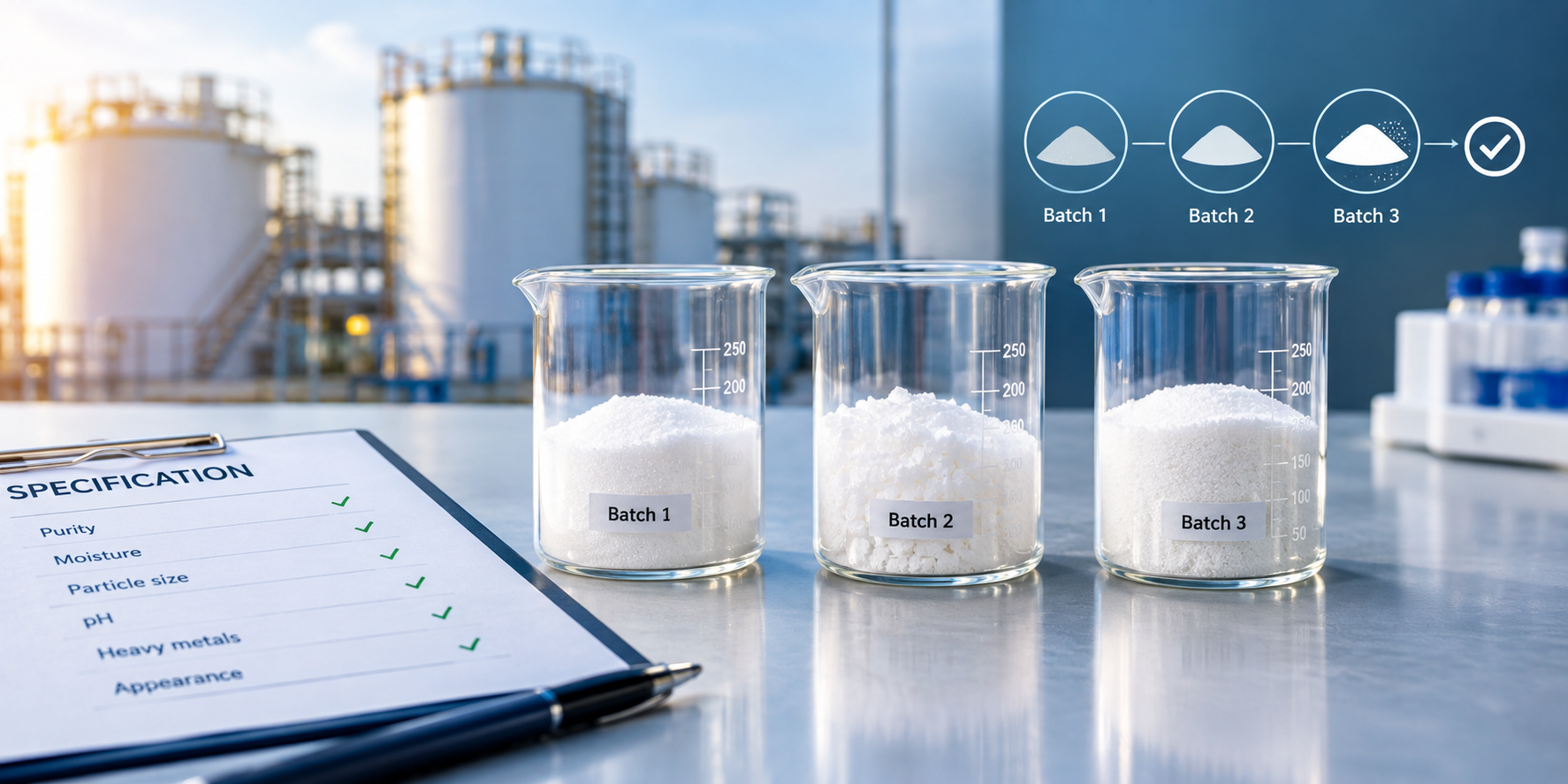
Beyond economics, there is a quality consistency argument that resonates strongly in regulated industries such as pharmaceuticals, agrochemicals and food-grade manufacturing. When a single qualified supplier produces your raw materials within a tightly controlled process, batch-to-batch variability narrows. Your QA team can focus its resources on product development rather than perpetual incoming inspection of materials from multiple sources with differing production standards.
The Architecture of a Resilient Sole Supplier Strategy
Critics of sole sourcing often cite a single, decisive objection: concentration risk. If your sole supplier experiences a production outage, regulatory suspension, or logistics crisis, your operations are exposed. This is a legitimate concern — and it is precisely why a well-designed sole supplier strategy is not simply a decision to buy from one place. It is a structured framework with multiple protective layers.

1. Rigorous Upfront Qualification
Before designating a sole supplier, an exhaustive qualification process is essential. This should span technical capability assessments, financial health reviews, regulatory compliance audits (including REACH, GHS and relevant local regulations), environmental and sustainability credentials, and a thorough evaluation of production capacity headroom. The goal is not to find a supplier who can meet your needs today, but one with the institutional depth to scale alongside your business.
2. Contractual Continuity Provisions
Sole supplier contracts in chemical procurement should include several non-negotiable provisions: minimum stock holding requirements at the supplier's facility, agreed notification periods for any production changes or discontinuations, technology transfer clauses that facilitate rapid qualification of an alternative in an emergency, and force majeure protocols with clear escalation paths.
3. Maintaining a Qualified Backup
True sole sourcing does not mean destroying all alternative options. A pragmatic approach maintains one or two secondary suppliers in a qualified (but inactive) state. These backup vendors are audited, sample-tested, and contractually engaged at a nominal level, ready to activate if the primary supplier relationship is disrupted. This "warm standby" model preserves negotiating discipline while insuring against catastrophic supply failure.
4. Demand Transparency and Forecasting
Sole supplier partnerships thrive on visibility. Sharing 12 to 18-month rolling demand forecasts with your supplier enables them to plan production capacity, secure raw material inputs, and manage inventory intelligently on your behalf. In return, buyers gain preferential treatment during allocation crunches — a particularly valuable benefit for specialty chemicals with constrained global supply.
Sector-Specific Considerations
The viability and structure of a sole supplier strategy vary significantly by sector. In pharmaceutical manufacturing, where regulatory bodies require extensive documentation of supply chains, sole supplier arrangements can actually simplify compliance by reducing the number of supplier changes requiring regulatory notification. In agrochemicals, seasonal demand volatility makes supplier partnership models — with embedded inventory buffers — particularly attractive. For industrial chemicals used in continuous manufacturing processes, uninterrupted supply is paramount, and the operational argument for a deeply committed sole supplier relationship is compelling.
Conversely, for bulk commodity chemicals traded in deep, liquid markets, a pure sole supplier approach may sacrifice pricing efficiency. In these categories, a preferred supplier framework — where one vendor receives the majority of business but competition is retained — often strikes the better balance.
How DECACHEM Approaches Sole Supplier Partnerships
We have built our service model around the belief that chemical procurement is a relationship business. Our role as a distribution partner is not simply transactional — we act as an embedded extension of our clients' procurement function, helping them navigate the complexity of supplier selection, qualification, contract structuring and ongoing performance management.
For clients seeking to consolidate their chemical sourcing, we offer a structured Preferred Supplier Program that combines the commercial benefits of volume concentration with the resilience mechanisms that safeguard against supply disruption. This includes dedicated account management, priority inventory reservation, co-managed safety stock programs and transparent reporting on supply chain health indicators.
Our warehouse infrastructure and European distribution network mean we can act as a strategic buffer between global production and local manufacturing — absorbing volatility in international freight and raw material markets before it reaches our clients' production floors.
Making the Decision
Transitioning to a sole or preferred supplier model is a significant strategic commitment, and it deserves careful deliberation. The right starting point is an honest assessment of your current supplier landscape: how many vendors are supplying similar or identical materials? What is the true total cost of managing those relationships — including qualification costs, QA resource, and administrative overhead? Where has supply variability created production disruption in the past?
From that baseline, a targeted consolidation strategy can be designed — identifying the chemical categories where sole sourcing delivers the greatest net benefit, selecting and qualifying the appropriate partner, and building the contractual and operational infrastructure to make the relationship durable.
Done well, sole supplier strategies in chemical procurement are not a risk — they are one of the most effective risk mitigation tools available to procurement leaders. The key is in the architecture.