Europe's Battery Gigafactories and the Growing Demand for Chemical Supply Security
Europe's industrial ambition has rarely been written in such stark terms. Across Germany, Poland, Hungary, Sweden, Spain and France, a wave of battery gigafactories is rising, some already humming with production, others still taking shape in vast construction zones. These facilities are the physical embodiment of a continent determined to electrify its economy and reduce its dependence on imported fossil fuels. But behind the clean façade of electrode lines and cell assembly halls lies a chemical supply puzzle that is becoming one of the most pressing strategic challenges in European industry.
The factories themselves are only as good as the materials flowing into them. And when it comes to chemicals — the electrolyte solvents, binders, specialty reagents, and process chemicals that make battery manufacturing possible — Europe's supply chain remains deeply underprepared for the scale of what is coming.
A Continent in Build-Out Mode
The numbers are compelling. According to European Commission projections, EU battery production capacity was expected to reach 458 GWh by 2025 and could exceed 1,000 GWh by 2030. The European Battery Alliance, launched in 2017, has grown to encompass over 800 actors across the value chain, with the stated ambition of capturing a market worth €250 billion annually. That market — stretching from raw mineral extraction to cell production to recycling — now represents one of Europe's most significant industrial bets.
Landmark facilities have already been added to the map: LG Energy Solution's plant near Wrocław, Poland, now operates at 85 GWh per year, making it the largest battery production facility in Europe. CATL's greenfield gigafactory in Debrecen, Hungary — the largest such investment in that country's history at €7.34 billion — is scaling up. Northvolt in Sweden, Automotive Cells Company in France, and a growing cluster of facilities in Spain's Basque Country, Valencia, and Extremadura are adding further capacity. Germany alone has announced over 300 GWh of planned annual cell production by 2030.
For European industry watchers and supply chain professionals, this is not just a story about cars. It is a story about the industrial infrastructure required to sustain a continent-wide manufacturing base — and how quickly the chemical inputs to that infrastructure can become bottlenecks.
What Gigafactories Actually Consume
To understand the chemical supply challenge, it helps to step inside the production process. Manufacturing a lithium-ion battery cell is, at its core, a precision chemical operation. Every stage — electrode slurry preparation, coating, electrolyte filling, formation cycling — depends on a reliable flow of high-purity chemical inputs.
N-Methyl-2-Pyrrolidone (NMP) is the workhorse solvent in conventional cathode electrode manufacturing. It dissolves binders such as PVDF (polyvinylidene fluoride) into a slurry that is coated onto aluminum current collectors. A single large-scale gigafactory can consume thousands of tonnes of NMP per year. Critically, most of the NMP is recovered and recycled in a closed-loop system — but this requires sophisticated distillation infrastructure and means that any disruption to supply or quality has an immediate cascading effect on production schedules.
Electrolyte chemicals present a further layer of complexity. Modern lithium-ion electrolytes are formulated from lithium salts — principally lithium hexafluorophosphate (LiPF₆), and increasingly LiFSI and LiTFSI for improved performance — dissolved in carbonate solvents such as ethylene carbonate, dimethyl carbonate, and ethyl methyl carbonate. The EU electrolyte market was valued at approximately USD 1.3 billion in 2025 and is projected to grow at a CAGR of 12.2%, reaching USD 4.2 billion by 2035. Demand is being driven not just by volume, but by the growing complexity of next-generation battery chemistries requiring formulations with higher thermal stability and fast-charging compatibility.
Binders, conductive additives, and process chemicals round out the picture. Aqueous binders such as CMC (carboxymethyl cellulose) and SBR (styrene-butadiene rubber) are gaining ground in anode manufacturing as the industry moves away from NMP-based processes for the negative electrode. Carbon black and carbon nanotube additives are needed for electrode conductivity. Acids, bases, and cleaning chemicals are consumed throughout the manufacturing environment.
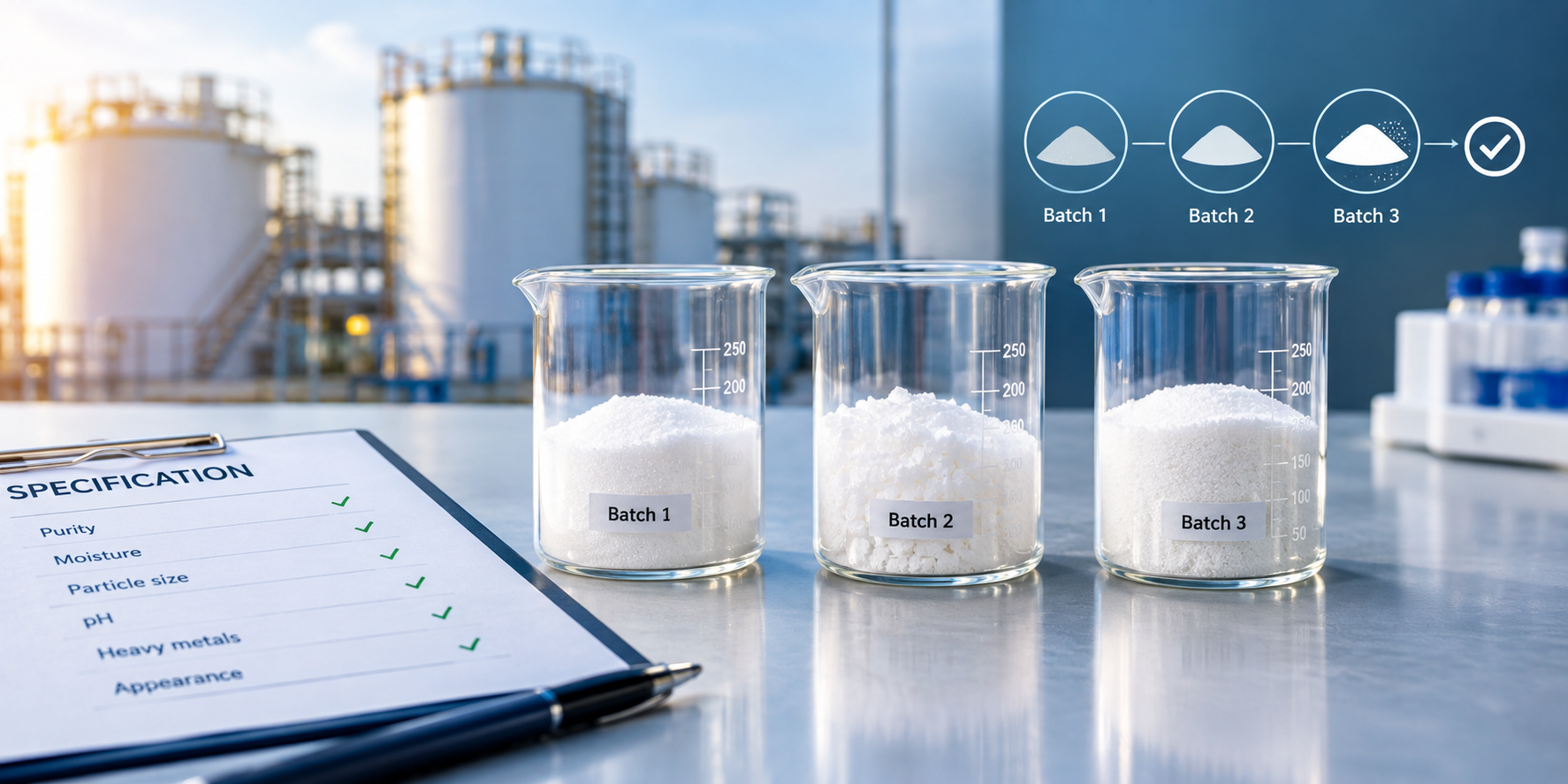
Each of these materials must arrive at the gigafactory gate with rigorous quality certification, consistent specification, and adequate volume — on schedule, every time.
The Upstream Gap
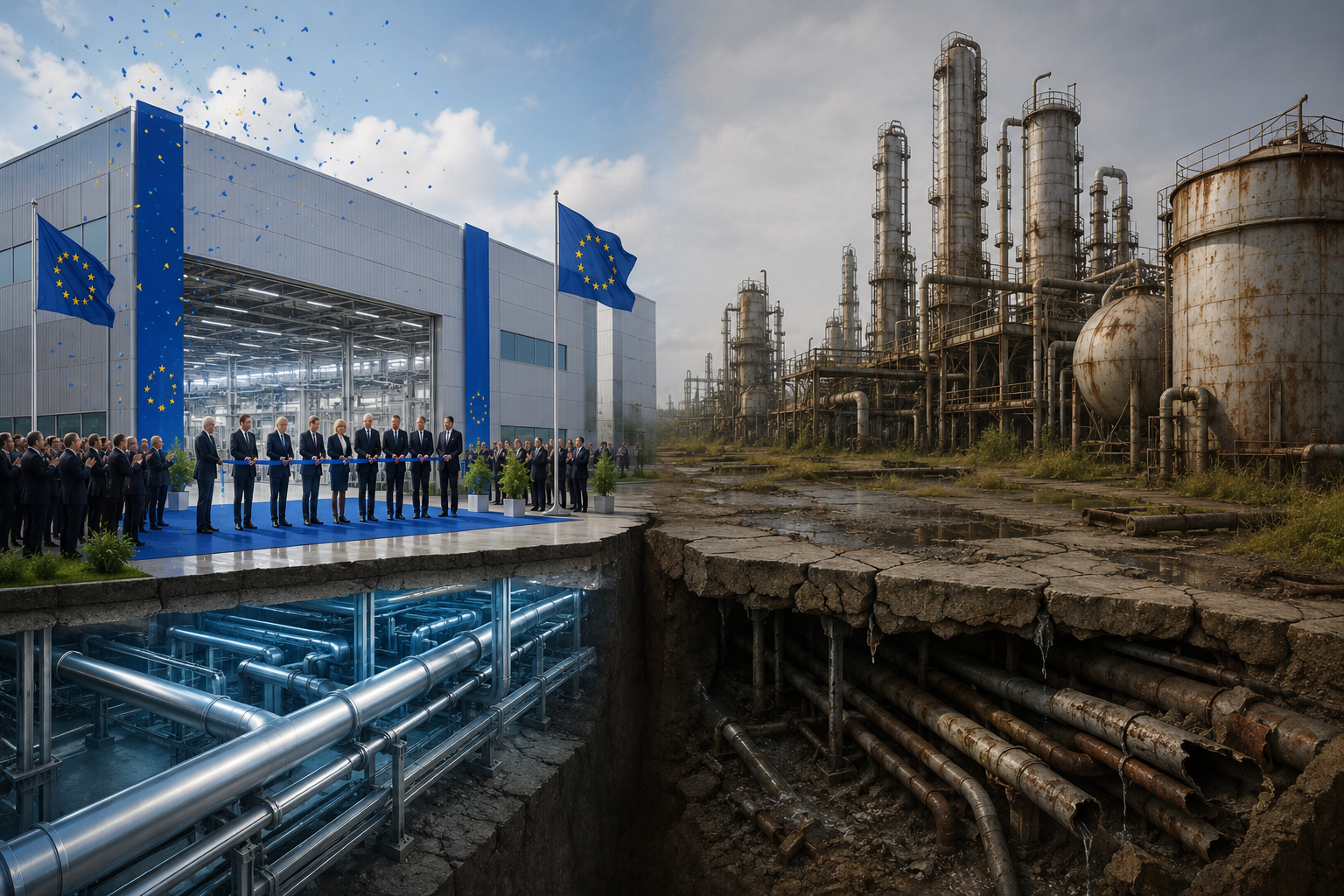
Here is where Europe's strategy reveals a structural weakness. The continent has invested heavily in what is visible: the gigafactories themselves, with their ribbon-cuttings and political fanfare. But the upstream chemical infrastructure that makes those factories run has received far less attention and capital.
China dominates the global battery supply chain to a degree that is difficult to overstate. It controls nearly 90% of global capacity for cathode active materials and over 97% of the global capacity for anode active materials. For specialty chemicals, including LiPF₆ and LiFSI, production capacity is also heavily concentrated in Asia, with qualification lead times of 12 to 18 months for new suppliers.
The result, as analysts have noted plainly, is that Europe's battery manufacturing footprint looks European on the surface but depends heavily on imported materials, imported intermediates, and imported expertise. Even with subsidies and political goodwill, competing on reliability and consistency of chemical supply remains a formidable challenge. For gigafactories, where continuous operation is critical to amortizing enormous capital investments, this is not a theoretical risk — it is an operational vulnerability.
The EU Battery Regulation (2023/1542), which came into force with carbon footprint declaration requirements for EV batteries beginning in 2025 and recycled content minimums from 2028, adds a regulatory dimension. German cell manufacturers are already requiring chemical suppliers to provide cradle-to-gate carbon footprints below 2.5 kg CO₂e per kg of chemical. This narrows the field of qualifying suppliers even further, as many Asian producers cannot easily meet European environmental documentation standards.
The Case for European Chemical Supply Partners
What does all of this mean for procurement professionals in the battery sector? It means that the selection of chemical supply partners is no longer a transactional purchasing decision — it is a strategic one.
A reliable European chemical distributor brings several things that spot-market purchasing from distant sources cannot easily replicate.
Proximity and continuity. Gigafactory production lines cannot wait for a delayed container shipment. European-based chemical distributors can maintain regional warehouse stock, respond to emergency top-up orders, and reduce the logistical risk that comes with multi-week lead times from Asia. For solvents like NMP, where recovery system performance depends on incoming purity specifications, consistency of supply is as important as volume.
Regulatory competence. REACH compliance, Safety Data Sheets aligned with EU requirements, carbon footprint documentation, and PFAS restriction navigation are not optional extras — they are table stakes for supplying into European gigafactories. Distributors who understand the evolving regulatory landscape can help procurement teams stay ahead of compliance requirements rather than scramble to meet them.
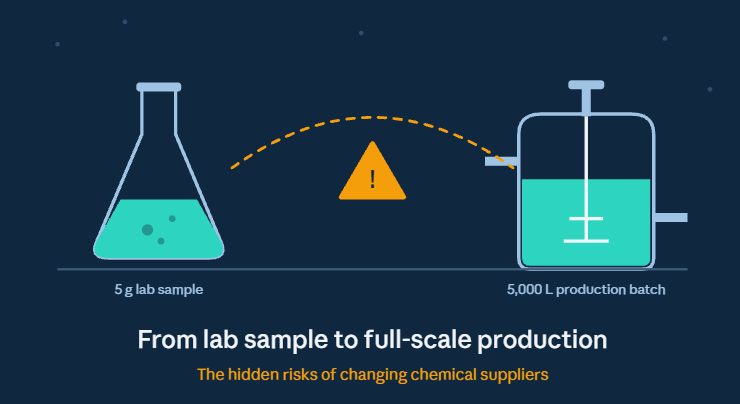
Technical partnership. As the industry transitions toward dry electrode processes, aqueous binder systems, and alternative electrolyte chemistries, battery manufacturers need chemical partners who can engage technically — not simply fulfill purchase orders. Qualifying a new binder or electrolyte additive for a gigafactory production line typically requires six to twelve months of testing. Suppliers who engage early in the product development cycle, providing samples, technical data, and application support, become embedded partners rather than interchangeable vendors.
Supply chain transparency. The battery passport requirements under EU regulation will soon make full chemical traceability mandatory. Distributors who can document the provenance, processing conditions, and environmental profile of every chemical they supply will be structurally advantaged as these requirements become enforceable.
What the Market Is Already Signalling
The signals from the market are already clear for those paying attention. Spain's emerging gigafactory cluster in the Basque Country, Valencia, and Extremadura is estimated to represent a total addressable market for life-cycle safe battery production chemicals of €45–65 million in 2026 alone, projected to grow at a CAGR of 18–22% through 2035. Germany's concentration of announced capacity — over 300 GWh by 2030 — makes it the single largest chemical demand centre for the industry in Europe.
Europe's EV battery demand growth rate between 2024 and 2025 was the highest of any major region globally. Innovation capabilities in European research institutions and startups remain strong. What has consistently been identified as the bottleneck is the scaling and commercialisation gap — and that gap is nowhere more pronounced than in the chemical inputs that enable production.
Global commodity trading houses have already stepped in to manage part of this imbalance, aggregating supply, managing logistics, and structuring long-term delivery agreements into Europe. Their involvement is itself a signal: the chemistry supply chain for European batteries is complex enough to require dedicated intermediaries with deep market knowledge. Yet their role also underscores the vulnerability — without experienced chemical supply partners buffering risk, many gigafactories would face immediate operational stress.
Looking Ahead: Building Resilience from the Chemical Layer Up
Europe's battery sovereignty goal will not be achieved by building cell factories alone. It will be achieved by constructing — painstakingly, investment by investment, partnership by partnership — the full value chain that makes those factories viable. That includes mining and refining, cathode and anode active material production, recycling infrastructure, and critically, the reliable, specification-compliant, regulatory-savvy supply of the industrial chemicals that run through every step of the process.
For chemical distributors with the right capabilities and the right geographic positioning, this moment represents a significant opportunity. The companies that invest now in building deep relationships with gigafactory procurement teams, in stocking and qualifying the chemical grades that advanced battery manufacturing demands, and in developing the regulatory and technical expertise to be genuine partners rather than transaction processors — those companies will be disproportionately well-placed as Europe's battery build-out reaches its full scale over the coming decade.
The factories are rising. The question is whether the chemical supply infrastructure will rise to meet them.