How High-Purity Chemicals Strengthen Compliance with EU Food Standards
Introduction to EU Food Standards and Chemical Compliance
The European Union is recognized globally for having some of the most rigorous food safety standards, designed to protect consumers while ensuring transparency and traceability throughout the food supply chain. These standards are shaped and enforced by key regulatory bodies such as the European Food Safety Authority (EFSA), the European Commission (EC), and the European Chemicals Agency (ECHA). Together, they establish strict frameworks governing everything from raw material sourcing and chemical composition to labeling, risk assessment, and ongoing compliance monitoring.
Within this regulatory environment, chemical quality plays a critical role in food production and processing. Many essential food applications, such as pH regulation, preservation, nutrient fortification, and processing aid functions, depend on chemicals that must meet precise purity and safety specifications. Even trace impurities can pose regulatory risks, impact product stability, or compromise consumer safety, making compliance increasingly dependent on the quality of chemical inputs.
High-purity chemicals are specifically produced to minimize contaminants and ensure consistent, well-defined compositions. By meeting food-grade and regulatory requirements from the outset, these chemicals help manufacturers align with EU standards more effectively, reduce compliance risks, and maintain confidence across audits and inspections. In today’s tightly regulated EU food market, purity is not optional - it is foundational to compliance.
What Are High-Purity Chemicals?
Definition and Purity Grades
High-purity chemicals are substances manufactured under tightly controlled conditions to achieve very low levels of impurities and consistent chemical composition. In the context of food production, purity is not just a quality indicator - it is a regulatory requirement. These chemicals must comply with defined specifications set by EU food safety authorities, including limits on heavy metals, by-products, and other potentially harmful contaminants.
A key distinction exists between food-grade and industrial-grade chemicals. Food-grade chemicals are specifically approved for direct or indirect contact with food and must meet strict standards established by EFSA, relevant EU regulations, and often international benchmarks such as FCC or E-number specifications. Industrial-grade chemicals, while suitable for technical or manufacturing purposes, may contain higher impurity levels and are generally not acceptable for food-related applications.
Typical purity benchmarks for high-purity food-grade chemicals are ≥99%, although many applications demand even higher levels depending on their function and regulatory classification. Beyond numerical purity, consistency from batch to batch and full documentation (including traceability and safety data) are equally critical.
Common High-Purity Chemicals Used in Food Processing
High-purity chemicals are widely used across food processing operations. Preservatives help extend shelf life and prevent microbial growth while maintaining product safety. Food additives such as acidity regulators, stabilizers, and nutrient salts support flavor, texture, and nutritional value. Processing aids, including pH adjusters and anti-caking agents, enable efficient production without altering the final product characteristics. Additionally, high-purity cleaning and sanitation agents are essential for maintaining hygienic processing environments, ensuring equipment cleanliness without leaving harmful residues.
Overview of EU Food Safety Regulations
The European Union maintains a comprehensive and highly structured food safety framework that governs every stage of the food supply chain, including the use of chemicals in food production and processing. This framework is built to ensure a high level of consumer protection, promote transparency, and enable effective risk management across all Member States. For food manufacturers and ingredient suppliers, understanding how chemical inputs fit into this regulatory system is essential for maintaining compliance and market access.
Key Regulatory Bodies
The European Food Safety Authority (EFSA) is responsible for scientific risk assessment related to food and feed safety. EFSA evaluates substances used in food, including additives, processing aids, and contaminants, providing scientific opinions that form the basis for regulatory decisions.
The European Commission (EC) translates EFSA’s scientific assessments into binding legislation and oversees the enforcement of food safety laws across the EU. Through its regulatory and monitoring role, the EC ensures harmonized standards and consistent application of food safety rules in all Member States.
REACH (Registration, Evaluation, Authorisation and Restriction of Chemicals) and CLP (Classification, Labelling and Packaging) regulations, administered by the European Chemicals Agency (ECHA), govern the registration, hazard classification, and safe use of chemicals placed on the EU market. While not food-specific, these regulations directly impact chemical manufacturers and suppliers serving the food industry.
Critical EU Regulations Impacting Chemical Use
Regulation (EC) No 178/2002, often referred to as the General Food Law, establishes the fundamental principles of EU food safety. It defines responsibilities across the supply chain, enforces traceability, and mandates that only safe substances may be used in food-related applications.
Regulation (EC) No 1333/2008 specifically addresses food additives, setting strict rules for authorization, purity criteria, labeling, and permitted uses within defined limits.
Good Manufacturing Practices (GMP) underpin all EU food regulations, requiring controlled production processes, documented quality systems, and consistent chemical purity to ensure food safety and regulatory compliance.
How High-Purity Chemicals Improve Regulatory Compliance
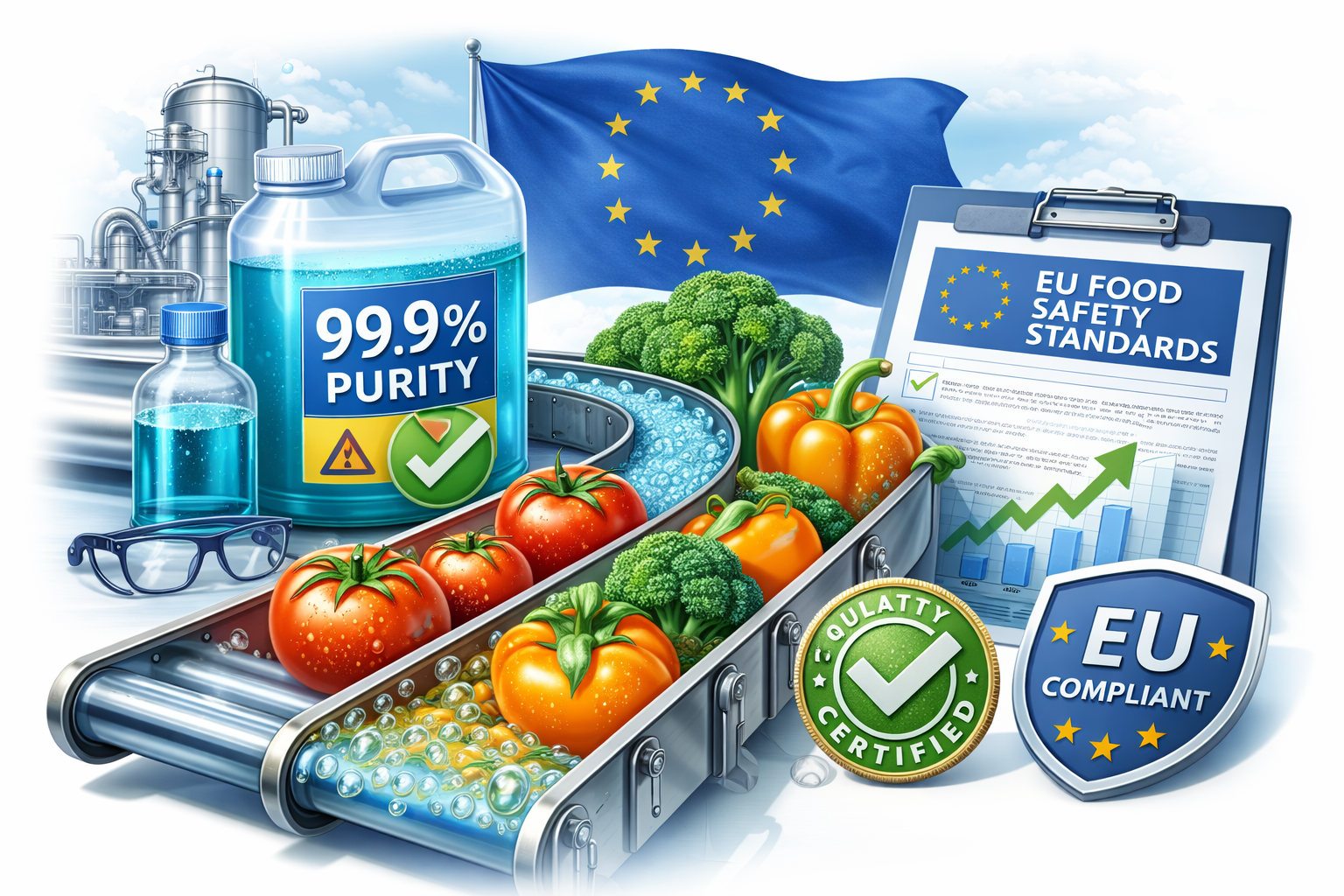
High-purity chemicals play a strategic role in helping food manufacturers meet the strict requirements of EU food safety legislation. By minimizing uncertainty around composition, contaminants, and performance, they directly support regulatory compliance while reducing operational and reputational risk.
Reduced Contaminant Risk
One of the most significant compliance advantages of high-purity chemicals is the reduced presence of unwanted contaminants. Lower levels of heavy metals, residual solvents, and by-products help ensure that chemical inputs remain well within EFSA-defined safety thresholds. This is especially critical in food applications where even trace amounts of certain impurities can trigger non-compliance, product recalls, or failed inspections.
By starting with highly refined raw materials, manufacturers can better control cumulative exposure levels across the final product. This not only simplifies compliance with maximum residue limits but also enhances overall consumer safety. High-purity chemicals reduce the likelihood of unintended interactions within formulations, supporting product stability and predictable performance throughout shelf life.
Improved Traceability and Documentation
EU regulations place strong emphasis on traceability and documentation across the entire food supply chain. High-purity chemical suppliers typically provide comprehensive Certificates of Analysis (CoA), detailed safety data sheets, and full batch documentation. These documents clearly define purity levels, impurity limits, and analytical methods, making regulatory audits more efficient and transparent.
Batch-to-batch consistency further strengthens compliance efforts. When chemical composition remains stable across deliveries, food manufacturers can maintain validated processes, reduce variability, and confidently demonstrate control to regulators. This level of documentation also supports rapid issue resolution if deviations or inquiries arise.
Alignment with EFSA Risk Assessments
EFSA risk assessments rely heavily on precise data regarding substance composition, exposure levels, and toxicological profiles. High-purity chemicals align closely with these assessment models by minimizing unknown variables and reducing the need for conservative assumptions.
As a result, approval processes become more straightforward, with fewer data gaps or follow-up questions from authorities. Manufacturers benefit from smoother product authorizations, reduced delays, and fewer formulation changes driven by compliance concerns. In the long term, using high-purity chemicals helps create stable, regulation-ready formulations that can adapt more easily to evolving EU food safety requirements.
Benefits for Food Manufacturers
High-purity chemicals offer tangible advantages for food manufacturers, helping them streamline operations while maintaining the highest standards of safety and quality.
Enhanced Product Safety and Quality
Using high-purity chemicals significantly reduces the risk of contamination, which translates to fewer product recalls and consumer safety incidents. Consistent chemical composition ensures that formulations perform as intended, supporting stable taste, texture, and nutritional quality. Moreover, lower levels of impurities can extend product shelf life, giving manufacturers more flexibility in storage, distribution, and retail presentation.
Faster Market Approvals
High-purity chemicals simplify regulatory submissions by providing precise documentation, Certificates of Analysis (CoA), and traceable batch records. This clarity accelerates approval processes with EU authorities, reducing delays caused by compliance uncertainties or the need for additional testing. Faster approvals mean products can reach the market more quickly, helping manufacturers respond efficiently to demand and remain competitive.
Brand Trust and Export Readiness
Compliance with EU food safety regulations across all member states enhances a manufacturer’s credibility and reputation. High-purity chemicals demonstrate a proactive commitment to consumer safety and regulatory excellence, building trust with distributors, retailers, and end consumers. For companies targeting international markets, consistent adherence to EU standards also ensures export readiness, minimizing barriers and reinforcing a brand’s global reliability.
Choosing the Right High-Purity Chemical Supplier
Selecting a reliable supplier is a critical step for food manufacturers seeking to leverage high-purity chemicals effectively. The right partner not only provides products that meet stringent purity standards but also supports compliance, traceability, and operational efficiency throughout the supply chain.
Supplier Certifications to Look For
Reputable suppliers typically hold internationally recognized certifications that demonstrate their commitment to food safety and quality management. ISO 22000 certification confirms that a supplier’s food safety management system meets rigorous global standards. FSSC 22000 further integrates ISO standards with sector-specific requirements, providing additional assurance for the production, handling, and distribution of food-related chemicals. Good Manufacturing Practices (GMP) certification ensures that production processes are controlled, documented, and consistently applied, minimizing risks of contamination or variability.
These certifications serve as independent verification that the supplier operates under strict protocols, giving manufacturers confidence that the chemicals they purchase are suitable for food applications and compliant with EU regulations.
Quality Control and Transparency
Beyond certifications, robust quality control and transparency are essential in evaluating suppliers. High-purity chemical suppliers should conduct extensive lab testing on every batch, measuring purity levels, detecting contaminants, and validating consistency. Comprehensive regulatory documentation, including Certificates of Analysis (CoA), safety data sheets, and traceability reports, further supports compliance and simplifies audits or inspections.
Transparency in sourcing, production methods, and quality results allows food manufacturers to integrate these chemicals into their processes with confidence. By choosing a supplier that combines certified quality systems with rigorous testing and full documentation, manufacturers can reduce compliance risk, streamline approvals, and maintain the highest standards of product safety and reliability.
Real-World Use Cases in the EU Food Industry
High-purity chemicals play a crucial role across multiple segments of the EU food industry, ensuring both product quality and regulatory compliance.
Dairy & Beverage Processing
In dairy and beverage production, high-purity stabilizers and preservatives are essential for maintaining texture, taste, and safety. These chemicals prevent microbial growth, extend shelf life, and support consistent product quality, all while meeting strict EU standards. Using high-purity inputs reduces the risk of contamination and simplifies compliance with regulatory inspections, particularly for sensitive products like milk, yogurt, and fruit juices.
Bakery & Confectionery
In the bakery and confectionery sector, emulsifiers and food acids are widely used to improve dough handling, maintain moisture, and enhance flavor profiles. High-purity chemicals ensure predictable performance and prevent undesirable reactions that could compromise taste or appearance. By relying on rigorously tested and documented ingredients, manufacturers can produce safe, consistent products while adhering to EU regulations, enabling smoother market approvals and reinforcing consumer trust.
Future Trends in Food-Grade Chemical Compliance
The landscape of food-grade chemical compliance in the EU is evolving rapidly, driven by consumer expectations, regulatory tightening, and sustainability goals. One emerging trend is the growing demand for ultra-pure ingredients. Manufacturers are increasingly prioritizing chemicals with exceptionally low impurity levels to ensure safety, improve product performance, and simplify regulatory approvals.
Sustainability and green chemistry are also shaping the future of food-grade chemicals. There is a rising focus on environmentally friendly production methods, renewable feedstocks, and reduced energy or water consumption. High-purity chemicals produced through sustainable processes not only meet safety standards but also align with broader corporate responsibility and EU environmental goals.
At the same time, EFSA continues to refine its risk assessment frameworks, leading to stricter evaluations of chemical safety and tighter limits for contaminants. This trend underscores the importance of using reliable, well-documented high-purity chemicals to maintain compliance, support consistent product quality, and stay ahead of regulatory changes. Manufacturers that anticipate these developments will be better positioned to meet both safety and market expectations in the years ahead.
FAQs
Are high-purity chemicals mandatory under EU law?
While EU regulations do not explicitly require every chemical to be “high-purity,” they mandate that all substances used in food production meet strict safety and contaminant limits. Using high-purity chemicals is often the most practical way to ensure compliance with these legal thresholds and minimize the risk of non-compliance.
How do purity levels affect EFSA approvals?
EFSA risk assessments rely on precise data about chemical composition and potential contaminants. Higher purity levels reduce unknown variables, making approval processes smoother and faster. Chemicals with consistent, documented purity help avoid additional testing or reformulations that may delay market entry.
What documentation is required for compliance?
Suppliers of food-grade chemicals must provide Certificates of Analysis (CoA), safety data sheets (SDS), and traceability reports. These documents confirm purity, batch consistency, and compliance with EU regulations, supporting audits, inspections, and regulatory submissions.
Are high-purity chemicals more expensive?
High-purity chemicals generally come at a premium due to stricter manufacturing controls, testing, and documentation. However, this cost is often offset by reduced regulatory risk, fewer recalls, faster approvals, and improved product quality, making them a strategic investment for food manufacturers.
Conclusion: Strengthening Compliance Through Purity
High-purity chemicals are a cornerstone of EU food safety compliance, offering clear benefits across product safety, regulatory alignment, and operational efficiency. By minimizing contaminants, ensuring batch consistency, and providing comprehensive documentation, these chemicals help manufacturers reduce risk, extend shelf life, and maintain consumer trust.
For EU food producers, sourcing high-purity chemicals is not just a regulatory necessity - it is a strategic advantage. It simplifies approvals, supports adherence to evolving EFSA standards, and enhances brand credibility in a competitive market.
Investing in certified, well-documented high-purity chemicals empowers manufacturers to meet stringent EU regulations with confidence. By prioritizing compliance-focused sourcing, companies can safeguard both product quality and their reputation, while staying prepared for the future of food-grade chemical standards.