Wastewater Limits for Nitrates and Phosphates: Industrial Responsibilities Explained
Wastewater limits for nitrates and phosphates have become a central compliance issue for industrial facilities worldwide. As regulators intensify efforts to combat nutrient pollution, industries are facing stricter nutrient discharge regulations and more rigorous enforcement mechanisms. For industrial facility managers, EHS leaders, and wastewater engineers, understanding these requirements is no longer optional, it is essential for operational continuity and risk management.
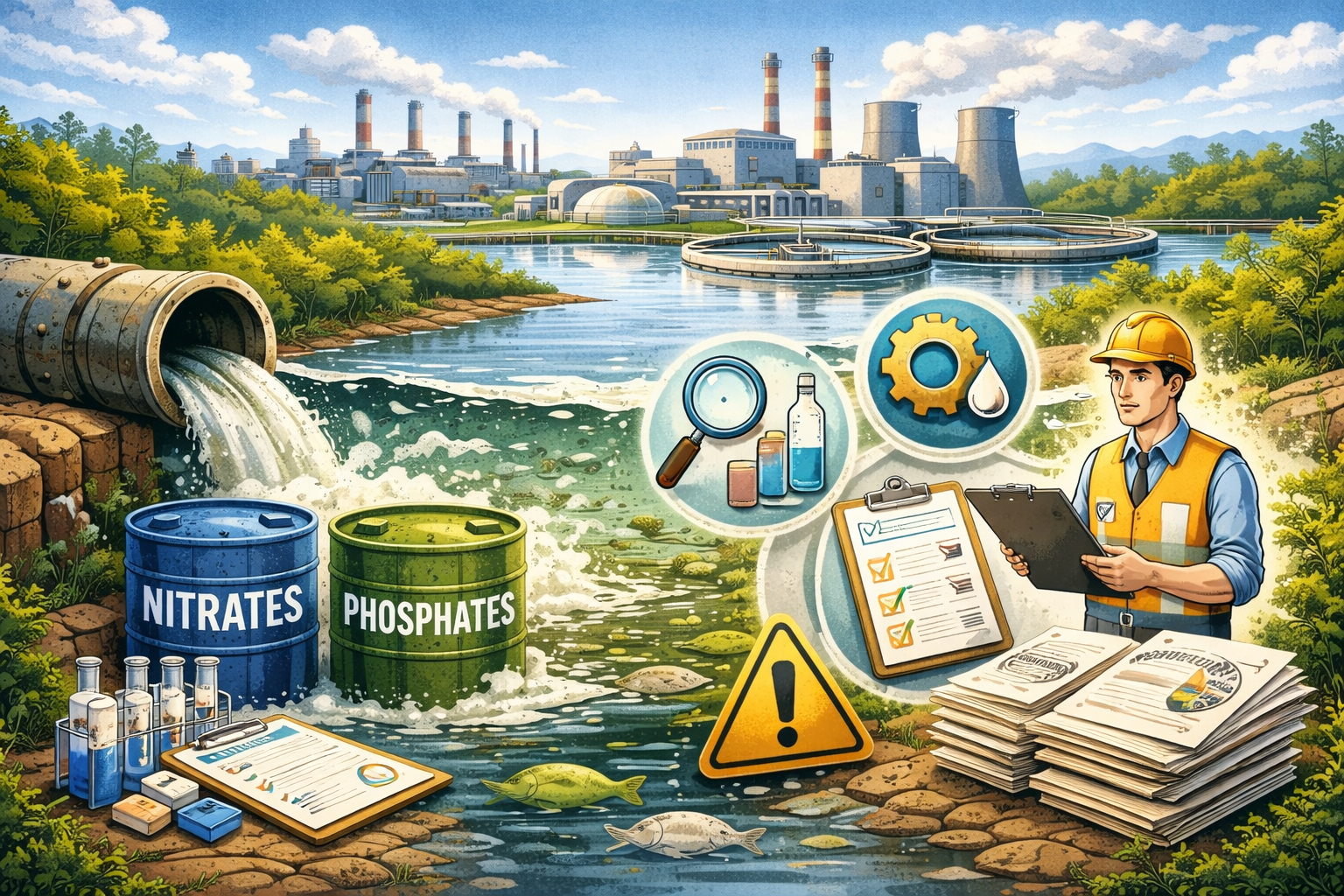
Nitrates (NO₃⁻) and phosphates (PO₄³⁻) are essential nutrients in agriculture and manufacturing processes. However, when discharged in excess into surface waters, they contribute to severe ecological disruption. Industrial wastewater compliance programs are increasingly focusing on controlling these nutrients due to their role in eutrophication, contamination of drinking water, and ecosystem degradation.
Globally, environmental agencies are tightening effluent concentration limits through updated water quality standards, Total Maximum Daily Load (TMDL) allocations, and more stringent nutrient discharge permits. Facilities must now integrate nutrient monitoring, pretreatment standards, and advanced effluent nutrient removal systems into their environmental management strategies.
This article provides a comprehensive overview of industrial wastewater discharge limits for nutrients, outlines regulatory frameworks across major jurisdictions, and explains the responsibilities industries must meet to ensure sustainable and legally compliant operations.
Why Nitrates and Phosphates Are Regulated in Wastewater
Environmental Impact of Excess Nutrients
The primary driver behind nutrient pollution regulations is environmental protection. Excess nitrates and phosphates stimulate excessive plant and algal growth - a process known as eutrophication. When algal blooms die and decompose, they consume dissolved oxygen in water bodies, leading to hypoxic conditions often referred to as “dead zones.”
These oxygen-depleted areas devastate aquatic ecosystems. Fish kills, biodiversity loss, and habitat degradation are common outcomes. Large water bodies, such as the Gulf of Mexico and various European coastal zones, have experienced recurring hypoxic events linked to upstream nutrient discharges.
Beyond surface waters, nutrient runoff and discharge can contaminate groundwater systems, complicating drinking water treatment and increasing public health risks.
Public Health and Economic Consequences
High nitrate concentrations in groundwater pose significant health concerns, particularly for infants. Elevated nitrate levels in drinking water are associated with methemoglobinemia (“blue baby syndrome”) and other health risks.
Economically, nutrient pollution affects fisheries, aquaculture, and tourism. Algal blooms can render water bodies unsafe for recreation, damage local economies, and require costly remediation efforts. Industries located near sensitive watersheds often face heightened scrutiny due to these downstream impacts.
Legal and Regulatory Drivers
In the United States, the Clean Water Act provides the legal foundation for regulating industrial effluent limits. Under this framework, discharge permits set enforceable nutrient concentration limits.
In Europe, the Water Framework Directive establishes basin-wide water quality objectives, requiring member states to prevent deterioration and achieve “good ecological status.”
Regional authorities also implement discharge compliance audits, water quality criteria, and watershed-specific restrictions, especially in nutrient-sensitive areas. These regulations form the backbone of modern industrial wastewater compliance systems.
What Are the Legal Limits for Nitrates and Phosphates?
Federal Standards (EPA & NPDES)
In the U.S., industrial discharges are regulated through the National Pollutant Discharge Elimination System (NPDES), administered by the United States Environmental Protection Agency. The EPA establishes water quality standards and numeric nutrient criteria, which states incorporate into discharge permits.
Permits may specify:
- Nitrate (NO₃⁻) concentration limits
- Total Nitrogen (TN) limits
- Total Phosphorus (TP) limits
- Mass-based discharge caps (kg/day)
Total Nitrogen (TN) includes nitrate, nitrite, ammonia, and organic nitrogen. Facilities must carefully distinguish between nitrate-specific limits and aggregate TN requirements.
EPA nitrate limits for drinking water (10 mg/L as nitrogen) influence downstream regulatory approaches, particularly where groundwater protection is a concern.
State-Level Variations
State agencies may impose stricter effluent limits based on local water quality criteria. In TMDL-designated watersheds, regulators allocate pollutant loads among industrial and municipal dischargers.
For example, facilities located near nutrient-impaired lakes may face significantly lower phosphate effluent standards than those discharging into high-flow rivers. Sensitive estuaries and drinking water reservoirs often trigger enhanced restrictions.
International Effluent Standards
Across the European Union, discharge standards vary by member state but are guided by the Water Framework Directive and Urban Wastewater Treatment Directive requirements.
In Canada, provinces establish nutrient discharge limits under federal environmental protection frameworks, often applying site-specific effluent concentration limits.
Asia-Pacific countries (including Japan, South Korea, Australia) have progressively strengthened nutrient pollution regulations, especially in coastal and industrialized regions.
Which Industries Are Most Affected?
High-Nutrient Industrial Sectors
Several industrial sectors generate wastewater with elevated nutrient concentrations:
- Food and beverage processing
- Fertilizer manufacturing
- Agricultural processing
- Dairy and meat processing
- Pulp and paper production
Facilities using nitrogen- or phosphorus-based raw materials face higher compliance risks. Nutrient mass loading is often substantial in these industries, requiring advanced effluent nutrient removal technologies.
Municipal-Industrial Shared Systems
Industries discharging to municipal treatment plants must comply with pretreatment standards. These indirect discharge limits ensure that publicly owned treatment works (POTWs) can meet their own discharge permits.
Pretreatment requirements may include:
- Nutrient concentration caps
- Flow equalization
- Monitoring and reporting obligations
Failure to meet pretreatment standards can result in industrial discharge permit revocation.
Industrial Responsibilities for Nutrient Compliance
Monitoring and Testing Requirements
Facilities must implement robust wastewater nutrient monitoring programs. Requirements often include:
- Routine grab or composite sampling
- Laboratory analysis using approved methods
- Continuous online nutrient analyzers (for high-risk operations)
- Reporting through discharge monitoring reports (DMRs)
Sampling frequency may range from weekly to daily, depending on permit conditions.
Wastewater Treatment Upgrades
Industrial wastewater treatment strategies for nutrient removal include:
Biological Nutrient Removal
(BNR):
Utilizes specialized microbial communities to convert nitrate to nitrogen gas (denitrification) and biologically remove phosphorus.
Chemical Precipitation: Addition of alum or ferric salts to bind phosphorus into removable solids.
Membrane Filtration: Advanced membrane systems provide high-efficiency removal of dissolved nutrients.
Facilities must evaluate treatment upgrades based on influent load, effluent concentration limits, capital cost, and long-term compliance risk.
Reporting and Documentation
Compliance extends beyond treatment performance. Facilities must:
- Submit discharge monitoring reports (DMRs)
- Maintain detailed operational records
- Conduct internal discharge compliance audits
- Prepare environmental impact assessments when required
Accurate documentation is essential during regulatory inspections and third-party ESG audits.
Technologies for Removing Nitrates and Phosphates
Biological Treatment Methods
Denitrification:
Anoxic biological processes convert nitrate into nitrogen gas, reducing total nitrogen concentrations.
Enhanced Biological Phosphorus Removal (EBPR):
Specialized bacteria accumulate phosphorus, enabling its removal through sludge wasting.
These methods are cost-effective for large-scale operations but require precise process control.
Chemical Treatment Solutions
Alum and Ferric Chloride:
Commonly used coagulants for phosphate precipitation.
Ion Exchange Systems:
Effective for nitrate removal in targeted applications, particularly polishing stages.
Chemical systems provide reliable performance but generate sludge requiring disposal.
Advanced Technologies
Reverse Osmosis (RO):
High removal efficiency for dissolved nutrients; energy-intensive.
Electrocoagulation:
Emerging technology for nutrient precipitation.
Constructed Wetlands:
Natural systems suitable for polishing effluent in space-available settings.
Selection depends on discharge compliance goals, footprint constraints, and lifecycle cost considerations.
Penalties for Non-Compliance
Failure to meet industrial wastewater discharge limits can result in severe consequences:
- EPA penalties and wastewater violation fines
- Administrative orders
- Consent decrees
- Production shutdown mandates
Financial penalties may reach tens of thousands of dollars per day per violation in the United States. Beyond direct fines, industrial compliance risks include reputational damage, investor scrutiny, and ESG score reductions.
Repeated violations can trigger intensified monitoring requirements and capital upgrade mandates.
Best Practices for Staying Compliant
Proactive wastewater compliance for industries requires strategic planning:
- Conduct regular wastewater audits
- Evaluate pretreatment system efficiency
- Implement nutrient management plans
- Partner with environmental consultants
- Invest in automated monitoring systems
- Track regulatory updates in relevant jurisdictions
A preventive compliance strategy reduces long-term capital costs and regulatory exposure.
Future Trends in Nutrient Regulation
Regulatory trends indicate tightening standards for Total Nitrogen (TN) and Total Phosphorus (TP). Climate change is amplifying watershed vulnerability, prompting stricter surface water protection policies.
Zero Liquid Discharge (ZLD) systems are gaining traction in water-scarce regions. Additionally, ESG reporting frameworks increasingly require transparent wastewater nutrient monitoring data.
Facilities that adopt forward-looking treatment technologies and digital compliance systems will be better positioned to meet evolving nutrient pollution regulations.
FAQ
What is the allowable limit of nitrates in industrial wastewater?
Allowable limits vary by jurisdiction and permit, typically ranging from 5–20 mg/L for nitrate (as nitrogen). Sensitive watersheds may impose lower thresholds.
How do industries reduce phosphate levels in effluent?
Industries commonly use chemical precipitation (alum or ferric salts), enhanced biological phosphorus removal, or membrane filtration systems.
What happens if a facility exceeds nutrient discharge limits?
Exceedances may trigger fines, corrective action plans, increased monitoring, and potential production restrictions.
Are nitrate and total nitrogen limits the same?
No. Total Nitrogen (TN) includes nitrate, nitrite, ammonia, and organic nitrogen. Nitrate limits apply specifically to NO₃⁻.
Which industries face the strictest wastewater nutrient regulations?
Food processing, fertilizer manufacturing, dairy operations, and facilities located in nutrient-sensitive watersheds typically face the strictest standards.
Conclusion
Wastewater limits for nitrates and phosphates represent a critical compliance frontier for modern industry. As nutrient pollution regulations intensify globally, facility managers and environmental professionals must integrate monitoring, treatment optimization, and regulatory awareness into their operational frameworks.
Proactive compliance is no longer simply about avoiding penalties, it is about safeguarding water resources, maintaining operational resilience, and demonstrating environmental responsibility in an increasingly sustainability-driven marketplace.