Heavy Metals in Food-Grade Chemicals: How Limits Are Defined and Controlled
Heavy Metals in Food-Grade Chemicals refer to trace amounts of metallic elements, such as lead, arsenic, cadmium and mercury, that may be present as impurities in additives, processing aids, or raw chemical inputs used in food production. In the context of food safety standards, heavy metals are classified as toxic elements in food when they exceed scientifically defined safety thresholds.
Food-grade chemicals are expected to meet stringent purity criteria. However, even high-quality materials can contain
trace contaminants due to natural geological presence, industrial processing, or environmental exposure. These impurities form part of a product’s impurity profile and must remain below established maximum contaminant levels.
Regulatory oversight is essential because heavy metal toxicity is cumulative and may pose long-term public health risks. Authorities establish limits based on toxicological studies, dietary exposure assessments, and calculations of acceptable daily intake (ADI). These limits are enforced through testing, documentation and regulatory audits.
This article explains how heavy metals enter food-grade materials, how permissible limits are defined, and how manufacturers ensure compliance through analytical testing methods and preventive controls. For QA/QC managers and regulatory professionals, understanding this framework is critical for maintaining chemical purity standards and protecting public health.
What Are Heavy Metals and Why Are They a Concern?
Heavy metals are metallic elements with relatively high atomic weight and density that can be toxic even at low concentrations. In food manufacturing safety, the term usually refers to elements with recognized toxicity and regulatory limits.
Because they can bioaccumulate and persist in biological systems, heavy metals are subject to strict maximum residue limits and permissible exposure levels in food-grade additives.
Common Heavy Metals Found in Food-Grade Chemicals
Lead (Pb) – Historically used in industrial applications, lead can appear as a trace impurity in mineral-derived raw materials. It is strictly regulated due to its neurotoxic properties.
Arsenic (As) – Often naturally present in soil and water, arsenic contamination risk is particularly relevant for phosphate-based and mineral additives.
Cadmium (Cd) – Commonly associated with zinc ores and phosphate rock, cadmium may enter food-grade chemicals during raw material extraction.
Mercury (Hg) – Though less common in modern manufacturing, mercury remains tightly controlled due to its high toxicity and bioaccumulative nature.
Chromium (Cr) – While trivalent chromium is less harmful, hexavalent chromium is highly toxic, requiring strict impurity limits.
These toxic heavy metals are monitored individually, as total heavy metal screening alone may not provide sufficient insight into risk.
Health Risks Associated with Heavy Metal Exposure
Heavy metal toxicity poses serious health risks, particularly with long-term chronic exposure. These elements can accumulate in tissues (a process known as bioaccumulation) increasing contamination risk over time.
Potential health effects include:
- Neurotoxicity, particularly in children (lead and mercury)
- Kidney and liver damage from chronic cadmium exposure
- Developmental risks affecting cognitive and physical growth
- Increased risk of cancer with prolonged arsenic exposure
Because of these risks, food safety regulations establish strict impurity limits to protect consumers. Even trace element contamination must remain below defined thresholds to ensure safe dietary intake across diverse populations.
Sources of Heavy Metal Contamination in Food-Grade Chemicals
Understanding contamination sources helps manufacturers design effective contamination control strategies.
Raw Material Contamination (Natural Occurrence)
Heavy metals often occur naturally in mineral deposits. Phosphate rock, salt deposits, and other mined materials may contain geological traces of lead, cadmium, or arsenic. Agricultural inputs used in certain food-grade additives can also introduce trace elements from soil.
Even when refined, these materials may retain residual impurities, requiring rigorous screening.
Manufacturing and Processing Equipment
Industrial contamination can occur through metal leaching from processing lines. Corrosion in storage tanks, pipelines, or reactors may introduce trace metals into otherwise compliant materials. Stainless steel equipment, if poorly maintained, can contribute chromium or nickel impurities.
Regular inspection and preventive maintenance are therefore critical elements of GMP compliance.
Packaging and Storage Factors
Packaging materials can interact with chemicals, especially under heat or humidity stress. Metal drums, valves, or container linings may introduce trace element contamination if unsuitable materials are used.
Environmental contamination within the supply chain (dust, airborne particles, or cross-contamination between batches) also contributes to impurity variability. Proper storage protocols reduce these risks.
How Regulatory Authorities Define Acceptable Limits
Regulatory limits for heavy metals in food-grade additives are science-based and risk-driven.
Risk Assessment Framework
Authorities rely on structured risk assessment models:
Hazard Identification – Determining whether a heavy metal can cause adverse health effects.
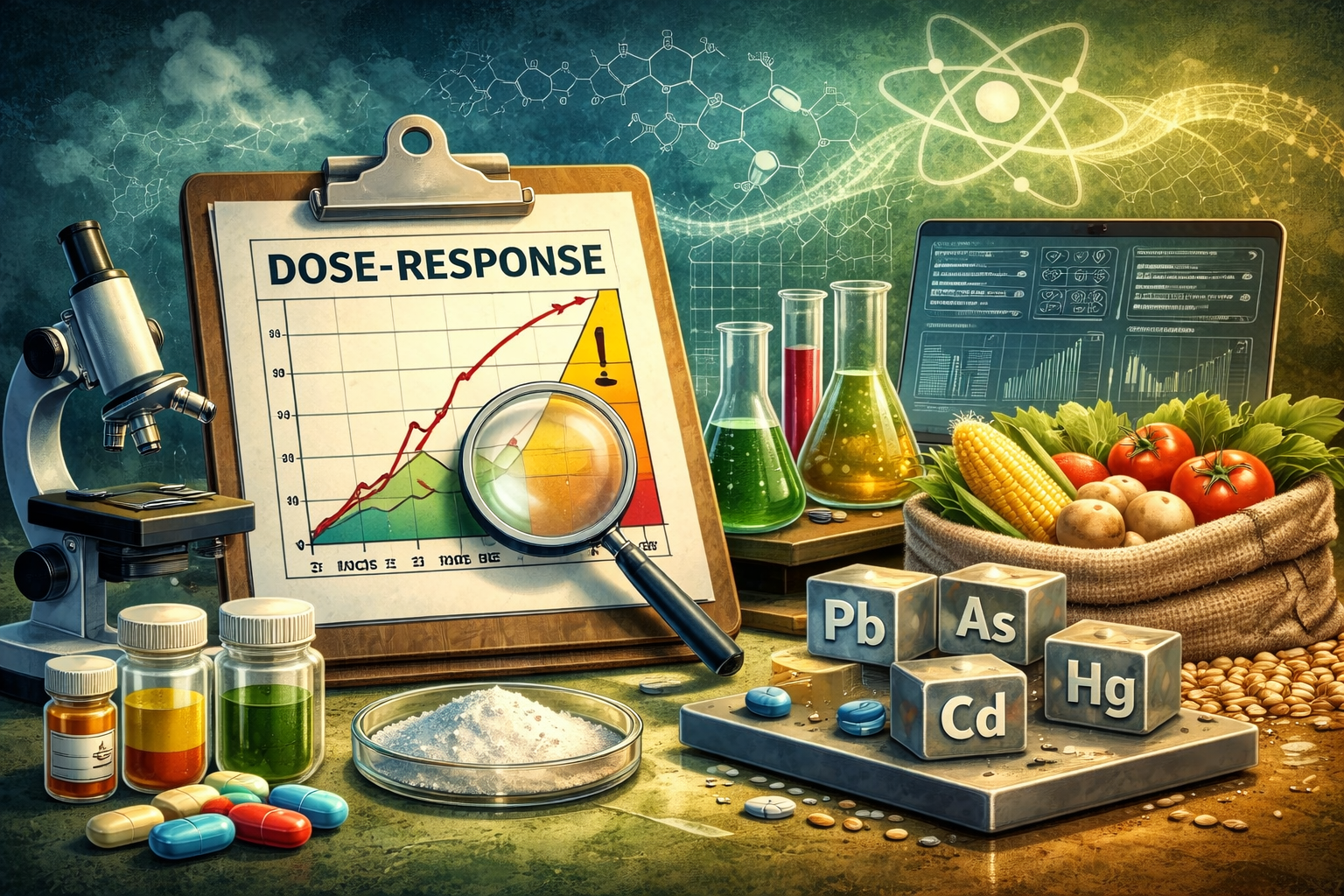
Dose-Response Assessment – Establishing the relationship between exposure level and toxicity.
Exposure Assessment – Estimating how much of the contaminant consumers ingest through diet.
Risk Characterization – Integrating hazard and exposure data to determine acceptable daily intake (ADI).
This systematic process ensures that regulatory limits protect even sensitive populations.
Global Regulatory Bodies and Standards
Several authorities define and harmonize food safety regulations:
The U.S.
Food and Drug Administration (FDA) establishes heavy metal limits for food additives and ingredients in the United States.
The European Food Safety Authority (EFSA) provides scientific opinions and risk assessments guiding EU impurity limits.
The World Health Organization (WHO) and the Food and Agriculture Organization (FAO) jointly develop the Codex Alimentarius, setting internationally recognized Codex standards.
The Food Safety and Standards Authority of India (FSSAI) regulates impurity levels within India’s food system.
These bodies base regulatory limits on toxicological research and global dietary patterns.
Maximum Allowable Limits and Specifications
Limits are typically expressed in parts per million (ppm) or parts per billion (ppb). Some specifications define total heavy metals, while modern standards increasingly require individual metal limits. This shift reflects improved analytical sensitivity and a more targeted risk assessment approach.
Testing and Detection Methods for Heavy Metals
Reliable detection is central to regulatory compliance.
Common Analytical Techniques
ICP-MS (Inductively Coupled Plasma Mass Spectrometry) is considered the gold standard for ICP-MS analysis. It offers extremely low detection limits (ppb or lower), enabling accurate trace element analysis across multiple metals simultaneously.
Atomic Absorption Spectroscopy (AAS) remains widely used for single-element analysis. Though less sensitive than ICP-MS, it is cost-effective for routine testing.
ICP-OES (Inductively Coupled Plasma Optical Emission Spectroscopy) provides multi-element capability with moderate sensitivity, often used in quality control laboratories.
X-Ray Fluorescence (XRF) is commonly applied for rapid screening. While not as precise as ICP-MS, it supports preliminary impurity profiling.
Each method must undergo analytical validation to confirm detection limits, accuracy, and reproducibility.
Sampling Protocols and Laboratory Accreditation
Accurate results depend on representative sampling and proper laboratory standards. Accredited laboratories operating under ISO/IEC 17025 ensure technical competence and traceability.
Good Laboratory Practices (GLP) and third-party testing enhance credibility. For global suppliers, independent laboratory verification reduces regulatory inspection risk and strengthens customer confidence.
Industry Controls and Preventive Measures
Preventing contamination is more effective than correcting it.
Supplier Qualification and Raw Material Screening
Supplier verification programs include vendor audits, raw material risk assessments, and Certificate of Analysis (COA) review. High-risk raw materials may require additional incoming testing before release.
Good Manufacturing Practices (GMP)
GMP compliance requires equipment maintenance, corrosion monitoring, validated cleaning procedures, and contamination prevention systems. Proper material handling minimizes cross-contamination risks.
HACCP and Preventive Controls
A structured HACCP plan identifies critical control points where heavy metal contamination could occur. Monitoring and verification activities ensure impurity limits remain within specification. Preventive controls reduce product recall risk and maintain food manufacturing safety.
Documentation and Compliance Requirements
Documentation supports regulatory compliance and audit readiness.
Certificates of Analysis (COA)
A COA should clearly state heavy metal specification reporting for each regulated element. Batch traceability ensures that any deviation can be investigated quickly. Clear impurity limits improve transparency within the supply chain.
Regulatory Audits and Inspections
Regulatory inspections, such as FDA inspections, or third-party food safety audits, assess documentation, testing frequency, and preventive controls. Non-compliance may result in warning letters, import restrictions, or product recall risk. Robust compliance documentation protects both manufacturers and suppliers.
Emerging Trends and Stricter Regulations
Advances in analytical testing methods are lowering detection thresholds, enabling regulators to establish stricter safety standards. ICP-MS analysis now detects contaminants at ultra-trace levels, supporting evolving regulations.
Consumers increasingly demand transparency and clean-label products. As a result, manufacturers must demonstrate proactive contamination control and sustainable sourcing practices.
Global harmonization of standards through Codex and regional authorities reduces trade barriers but also raises expectations. Stricter safety standards reflect ongoing commitment to public health protection and continuous food safety innovation.
FAQs – Heavy Metals in Food-Grade Chemicals
What are acceptable levels of heavy metals in food-grade chemicals?
Acceptable levels depend on the specific metal, product category, and jurisdiction. Limits are typically defined in ppm or ppb and based on acceptable daily intake (ADI). Regulatory bodies such as FDA, EFSA, and Codex establish maximum contaminant levels to ensure consumer safety.
How often should heavy metals be tested?
Testing frequency depends on risk assessment, supplier reliability, and regulatory requirements. High-risk raw materials may require batch-by-batch testing, while lower-risk inputs may follow periodic verification under a validated supplier verification program.
Are natural food additives exempt from heavy metal limits?
No. Natural origin does not exempt a product from impurity limits. Mineral-based or plant-derived additives must comply with the same food safety regulations and maximum residue limits as synthetic counterparts.
What happens if a batch exceeds permissible limits?
If a batch exceeds regulatory limits, it must be rejected, reprocessed (if permitted), or disposed of according to compliance procedures. Root cause analysis and corrective actions are required to prevent recurrence and minimize product recall risk.
How can manufacturers minimize contamination risk?
Manufacturers can reduce risk through supplier audits, GMP compliance, validated analytical testing methods, corrosion-resistant equipment, and HACCP monitoring. Preventive controls are essential to maintaining chemical purity standards.
Are heavy metal limits the same worldwide?
No. While Codex standards promote harmonization, national authorities may set different permissible limits. Companies exporting internationally must comply with the strictest applicable regulatory requirements.
Conclusion: Ensuring Safety Through Science and Compliance
Heavy Metals in Food-Grade Chemicals are tightly regulated to protect public health. Through risk assessment frameworks, defined acceptable daily intake values, and enforceable impurity limits, authorities establish science-based regulatory limits.
For manufacturers and suppliers, proactive quality assurance, validated ICP-MS analysis, GMP compliance, and comprehensive documentation are essential components of regulatory compliance. As detection technologies advance and evolving regulations become stricter, continuous improvement remains vital.
Ultimately, protecting food safety integrity depends on collaboration across the supply chain - ensuring that every food-grade additive meets the highest standards of purity, safety and transparency.