Circular Chemistry: How By-Products from Phosphate Production Are Being Reused
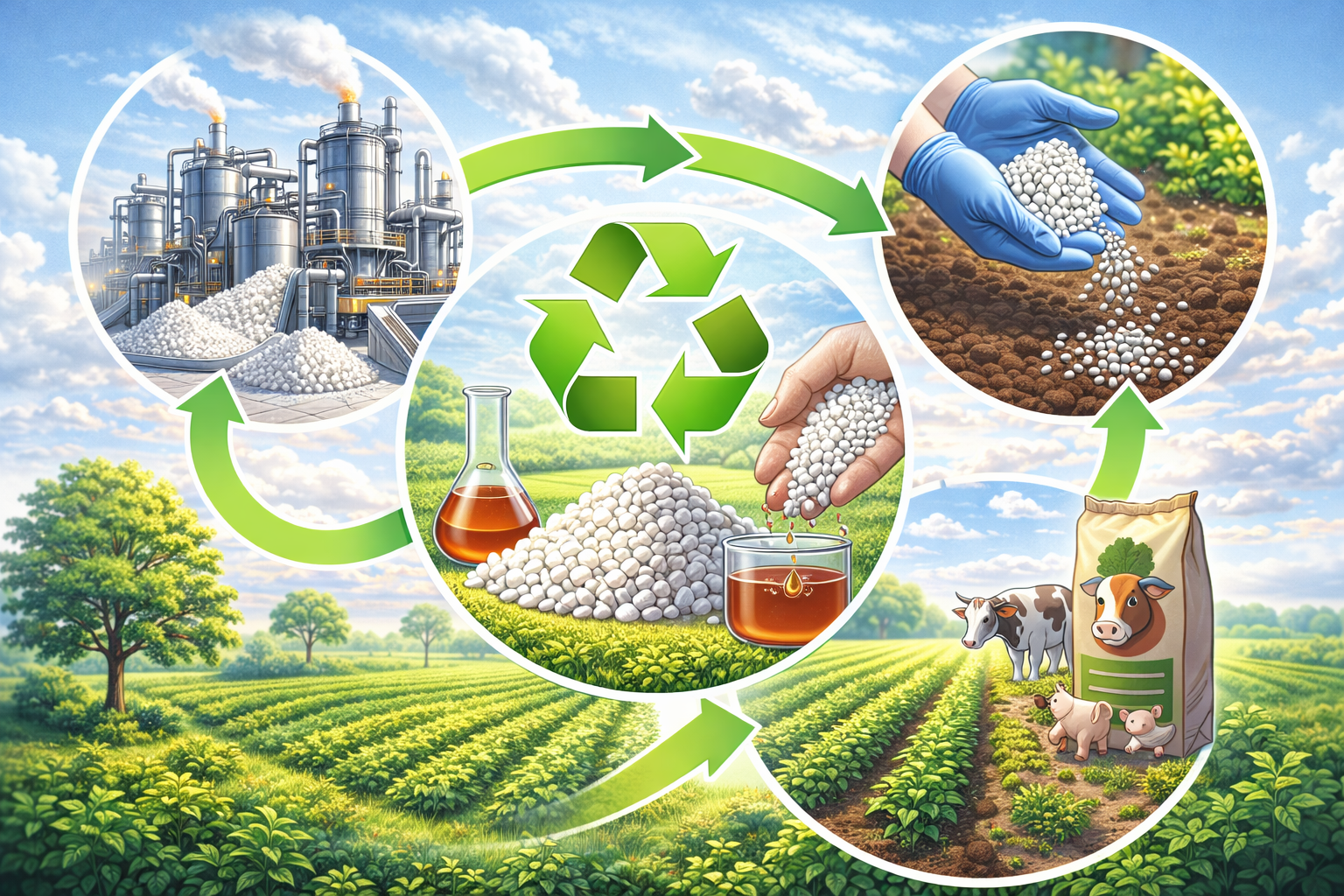
Circular chemistry refers to the design and optimization of chemical processes to minimize waste, maximize resource efficiency, and keep materials circulating within the production ecosystem for as long as possible. Instead of the traditional linear model - extract, produce, dispose - circular chemistry promotes a regenerative system where by-products are not an endpoint but a starting point for new applications. This concept is becoming increasingly significant as modern industries face mounting pressure to reduce emissions, conserve natural resources, and operate more sustainably.
The phosphate industry, essential to agriculture, food production, and countless industrial applications, has long been associated with a sizable environmental footprint. Mining operations disrupt ecosystems, processing consumes energy, and production often generates substantial quantities of by-products. Historically, many of these secondary materials were treated as waste, resulting in economic losses and environmental challenges.
Today, however, the industry is undergoing a transformative shift. Advances in technology, combined with growing sustainability demands, are unlocking new possibilities for repurposing these by-products. By turning “waste into value,” phosphate producers can lower environmental impact, recover useful materials, and create new revenue streams - illustrating how circular chemistry is reshaping the future of mineral-based industries.
Understanding the Phosphate Production Process
How Phosphates Are Manufactured
Phosphate production begins with the extraction of phosphate ore from naturally occurring deposits, typically through open-pit mining. Once extracted, the ore undergoes beneficiation - a series of processes such as crushing, washing, and flotation designed to concentrate the phosphate minerals and remove impurities. This upgraded material is then ready for chemical conversion.
The most common route involves reacting the concentrated phosphate rock with sulfuric acid, producing phosphoric acid, the core ingredient for fertilizers, feed additives and numerous industrial applications. This reaction also generates several by-products that historically posed disposal and storage challenges but are now increasingly seen as valuable secondary resources.
Main By-Products Generated
The phosphoric acid production process yields multiple by-products with diverse potential uses. Phosphogypsum, a calcium sulfate-rich material, is produced in large volumes and has applications ranging from construction to soil conditioning. Fluorosilicic acid, captured from process gases, can serve as a precursor in chemical manufacturing. Waste heat generated during reactions can be recovered for energy, reducing overall fuel consumption. Additionally, wastewater residues contain nutrients and minerals that can be treated and repurposed rather than discharged.
Environmental Challenges Associated With By-Products
Despite their potential value, these by-products also present environmental concerns. Large-scale storage of phosphogypsum stacks can lead to long-term land use and stability issues. Improper handling may contribute to soil and water contamination, particularly through leaching of trace elements. Process gases and volatilized compounds raise emissions concerns, requiring careful monitoring and mitigation. These challenges underscore the importance of circular strategies to transform by-products into sustainable resources rather than environmental burdens.
Key By-Products of Phosphate Production and Their Reuse Applications
Phosphogypsum Reuse Innovations
Phosphogypsum (PG), a calcium sulfate by-product formed during the reaction of phosphate rock with sulfuric acid, has historically been stored in large stacks due to concerns about impurities and trace radioactivity. However, modern research and improved regulatory frameworks are opening new avenues for safer, beneficial reuse. In road construction, PG can serve as a stabilizing agent and a cost-effective alternative to natural gypsum. In the cement and broader building materials sector, it enhances setting properties and helps reduce reliance on mined gypsum. Agricultural applications are also emerging, with PG functioning as a soil conditioner that improves structure, reduces sodium levels, and enhances water infiltration. While radiation safety remains an important consideration, controlled use under monitored conditions has proven both feasible and environmentally responsible.
Fluorosilicic Acid (FSA) Recovery and Uses
Fluorosilicic acid is produced when fluoride compounds released during acidulation are captured in scrubbers. Instead of being treated as waste, FSA is now an important commercial product. Its most recognized application is in drinking water fluoridation, where it helps prevent tooth decay. It is also a key precursor for producing aluminum fluoride, essential in the aluminum smelting industry. Beyond these uses, FSA serves as a feedstock in various industrial chemical processes, demonstrating how an emission-control by-product can become a valuable asset.
Recovering Rare Earth Elements (REEs)
Phosphate ores naturally contain small concentrations of rare earth elements, which can be recovered from phosphogypsum, phosphoric acid, or other process streams. Emerging extraction methods—such as solvent extraction, ion-exchange resins, and membrane technologies - are making this recovery increasingly viable. Given their high market value, driven by demand in electronics, renewable energy technologies, and advanced manufacturing, REEs represent one of the most strategic opportunities in circular chemistry for phosphate producers.
Waste Heat Recovery in Phosphate Plants
Phosphate production releases significant thermal energy, particularly during sulfuric acid manufacture. Waste heat recovery systems, including cogeneration units and steam networks, capture this energy and convert it into electricity or usable process heat. This not only improves overall plant efficiency but also reduces fuel consumption and emissions, turning what was once lost heat into a meaningful operational advantage.
Wastewater Reuse and Resource Recovery
Phosphate processing generates wastewater containing nutrients, solids, and trace chemicals. Modern treatment methods, such as advanced filtration, precipitation, and biological systems, allow plants to recover clean water for reuse in production. In many cases, valuable nutrients or minerals can also be extracted, reducing discharge volumes and transforming wastewater from a liability into a resource within the circular production cycle.
Benefits of Reusing Phosphate Production By-Products
Environmental Advantages
Reusing by-products from phosphate production delivers meaningful environmental benefits across the entire value chain. First, it significantly reduces landfill pressure by diverting materials such as phosphogypsum, wastewater residues, and industrial acids away from long-term storage sites. This minimizes land disturbance and helps limit the environmental liabilities associated with large waste stacks. Additionally, repurposing by-products leads to lower overall emissions. When materials are recovered and reintroduced into industrial processes, the demand for additional mining, transportation, and raw material processing decreases - activities that typically generate substantial greenhouse gases. Finally, by closing resource loops, companies promote broader resource conservation. Each ton of by-product reused represents a reduction in virgin resource extraction, helping preserve natural deposits and supporting more sustainable industrial practices.
Economic and Industrial Advantages
Beyond environmental gains, reuse strategies offer clear economic benefits for producers and downstream industries alike. By converting what was once treated as waste into usable inputs, companies can lower their production costs and reduce expenses related to waste management, handling, and storage. Many by-products also create entirely new revenue streams, such as the sale of fluorosilicic acid for fluoridation or the recovery of rare earth elements for high-tech applications. Furthermore, improving energy efficiency, particularly through waste heat recovery systems, reduces operational energy consumption and enhances overall plant performance. Collectively, these advantages strengthen industrial competitiveness while supporting a more resilient, circular production model.
Global Case Studies in Circular Chemistry
for Phosphate Production
Morocco (OCP Group) – Circular Industrial Ecosystems
Morocco’s OCP Group is widely recognized as a global leader in implementing circular chemistry principles within phosphate production. One of their most advanced practices is large-scale water recycling. Operating in an arid region, OCP has invested heavily in closed-loop water circuits, desalination plants, and wastewater reuse systems that significantly reduce freshwater withdrawals. Many of its mining and processing sites now operate on reclaimed or desalinated water streams, supporting both environmental stewardship and long-term production stability.
OCP is also exploring circular value creation through rare earth element (REE) extraction from phosphate ores and tailings. These REE recovery projects aim to turn previously lost material into strategic by-products for high-tech industries. By integrating energy management, water reuse, and by-product valorization, OCP is building a model of a circular industrial ecosystem scaled across an entire national phosphate industry.
United States & European Union
Across the U.S. and EU, research and regulatory progress is pushing phosphogypsum, once considered only a waste stream, toward potential reuse pathways. Academic and industrial studies are exploring its suitability in cement, road bases, and controlled agricultural applications. While both regions maintain strict safety standards, recent regulatory reviews and pilot programs reflect a growing openness to reevaluating phosphogypsum’s circular potential. This shift is laying the groundwork for future industrial symbiosis, where phosphate by-products can reenter productive value chains rather than remain in long-term stockpiles.
India & China
India and China are advancing practical circularity by commercializing waste-to-fertilizer innovations. Several plants now recover nutrients from effluents, sludge, and low-grade ores and convert them into blended or specialty fertilizers. In parallel, both countries have implemented waste heat recovery systems in phosphoric acid and fertilizer production, capturing thermal energy from kilns and acid plants to power internal operations. These strategies demonstrate how emerging economies can scale cost-effective circular chemistry to meet growing agricultural demand while reducing energy and resource intensity.
Challenges and Limitations in By-Product Reuse
Regulatory Restrictions
Efforts to integrate circular chemistry into phosphate production often face significant regulatory hurdles, especially concerning phosphogypsum. In many regions, this by-product is classified as a controlled waste due to its potential radioactivity and impurity content. Strict storage requirements, transport rules, and land-application limits can slow or even prevent large-scale reuse initiatives. As policymakers weigh environmental risks against circular economy benefits, companies must navigate a patchwork of evolving regulations, making investment decisions more complex and uncertain.
Technological Barriers
Even when regulations allow reuse, technological obstacles can limit feasibility. Advanced extraction processes, such as recovering rare earth elements or purifying gypsum for construction use, require substantial capital investment and specialized equipment. For many producers, the cost of upgrading existing plants outweighs the economic gain from by-product valorization. Purity and contamination remain persistent challenges as well: trace heavy metals, organics, or residual acids can complicate downstream applications and demand additional treatment steps. These technical constraints often delay commercialization or restrict reuse opportunities to niche markets.
Market Acceptance & Quality Concerns
Beyond technology and regulation, industry perception plays a defining role. Products derived from phosphate by-streams must meet stringent certification standards to enter the fertilizer, construction, or chemical markets. Achieving consistent quality can be difficult, particularly for materials sourced from variable waste streams. As a result, downstream users may hesitate to adopt secondary products, preferring established, virgin alternatives. Building trust requires transparent quality control, long-term performance data, and collaboration across the supply chain to demonstrate reliability and safety.
Future Trends in Circular Chemistry for Phosphate Production
Improved Mineral Recovery Technologies
The next wave of circular chemistry in phosphate production will be driven by high-efficiency mineral recovery methods. Emerging processes, such as selective leaching, advanced solvent extraction, and membrane-based separations, are making it possible to recover valuable nutrients and critical minerals from low-grade ores, tailings, and legacy waste stacks. These technologies not only increase overall resource efficiency but also help reduce the environmental footprint of mining operations by transforming what was once considered waste into marketable products.
AI-Driven Waste Stream Monitoring
Artificial intelligence and real-time analytics are poised to become core components of circular phosphate production. AI-enhanced monitoring systems can track waste streams, detect contaminants, and optimize chemical use with far greater precision than manual sampling. Machine-learning models can predict process fluctuations, recommend adjustments, and prevent inefficiencies before they occur. This data-driven approach enables more accurate segregation of reusable by-products and supports safer, more consistent recovery operations.
Sustainable “Zero-Waste” Phosphate Plants
Looking ahead, many producers are moving toward integrated “zero-waste” plant designs. These facilities combine closed-loop water systems, heat recovery units, mineral recovery modules, and renewable energy inputs to minimize emissions and eliminate unmanaged waste outputs. In such models, every stream (solid, liquid or gaseous) is reused, purified, or converted into a saleable product. Although still emerging, zero-waste phosphate complexes represent the long-term vision for a fully circular, resource-efficient industry.
Conclusion
Circular chemistry is rapidly transforming phosphate production from a traditionally resource-intensive industry into a model for sustainable industrial practice. By rethinking waste as a source of value and closing material loops across mining, processing, and downstream applications, producers can significantly reduce environmental impacts while strengthening long-term resource security.
As global demand for fertilizers and critical minerals continues to rise, integrating circular approaches is no longer optional - it is essential. The innovations emerging today, from advanced recovery technologies to AI-enabled monitoring and zero-waste plant designs, illustrate how industry can align profitability with responsibility. By embracing circular chemistry, the phosphate sector can contribute meaningfully to global environmental goals, support climate and resource-efficiency targets, and play a pivotal role in building a more resilient, sustainable industrial future.
FAQs
What are the major by-products of phosphate production?
The main by-products include phosphogypsum, a calcium sulfate-rich material; fluorosilicic acid (FSA); wastewater and sludge; and occasionally trace amounts of rare earth elements (REEs). These materials can be reused in construction, water treatment, fertilizer production, and high-tech applications when properly managed.
Is phosphogypsum safe for construction use?
Phosphogypsum contains trace radioactivity and residual impurities, so its reuse is heavily regulated. When treated and monitored according to safety standards, it can be safely incorporated into cement, road base, and soil amendment applications. Compliance with local regulations is essential to ensure safe usage.
Why is circular chemistry important for fertilizer manufacturers?
Circular chemistry helps manufacturers minimize waste, recover valuable by-products, reduce environmental impact, and lower production costs. By reusing materials that were previously discarded, companies can improve resource efficiency and contribute to sustainable industrial practices.
Can phosphate production become zero-waste?
Yes, with integrated approaches combining advanced mineral recovery, waste heat reuse, water recycling, and innovative processing technologies, phosphate plants can move toward zero-waste operations. Full implementation is still emerging but represents the long-term industry vision.
Which countries are leading in phosphate by-product recycling?
Morocco, the United States, European Union countries, India, and China are at the forefront of phosphate by-product reuse. These regions implement a mix of technological innovations, regulatory frameworks, and commercial projects to maximize resource recovery and industrial circularity.