From Mine to Market: Tracing the Carbon Footprint of Phosphate Supply Chains
Phosphate is one of the most essential resources in global agriculture, forming the backbone of fertilizer formulations that sustain modern crop yields. From boosting root development to improving flowering and fruiting, phosphate-based fertilizers directly support global food security. Yet behind every bag of fertilizer lies a complex supply chain, one that begins deep in phosphate rock deposits and stretches across mining sites, processing plants, transport networks, and international markets.
As climate goals tighten worldwide, the mining and fertilizer industries face mounting pressure to reduce emissions across all stages of production. Energy-intensive extraction, chemical processing, and long-distance transport all contribute to phosphate’s carbon footprint, underscoring the importance of transparency and innovation. Understanding where emissions originate is the first step toward meaningful decarbonization.
This article traces phosphate’s journey from mine to market, exploring each stage of the supply chain and its associated environmental impacts. We will break down how phosphate rock is mined, processed into usable products, transported globally, and finally integrated into agricultural systems. Along the way, we’ll highlight where emissions occur, which technologies and practices can reduce them, and how producers and buyers alike can move toward a lower-carbon future.
What Are Phosphates? Global Demand, Uses & Market Dynamics
Phosphate’s Role in Fertilisers and Food Security
Phosphates are naturally occurring minerals containing phosphorus—an element essential for plant growth, root development, and energy transfer within crops. Because phosphorus cannot be synthesised or substituted, phosphate-based fertilisers remain indispensable for global agriculture. Roughly 80% of all mined phosphate rock is used to produce fertilisers such as MAP, DAP, and SSP, each critical for maintaining soil fertility and supporting rising food demands. As the world’s population grows and arable land becomes more limited, phosphates play an increasingly strategic role in ensuring stable, high-yield food production.
Major Phosphate-Producing Regions (Morocco, China, U.S., etc.)
Phosphate production is geographically concentrated, with a handful of countries dominating global supply. Morocco and Western Sahara hold over 70% of the world’s known phosphate rock reserves, making them central to long-term supply security. China remains a major producer and consumer, driven by its vast agricultural sector. The United States, along with Russia, Jordan, Saudi Arabia, and Tunisia, also contribute significantly to global output. This concentration means that political stability, trade policies, and local environmental regulations in these regions have far-reaching impacts on global markets.
Supply-Demand Trends Influencing Emissions
Rising global fertiliser demand, driven by population growth and intensifying agriculture, places pressure on mining operations and processing facilities. As lower-grade deposits are tapped, more energy is required for extraction and beneficiation, increasing the carbon intensity of production. Additionally, growing international trade of phosphates adds transport-related emissions. Market volatility, stricter environmental standards, and the push toward greener fertilisers are prompting producers to invest in cleaner technologies and efficiency upgrades. These dynamics shape not only supply and pricing but also the overall environmental footprint of phosphate products worldwide.
Mapping the Phosphate Supply Chain: From Extraction to End Product
Stage 1 – Mining and Ore Extraction
Phosphate’s journey begins at the mine, where phosphate rock is extracted from sedimentary or igneous deposits. Open-pit mining is the most common method and involves removing large quantities of overburden before accessing the ore beneath. This stage is highly energy-intensive, relying on heavy machinery such as draglines, excavators, and haul trucks, each contributing significantly to the carbon footprint. The quality of the ore also plays a major role: lower-grade deposits require more energy per ton of usable phosphate, increasing emissions over time.
Stage 2 – Beneficiation and Processing
Once mined, raw phosphate rock undergoes beneficiation to separate valuable phosphate minerals from impurities like clay and sand. Techniques such as flotation, washing, and screening improve the ore’s concentration but require substantial amounts of water and electricity. The rock is then chemically processed (often with sulfuric acid) to produce phosphoric acid, a key intermediate for fertilisers and industrial applications. This chemical conversion is one of the most carbon-intensive stages due to heat, pressure, and reagent consumption.
Stage 3 – Transportation (Local + Global Shipping)
Phosphate materials travel significant distances before reaching end users. Within the producing country, trucks, rail, and conveyors move ore from mines to processing plants and ports. International shipping then carries finished products, such as DAP, MAP, or purified phosphoric acid, to global markets. Each transport link adds emissions, particularly long-haul maritime routes connecting producers in North Africa, China, or the U.S. with major agricultural regions in India, Brazil, and Europe.
Stage 4 – Conversion Into Fertilisers or Industrial Products
Processed phosphoric acid and phosphate salts are transformed into a wide range of products. Fertilisers like DAP and MAP dominate, while purified acids serve food, feed, and technical industries. Production often requires additional heating, reaction steps, and drying, further contributing to the overall carbon footprint.
Stage 5 – Distribution to Agricultural Markets
Finally, fertilisers are transported from warehouses or ports to regional distributors, cooperatives, and farms. Last-mile delivery, storage requirements, and application practices all influence energy use. While this stage has a smaller footprint compared to mining and processing, it is essential for delivering phosphate-based nutrients to the fields that drive global food production.
Carbon Footprint Breakdown at Each Supply-Chain Stage
Emissions from Drilling, Blasting & Excavation
The extraction of phosphate rock is the first and often one of the most carbon-intensive steps in the supply chain. Mining operations rely heavily on diesel-powered machinery - drill rigs, loaders, haul trucks, and blasting equipment - all of which generate substantial Scope 1 emissions. Blasting activities release not only CO₂ but also nitrous oxides (NOₓ), contributing to localised air pollution. As easily accessible deposits are depleted, mining activities are moving toward deeper or lower-grade ores, requiring more fuel per ton of recovered material. This trend drives a gradual increase in upstream emissions unless offset by electrification or renewable energy integration.
Energy Use in Beneficiation and Chemical Processing
Beneficiation requires large volumes of water, electricity, and mechanical energy to separate phosphate minerals from waste materials. Pumping, grinding, flotation, drying, and waste-handling all contribute to energy consumption, primarily generating Scope 2 emissions if powered by grid electricity. The next step - chemical processing to produce phosphoric acid - significantly amplifies the carbon footprint. Reacting phosphate rock with sulfuric acid demands heat and steam, often generated from fossil fuels. Additionally, the production of key reagents (such as sulfuric acid and ammonia for downstream fertilisers) adds indirect Scope 3 emissions. This stage is widely recognised as the highest contributor to total lifecycle emissions for most phosphate-based products.
Transportation Emissions (Road, Rail, Ports, Maritime)
Transport plays a major role in the phosphate supply chain due to long distances between mines, processing facilities, ports, and agricultural markets. Road transport, commonly used for local hauling, has high per-ton emissions, while rail and conveyors offer lower footprints but require dedicated infrastructure. Maritime shipping, essential for global fertiliser movement, accounts for significant Scope 3 emissions, especially when transporting bulk products from major exporters to high-demand regions like India and Brazil. Port operations, loading, and unloading also consume energy and contribute to indirect emissions.
Emissions from Fertiliser Manufacturing (MAP, DAP, SSP)
Manufacturing phosphate fertilizers involves additional reaction steps that generate both direct and indirect emissions. Producing DAP and MAP requires combining phosphoric acid with ammonia—an energy-intensive input whose production has substantial embedded CO₂. SSP manufacturing consumes less energy but still involves heat, grinding, and acidulation. Depending on plant efficiency, energy sources, and process optimization, fertilizer production can represent a significant share of midstream emissions.
Scope 1, 2, 3 Emission Categories Explained
To understand the full footprint, emissions must be categorised:
Scope 1: Direct emissions from company-owned operations - mining machinery, chemical reactions, on-site fuel combustion.
Scope 2: Indirect emissions from purchased energy - electricity used in beneficiation, pumping, processing and manufacturing.
Scope 3: All other indirect emissions - raw material inputs (ammonia, sulfuric acid), global transport, equipment manufacturing, product use, and end-of-life impacts.
Recognising these categories allows producers and buyers to pinpoint high-emission hotspots and prioritise
decarbonization strategies effectively.
Key Drivers of High Emissions in Phosphate Production
Energy-Intensive Processing Facilities
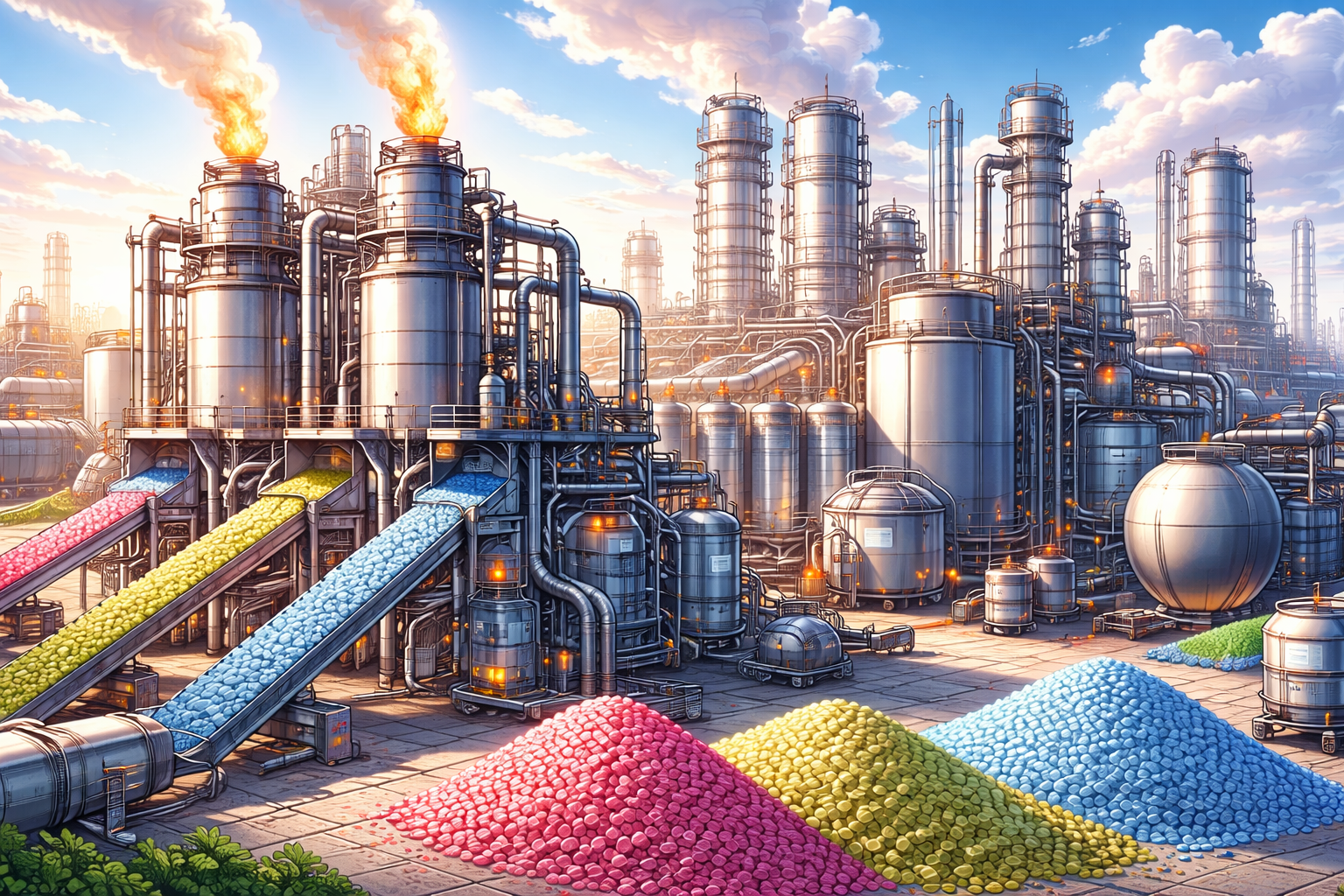
A major source of emissions in phosphate production comes from the high energy demand of processing facilities. Beneficiation requires extensive grinding, flotation, pumping, and drying - processes that depend heavily on electricity and heat. Chemical conversion into phosphoric acid further increases energy consumption, as the reaction between phosphate rock and sulfuric acid generates heat that must be controlled with steam and additional utilities. When these operations rely on fossil fuels or carbon-intensive grids, emissions rise sharply.
Heavy Transportation Distances
Phosphate resources are geographically concentrated, while demand is globally dispersed. This means phosphate rock, phosphoric acid, or finished fertilisers often travel thousands of kilometres by road, rail, and maritime shipping. Transporting bulk materials, especially across major trade routes from North Africa, the Middle East, or China to agricultural markets such as India, Brazil, and Europe, adds substantial Scope 3 emissions. Even within producing countries, moving ore between mines, concentrators, and chemical plants requires significant diesel use.
High Sulfuric Acid Requirements
Phosphoric acid production depends on large volumes of sulfuric acid, whose own manufacturing process is energy- and heat-intensive. Producing sulfuric acid releases both direct combustion emissions and indirect emissions tied to electricity and sulphur supply. Because sulfuric acid is the primary reactant for breaking down phosphate rock, its embedded carbon footprint directly amplifies the total emissions of phosphate-based fertilisers.
Legacy and Outdated Plant Infrastructure
Many phosphate mines and processing plants were built decades ago, operating with outdated technologies and inefficient energy systems. Aging equipment typically consumes more electricity, produces more waste heat, and allows for higher fugitive emissions. Limited automation and insufficient environmental controls also reduce operational efficiency. Without modernisation, such as electrification, heat recovery systems, or renewable energy integration, these legacy assets remain a major source of avoidable emissions in the phosphate supply chain.
Measuring Emissions: Tools, Models & LCA Frameworks
ISO 14040/44 Life Cycle Assessment Guidelines
Accurate measurement of phosphate-related emissions begins with internationally recognised Life Cycle Assessment (LCA) standards. ISO 14040 and ISO 14044 provide the framework for defining system boundaries, selecting impact categories, conducting inventory analysis, and interpreting results. These guidelines ensure that emissions from mining, beneficiation, processing, transport, and fertiliser production are captured consistently and transparently. For phosphate producers and buyers, ISO-based LCAs form the foundation for credible carbon footprint reporting and comparison across suppliers.
GHG Protocol for Mining Operations
For companies seeking to categorise and disclose emissions from phosphate extraction and processing, the Greenhouse Gas (GHG) Protocol offers the most widely used accounting methodology. Its standards help mining companies classify emissions into Scope 1 (on-site operations), Scope 2 (purchased electricity and heat), and Scope 3 (transport, chemical inputs, equipment, and downstream use). Applying the GHG Protocol ensures that emissions are not overlooked—especially indirect ones, which make up a large share of phosphate’s total footprint.
Software & Databases (OpenLCA, SimaPro, Ecoinvent)
To operationalise LCA work, producers and sustainability teams rely on specialised software. Tools like OpenLCA and SimaPro provide advanced modelling environments that allow users to simulate full supply-chain impacts. They draw from global databases such as Ecoinvent, which contains detailed emission factors for mining activities, reagents like sulfuric acid, energy mixes, transportation modes, and fertiliser manufacturing processes. These digital tools help quantify emissions with precision and highlight hotspots for improvement.
Tracking Real-Time Emissions via Digital Twins / IoT
Emerging technologies are transforming how phosphate supply chains monitor emissions. Digital twins - virtual replicas of mining or processing plants - integrate sensor data, equipment performance metrics, and energy flows to calculate emissions in real time. IoT-enabled devices track fuel consumption, electricity use, and process efficiency, enabling faster detection of inefficiencies and more dynamic carbon reporting. Together, these innovations offer producers a pathway toward continuous monitoring, predictive optimisation, and more transparent climate performance across the entire phosphate lifecycle.
Emerging Technologies Reducing Phosphate’s Carbon Footprint
Renewable Energy Integration in Mining
Mining operations have long depended on diesel generators and carbon-intensive power grids, but this is rapidly changing. Solar and wind installations at mine sites are becoming more common, especially in regions with abundant sunlight, such as North Africa and the Middle East. Hybrid microgrids, combining renewables with battery storage, can power beneficiation plants, conveyor systems, and auxiliary infrastructure. By reducing reliance on fossil fuels, renewable integration significantly cuts Scope 2 emissions and improves long-term energy cost stability.
Electrification of Heavy Machinery
The shift toward electric mining equipment (haul trucks, loaders, and drilling rigs) is one of the most promising decarbonization pathways. Battery-electric and trolley-assist haul trucks reduce diesel consumption dramatically, while electric excavators and drilling systems lower both emissions and onsite noise pollution. Although full electrification requires substantial charging infrastructure, early adopters report double-digit reductions in operational emissions and improved efficiency per ton of ore moved.
Low-Emission Sulfuric Acid Production
Since sulfuric acid is the most critical reagent in phosphoric acid production, innovations in its manufacturing have a direct impact on phosphate’s footprint. Modern sulfuric acid plants equipped with heat-recovery systems can generate steam and electricity as by-products, significantly improving energy efficiency. New catalytic processes and cleaner feedstocks also reduce SO₂ and CO₂ emissions. Integrating these upgraded technologies into older facilities offers one of the fastest ways to lower midstream emissions.
Maritime Green Fuels (Ammonia, LNG, Methanol)
Phosphate fertilisers travel long distances by sea, making maritime emissions a major component of the overall carbon footprint. The shipping industry is transitioning toward cleaner fuels such as LNG, methanol, and, increasingly, green ammonia. These alternatives can reduce lifecycle emissions substantially compared to conventional bunker fuels. As more vessels adopt dual-fuel engines and ports expand bunkering infrastructure, phosphate exporters can significantly reduce transport-related emissions.
AI-Powered Logistics Optimisation
Artificial intelligence is reshaping supply-chain efficiency by optimising transport routes, vessel loading, and multimodal coordination. AI algorithms analyse weather, port congestion, fuel consumption, and shipment timing to minimise delays and shorten travel distances. This reduces fuel use across road, rail, and maritime transport. For large fertiliser flows - where even minor efficiency gains translate into major carbon savings - AI-driven logistics can deliver measurable reductions in both costs and emissions.
Case Studies: Leading Sustainable Phosphate Producers
Morocco’s OCP Group – Renewable Energy Mega Projects
The OCP Group, the world’s largest phosphate producer, has become a global benchmark for sustainable mining. OCP is rapidly transitioning its operations to run on solar and wind power through Morocco’s large-scale renewable energy program. Beneficiation plants, slurry pipelines, and desalination facilities are increasingly powered by green electricity, dramatically lowering Scope 2 emissions. The company’s long-term strategy aims for full carbon neutrality by 2040, combining renewable expansion, electrification, and green ammonia production for fertiliser manufacturing.
US and Australia – Circular Waste-Phosphate Recovery Models
Producers in the United States and Australia are focusing on circularity by recovering phosphate from industrial waste streams, wastewater, and agricultural runoff. Technologies such as struvite crystallisation allow utilities and fertiliser companies to extract valuable phosphorus from sewage sludge and digestate. This approach reduces the need for mined phosphate rock, cuts emissions tied to extraction, and helps mitigate environmental pollution. Several pilot programs have shown that recovered phosphates can meet purity requirements for fertiliser use while offering a significantly lower carbon footprint.
European Union – Strict Decarbonization Regulations Driving Change
The European Union’s environmental policies, including the Fit for 55 package and the EU Emissions Trading System, are accelerating decarbonization across the phosphate sector. EU fertiliser producers face strict caps on emissions, mandatory reporting, and incentives to adopt cleaner technologies such as heat recovery, electrified processing, and low-carbon sulfuric acid production. Additionally, the EU’s increasing scrutiny of imported fertilisers through tools like the Carbon Border Adjustment Mechanism (CBAM) pressures global suppliers to comply with high sustainability standards. As a result, European producers are among the fastest adopters of energy-efficient and climate-aligned phosphate technologies.
Roadmap to a Low-Carbon Phosphate Supply Chain
Recommended Strategies for Mining Companies
Mining companies play a central role in reducing upstream emissions and can make rapid progress through targeted investments. Priorities include electrifying haul trucks and drilling equipment, integrating solar or wind power into mine-site operations, and deploying energy-efficient beneficiation technologies. Companies can also modernise aging plants with heat-recovery systems, advanced flotation circuits, and automated process controls. Implementing real-time emissions tracking (via digital twins or IoT sensors) helps operators identify inefficiencies and optimise fuel and electricity use. Partnerships with sulphur suppliers to source lower-carbon sulfuric acid further enhance overall reductions.
Policy Recommendations for Governments
Governments can accelerate decarbonization by establishing clear regulatory expectations and offering incentives for cleaner operations. Carbon pricing, emissions disclosure requirements, and mandatory LCA-based reporting push companies toward transparency and efficiency. Public-private partnerships can support renewable energy integration in mining regions, while subsidising electrification infrastructure, such as charging stations for heavy vehicles. Governments can also fund research into phosphate recycling, wastewater recovery technologies, and next-generation fertiliser chemistry to diversify supply and reduce pressure on primary mining.
What Buyers (Fertiliser Manufacturers) Can Do
Fertiliser producers and industrial phosphate users are increasingly influential in shaping the market’s sustainability trajectory. By prioritising suppliers with certified low-carbon LCAs, buyers can reward producers who invest in greener operations. Manufacturers can also reduce midstream emissions by improving their own energy efficiency, adopting green ammonia in MAP/DAP production, and optimising transport through multimodal logistics and maritime green fuels. Collaboration with producers on transparent data-sharing and joint sustainability programs helps build resilient, lower-emission supply chains that meet future climate and regulatory expectations.
Conclusion – The Future of Green Phosphate Supply Chains
Decarbonising phosphate supply chains is no longer optional - it is a critical step toward sustainable agriculture and global food security. From mining and beneficiation to fertiliser production and distribution, every stage contributes to the overall carbon footprint, but emerging technologies, renewable energy integration, and process innovations provide a clear pathway to reduction. Electrification, low-emission sulfuric acid production, AI-driven logistics, and circular phosphate recovery are transforming the industry into a lower-carbon, more efficient system.
Transparency and robust Life Cycle Assessment (LCA) data are essential to this transition. They enable producers, buyers, and regulators to identify emissions hotspots, track progress, and make evidence-based decisions that drive real change.
Ultimately, achieving a truly green phosphate supply chain requires collaboration across the entire industry. Mining companies, fertiliser manufacturers, policymakers, and end-users must work together to share best practices, invest in sustainable technologies, and adopt common reporting standards. By doing so, the sector can deliver fertilisers that support global food production while minimising environmental impact, setting a benchmark for responsible and climate-conscious industrial supply chains.
FAQs
What is the carbon footprint of phosphate mining?
The carbon footprint of phosphate mining varies depending on ore grade, mining method, and energy sources. Open-pit mining with diesel-powered equipment generates the largest direct emissions, while beneficiation and chemical processing add substantial indirect emissions. Overall, mining and initial processing account for a significant portion of the total lifecycle emissions of phosphate products.
Which part of the phosphate supply chain emits the most carbon?
Chemical processing, particularly the conversion of phosphate rock into phosphoric acid using sulfuric acid, is typically the highest-emission stage. Mining machinery and transport also contribute considerably, but the energy intensity of chemical reactions and reagent production makes the midstream process the dominant source of CO₂.
Can phosphate fertilisers be produced sustainably?
Yes. Sustainability is achievable through renewable energy integration, electrification of heavy machinery, energy-efficient chemical processing, and adoption of circular models such as phosphate recovery from waste streams. Transparent Life Cycle Assessments (LCAs) and adherence to environmental standards are key to verifying low-carbon production.
How does transportation impact emissions?
Transportation (by road, rail, and maritime shipping) adds significant Scope 3 emissions, especially for international trade. Bulk fertilisers shipped long distances contribute notably to the total carbon footprint, making logistics optimisation and green fuels critical for emission reduction.
What technologies can reduce mining-related emissions?
Electrification of haul trucks and drilling rigs, renewable energy for mine-site operations, energy-efficient beneficiation, real-time monitoring via IoT and digital twins, and modernisation of plant infrastructure are among the most effective technologies to lower emissions from mining and early processing stages.