The Future of Desalination: How Advanced Adsorbents Improve Water Supply
The world is facing an unprecedented water crisis. According to recent estimates, over 2 billion people worldwide lack access to safe drinking water, and this number is projected to increase as climate change, population growth, and industrial development place a growing strain on freshwater resources. With oceans covering more than 70% of Earth's surface, desalination has long been viewed as the ultimate solution to water scarcity. Yet traditional desalination methods, while effective, come with significant economic and environmental costs that have limited their widespread adoption. Today, a new generation of advanced adsorbent materials is emerging that could fundamentally transform the desalination landscape, making clean water accessible to millions who currently lack it.
The Limitations of Traditional Desalination
For decades, the desalination industry has relied primarily on two approaches: reverse osmosis and thermal distillation. Reverse osmosis, which forces seawater through semi-permeable membranes under high pressure, has become the dominant technology, accounting for approximately 65% of global desalination capacity. Thermal distillation, which mimics the natural water cycle by heating seawater and condensing the resulting vapor, makes up most of the remainder.
While these technologies have proven reliable, they face substantial challenges. Reverse osmosis systems require enormous amounts of energy to generate the pressures needed to push water through membranes, typically ranging from 55 to 70 bar. This translates to high operational costs and significant carbon footprints, particularly in regions dependent on fossil fuel-based electricity. Infrastructure investments are equally daunting, with large-scale plants costing hundreds of millions of dollars to construct.
Environmental concerns add another layer of complexity. The concentrated brine byproduct from desalination, often twice as salty as seawater and containing chemical residues from pretreatment processes, must be carefully managed to avoid harming marine ecosystems. Membrane fouling, caused by biological growth and mineral scaling, requires regular cleaning with harsh chemicals and eventual membrane replacement, further increasing costs and environmental impact.
Perhaps most significantly, these limitations have made desalination economically unfeasible for many water-stressed regions, particularly in developing nations where the need is greatest. The high capital and operational costs place advanced desalination technology out of reach for communities that would benefit most from reliable freshwater supplies.
Understanding Adsorbent Technology
Advanced adsorbents represent a fundamentally different approach to separating salt from water. Rather than using physical barriers like membranes or energy-intensive phase changes like thermal distillation, adsorbent materials work through selective molecular interactions. These materials feature enormous internal surface areas, sometimes exceeding 7,000 square meters per gram, riddled with precisely engineered pores and channels that can selectively capture salt ions while allowing water molecules to pass through.
The process begins when seawater contacts the adsorbent material. Salt ions, particularly sodium and chloride, are attracted to specific binding sites on the adsorbent's surface through various mechanisms, including electrostatic interactions, ion exchange, and coordination chemistry. Water molecules, being neutral and smaller, are less strongly attracted and can be separated from the salt-laden adsorbent. Once saturated with salt, the adsorbent can be regenerated through various methods such as washing with a small amount of water, changing the electrical potential, or slight temperature adjustments, allowing it to be reused for multiple cycles.
This approach offers several theoretical advantages over membrane-based separation. Because the process doesn't require forcing water through a physical barrier, it can operate at much lower pressures, dramatically reducing energy requirements. The selectivity of well-designed adsorbents can be superior to membranes, potentially achieving higher purity water or more complete salt removal. Additionally, adsorbent systems can be more resistant to fouling since they don't rely on microscopic pores that can easily become blocked.
The New Generation of Advanced Adsorbents
Recent advances in materials science have produced several promising classes of adsorbent materials, each with unique properties suited for desalination applications.
Metal-organic frameworks, or MOFs, represent one of the most exciting developments. These crystalline materials consist of metal ions or clusters coordinated to organic molecules, creating highly ordered three-dimensional structures with extraordinary porosity. MOFs can be precisely engineered at the molecular level to create pores of specific sizes and chemical properties, allowing researchers to design materials optimized for capturing particular ions. Some MOFs have demonstrated remarkable selectivity for sodium and chloride ions, the primary components of seawater salinity.
Carbon-based nanomaterials offer another promising avenue. Graphene oxide, carbon nanotubes, and activated carbons with engineered surface chemistry can provide excellent ion adsorption properties. These materials benefit from carbon's chemical stability, relatively low cost, and the extensive knowledge base developed through decades of activated carbon use in water treatment. Researchers have developed methods to functionalize these materials with chemical groups that enhance their affinity for salt ions while maintaining rapid water transport.

Advanced zeolites and modified clays represent evolutionary improvements on naturally occurring minerals that have been used for water treatment for generations. Modern synthesis techniques allow the creation of zeolites with precise pore sizes and ion exchange properties optimized for desalination. Similarly, clay minerals can be chemically modified or intercalated with other materials to enhance their salt removal capabilities while maintaining the low cost and abundant availability that make clays attractive.
Biomimetic materials inspired by natural biological systems represent an emerging frontier. Researchers studying how mangrove trees exclude salt or how certain proteins in cell membranes selectively transport ions have developed synthetic materials that mimic these biological mechanisms. These nature-inspired designs often achieve remarkable efficiency and selectivity.
Increasingly, researchers are developing hybrid systems that combine multiple adsorbent types or integrate adsorbents with other technologies to leverage the strengths of each approach while compensating for individual weaknesses.
Transformative Advantages
The potential benefits of adsorbent-based desalination extend across technical, economic, and environmental dimensions. Energy consumption represents perhaps the most significant advantage. While reverse osmosis typically requires 3 to 4 kilowatt-hours per cubic meter of freshwater produced, advanced adsorbent systems in development have demonstrated the potential to reduce this by 40 to 50 percent. This energy reduction directly translates to lower operational costs and reduced carbon emissions.
The lower operating pressures required by adsorbent systems mean simpler, less expensive equipment with reduced maintenance needs. Without the need for high-pressure pumps and vessels rated for extreme pressures, capital costs can be substantially lower. This cost reduction could make desalination economically viable for smaller communities and developing regions currently unable to afford traditional plants.
Adsorbent systems also offer enhanced flexibility. Their modular nature allows for scalable designs ranging from small community-level installations to large industrial facilities. This scalability enables distributed water production closer to points of use, reducing the need for extensive water distribution infrastructure. Additionally, because many adsorbent regeneration processes can utilize low-grade heat, these systems are particularly well-suited for integration with solar thermal energy, waste heat from industrial processes, or other renewable energy sources.
From an environmental perspective, adsorbent-based systems can potentially reduce the volume and concentration of brine discharge through more efficient salt removal and concentration. Some adsorbent regeneration methods produce more concentrated brine streams that may be easier to manage or even enable salt recovery as a valuable byproduct. The reduced chemical usage compared to membrane systems, which require extensive pretreatment and regular cleaning with aggressive chemicals, further minimizes environmental impact.
Real-World Progress
The transition from laboratory curiosity to practical technology is well underway. Research institutions and companies worldwide are conducting pilot projects that demonstrate the viability of adsorbent-based desalination. Small-scale systems have successfully produced potable water from seawater, with some achieving salt rejection rates exceeding 95 percent, comparable to commercial reverse osmosis systems.
Several pilot facilities are exploring capacitive deionization, which uses electrically charged adsorbent electrodes to remove salt ions from water. These systems have shown particular promise for brackish water desalination and are beginning to see commercial deployment for specific applications. Other projects are testing continuous flow systems where water passes through columns packed with adsorbent materials, with multiple columns operating in rotation to enable continuous operation while regeneration occurs.
Integration with existing infrastructure represents another important development pathway. Rather than completely replacing established reverse osmosis plants, advanced adsorbents can be used as pretreatment to reduce the burden on RO membranes, potentially extending membrane life and reducing overall energy consumption. Hybrid approaches combining multiple technologies often prove more practical than revolutionary replacement of established systems.
Challenges on the Path Forward
Despite the compelling advantages, significant challenges must be addressed before adsorbent-based desalination achieves widespread commercial success. Material stability over thousands of adsorption-regeneration cycles remains a critical concern. Many promising adsorbents show excellent performance initially but degrade over time, losing capacity or selectivity. Real-world seawater contains complex mixtures of ions, organic matter, and particulates that can interfere with adsorbent performance in ways not captured by laboratory studies with synthetic seawater.
Regeneration efficiency critically impacts both economics and environmental performance. If regeneration requires excessive water, energy, or chemicals, the advantages over conventional methods diminish. Achieving complete regeneration while maintaining adsorbent integrity over many cycles requires careful optimization of materials and processes.
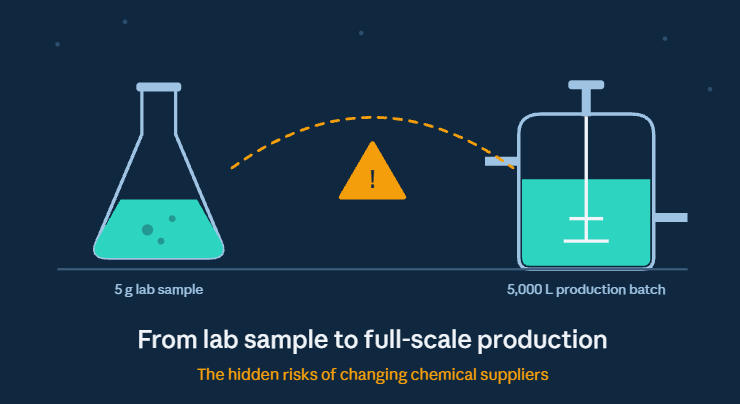
Scaling from laboratory demonstrations to industrial-scale facilities presents engineering challenges familiar to any emerging technology. Manufacturing adsorbent materials in the quantities needed for large desalination plants while maintaining quality and controlling costs requires the development of new production methods. System engineering must address issues of flow distribution, pressure drop, heat management, and process control that become significant at larger scales.
Economic viability remains the ultimate test. Advanced adsorbents must not only match the performance of established technologies but also demonstrate clear cost advantages to justify the investment and risk of adopting new approaches. With decades of optimization behind reverse osmosis technology and massive installed capacity, the bar for new technologies is high.
Regulatory frameworks and industry standards developed around membrane-based desalination must evolve to accommodate new technologies. Water quality standards, safety protocols, and certification processes need to be established for adsorbent-based systems to enable their commercial deployment.
A Vision for the Future
The path forward for advanced adsorbent desalination likely involves multiple parallel developments. Continued materials research will produce increasingly efficient and stable adsorbents optimized for specific applications and water sources. Hybrid systems that strategically combine adsorbents with membranes, thermal processes, or other technologies will leverage the strengths of each approach. Smart materials that respond to stimuli such as temperature, light, or electrical potential may enable more efficient regeneration and process control.
Integration with renewable energy represents a particularly promising direction. Solar-driven adsorbent desalination systems could provide off-grid water production for remote communities. Waste heat from industrial facilities or power plants could drive adsorbent regeneration, creating synergies between water production and other economic activities.
The vision extends beyond large centralized plants to include decentralized water treatment systems serving individual communities or even buildings. Compact, modular adsorbent systems could be deployed rapidly in emergencies or developing regions, providing clean water without the infrastructure requirements of conventional desalination.
Conclusion
Advanced adsorbents represent more than an incremental improvement in desalination technology. They offer a pathway to making clean water accessible to communities worldwide, including those currently unable to afford conventional desalination. By reducing energy consumption, lowering costs, and minimizing environmental impact, these innovative materials could help address one of humanity's most pressing challenges.
The transformation of desalination through advanced adsorbents requires continued investment in research, courageous adoption of new technologies by industry, and supportive policy frameworks that encourage innovation.
Companies like DECACHEM are shaping this charge, dedicated to developing and commercializing innovative adsorbent technologies that bridge the gap between laboratory promise and real-world impact.
The future of water security depends on our ability to innovate, and advanced adsorbents represent one of the most promising innovations on the horizon. As these technologies mature and deploy at scale, they may well be remembered as a turning point in humanity's relationship with water, enabling us to finally tap the ocean's vast resources to meet our needs sustainably.