The Science of Foliar Feeding: Fast Nutrient Delivery with Phosphates and Nitrates
Foliar feeding is a powerful technique that delivers essential nutrients directly to a plant’s leaves, offering growers a fast, efficient way to correct deficiencies and boost crop performance. Unlike traditional soil applications, foliar sprays bypass the complexities of soil chemistry and root uptake, allowing nutrients, especially phosphates and nitrates, to reach plant tissues rapidly when they’re needed most.
What is Foliar Feeding?
Foliar feeding involves applying nutrient solutions directly onto leaves, where they are absorbed through specialized structures and surface pathways. It’s commonly used to address immediate nutrient shortages, support critical growth stages, or enhance overall plant vigor.
Why Plants Absorb Nutrients Through Leaves
Leaves are highly active metabolic hubs. When nutrients are applied to the leaf surface, plants can take them up quickly, especially under conditions where root uptake is limited by drought, soil pH, or temperature stress.
Quick Science Snapshot — Stomata, Cuticles & Nutrient Uptake
Nutrients enter through microscopic pores called stomata and diffuse across the leaf’s waxy cuticle. Once inside, phosphates and nitrates move rapidly into the plant’s vascular system, offering fast, targeted nutritional support.
The Plant Leaf as a Nutrient Transport System
Leaves are far more than photosynthetic surfaces - they are dynamic, highly structured nutrient gateways. When nutrients like phosphates and nitrates are applied foliarly, the leaf’s anatomy and internal transport systems determine how efficiently they enter and move through plant tissues.
Leaf Anatomy (Stomata, Cuticle, Mesophyll)
A leaf’s surface is protected by a waxy cuticle that limits water loss but still allows certain dissolved nutrients to penetrate. Scattered across this surface are stomata - tiny adjustable pores that regulate gas exchange. Beneath these entry points lies the mesophyll, a network of cells with large surface areas and active metabolic activity. This internal tissue acts as a hub where absorbed nutrients can quickly move into the plant’s vascular system.
Absorption Pathways: Apoplastic vs. Symplastic Transport
Once nutrients cross the leaf surface, they travel by two primary routes. In the apoplastic pathway, nutrients move between cells through cell walls and intercellular spaces, allowing rapid initial distribution. In the symplastic pathway, nutrients cross cell membranes and move from cell to cell through plasmodesmata, enabling controlled and targeted nutrient allocation. Both pathways play complementary roles, ensuring efficient uptake and distribution of foliar phosphates and nitrates.
Environmental Factors Affecting Absorption (Humidity, Temperature, Leaf Age)
Foliar uptake is strongly influenced by environmental conditions. High humidity keeps leaf surfaces hydrated, improving nutrient dissolution and movement across the cuticle. Moderate temperatures support active metabolism and stomatal functioning. Younger leaves typically absorb nutrients more readily due to thinner cuticles and higher physiological activity. Understanding these factors helps growers optimise foliar applications for maximum efficiency and effectiveness.
Why Phosphates and Nitrates Work Best in Foliar Sprays
Phosphates and nitrates are among the most effective nutrients for foliar application because of their high solubility, mobility and rapid integration into plant metabolic pathways. When delivered through leaves, these ions bypass soil limitations and enter directly into active transport routes, making them ideal for fast correction of deficiencies and supporting critical growth phases.
Molecular Mobility of Phosphates
Phosphates, especially in purified and fully soluble forms, move efficiently across the leaf surface due to their ionic charge and compatibility with the plant’s natural transport systems. Once absorbed, phosphate ions become immediately available for key biochemical processes - including ATP production, energy transfer, and root development. Although phosphate mobility within the plant can be moderate compared to other ions, foliar delivery places the nutrient directly where it’s needed, reducing delays caused by soil fixation or slow root uptake.
Nitrate Ion Transport and Solubility
Nitrates are exceptionally soluble and highly mobile, making them ideal candidates for foliar sprays. Their negative charge allows them to move freely through leaf tissues and into the vascular system with minimal metabolic processing. Once inside, nitrate rapidly supports amino acid synthesis and overall vegetative growth. Because the leaf surface readily absorbs nitrate-rich solutions, plants can respond very quickly to foliar nitrogen feeding, especially during rapid growth stages.
Speed of Translocation Through the Phloem
Both phosphates and nitrates move efficiently through the phloem - the plant’s nutrient distribution highway. After foliar absorption, these ions are rapidly transported to young tissues, developing fruits, and other nutrient-demanding organs. This speed is especially advantageous when plants exhibit early signs of deficiency or when environmental stresses limit root activity.
Comparing Foliar vs. Soil Uptake Efficiency
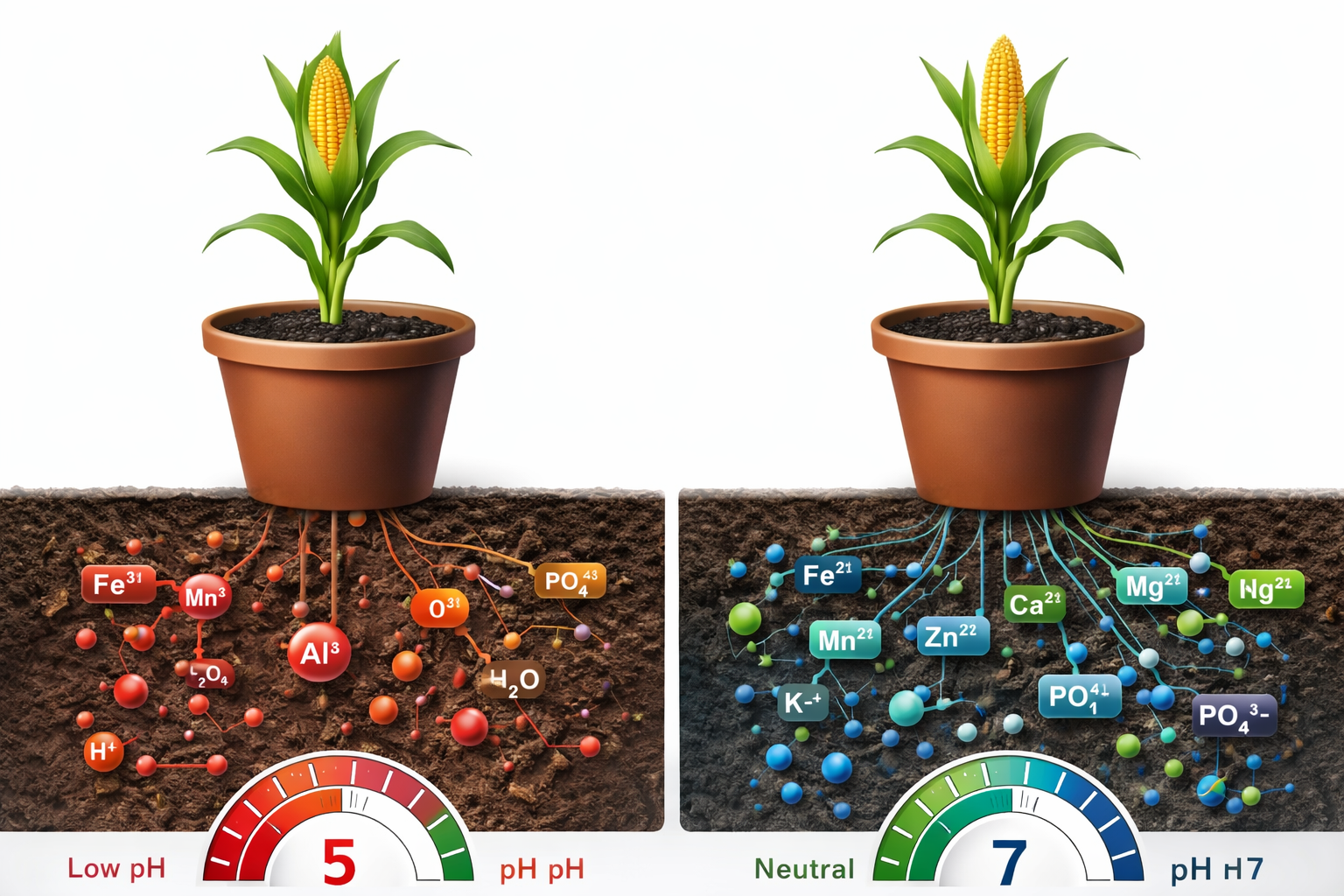
Soil applications often face challenges such as pH imbalance, nutrient fixation, leaching, and competition with other ions. Foliar sprays bypass these barriers entirely. While soil feeding remains essential for long-term nutrient supply, foliar feeding with phosphates and nitrates provides immediate, targeted delivery. This combination results in higher short-term efficiency, faster correction of deficiencies, and improved overall nutrient-use effectiveness - making these ions the preferred choice for high-performance foliar formulations.
Biochemical Science — How Nutrients Move Inside the Plant
Once absorbed through the leaves, foliar-applied nutrients enter the plant’s intricate biochemical network, influencing growth, development, and stress resilience. Phosphates and nitrates play particularly critical roles in these processes, supporting essential metabolic pathways.
Phosphorus Role in ATP, DNA, and Energy Signaling
Phosphorus, delivered as phosphate ions, is central to the plant’s energy economy. It forms part of ATP, the energy currency of cells, and is a key component of nucleic acids like DNA and RNA, supporting cell division and genetic function. Foliar-applied phosphates quickly integrate into these pathways, ensuring that energy transfer, signaling, and root and shoot development proceed efficiently.
Nitrogen Role in Chlorophyll, Amino Acids and Growth
Nitrate ions provide plants with readily available nitrogen, essential for synthesizing chlorophyll, amino acids, and proteins. These molecules are critical for photosynthesis, tissue growth, and enzyme production. Foliar application of nitrates ensures that rapidly growing tissues receive nitrogen without the delays sometimes caused by soil uptake or fixation.
How Foliar-Applied Nutrients Influence Metabolic Pathways
Foliar feeding allows nutrients to bypass soil-related barriers, directly entering the phloem and distributing to metabolically active tissues. This rapid nutrient availability enhances enzymatic reactions, supports stress responses, and improves overall plant vigor. Timely foliar applications can accelerate growth during key developmental stages, optimize photosynthesis, and strengthen plant resilience.
pH Effects on Nutrient Mobility
The effectiveness of foliar-applied phosphates and nitrates is influenced by leaf surface and internal pH. Optimal pH ensures maximum solubility and mobility, allowing nutrients to traverse cell walls, enter mesophyll tissues, and be efficiently translocated through the phloem. Understanding and adjusting spray formulations for pH compatibility enhances absorption and metabolic utilization.
Formulations & Concentrations for Effective Foliar Feeding
The success of foliar feeding depends heavily on the formulation and concentration of nutrients. Properly balanced solutions ensure rapid uptake, minimize leaf burn, and maximize the efficiency of phosphates and nitrates.
Ideal Foliar Nutrient Ratios (N:P:K Focused on N & P)
For foliar applications, nitrogen (N) and phosphorus (P) are the primary nutrients, while potassium (K) is often applied in moderate amounts. Optimal N:P ratios vary depending on crop type and growth stage, but foliar sprays generally emphasize a higher proportion of N for vegetative growth and adequate P for energy transfer and root development. Tailoring ratios to the plant’s immediate needs ensures rapid physiological responses and effective nutrient utilization.
Chelated vs. Non-Chelated Nutrients
Chelation can improve nutrient stability and uptake, especially for micronutrients, but even macronutrients like phosphates and nitrates benefit from formulations that prevent precipitation or antagonistic reactions. Chelated nutrients are more resistant to environmental degradation and remain soluble on the leaf surface longer, enhancing absorption and minimizing losses from rainfall or UV exposure.
Optimal Concentration Ranges for Phosphate & Nitrate Sprays
Concentration is critical: too low, and the spray may be ineffective; too high, and it risks leaf burn or osmotic stress. Phosphate concentrations in foliar sprays typically range from 0.1% to 0.5%, while nitrate solutions are commonly applied at 0.5% to 2%, depending on crop sensitivity and environmental conditions. Maintaining these ranges ensures rapid uptake without compromising plant health.
Surfactants & Additives that Improve Penetration
Surfactants reduce surface tension, helping nutrient droplets spread evenly across the leaf and penetrate the cuticle. Other additives, such as wetting agents or pH stabilizers, can further enhance absorption and nutrient mobility. Selecting compatible surfactants and additives tailored to the specific crop and nutrient solution is key to maximizing foliar feeding efficiency.
Application Timing & Best Conditions for Maximum Uptake
Effective foliar feeding is not just about the nutrients - it’s also about applying them under the right conditions. Timing, environmental factors, and crop-specific needs all influence how efficiently phosphates and nitrates are absorbed and utilized.
Morning vs. Evening Sprays
Spraying in the early morning or late afternoon is generally ideal. During these periods, stomata are open, allowing maximum nutrient entry, while cooler temperatures reduce evaporation and minimize leaf burn. Midday applications are less effective due to stomatal closure and a higher risk of foliar damage.
Ideal Temperature & Humidity Ranges
Foliar absorption is optimized at moderate temperatures (15–25°C) and high humidity. Humid conditions keep the leaf surface hydrated, facilitating nutrient dissolution and movement across the cuticle. Extremely hot or dry conditions can reduce uptake efficiency and increase stress on plants.
Frequency and Timing for Different Crops
Different crops and growth stages dictate foliar feeding schedules. Fast-growing vegetables or high-value fruit crops often benefit from more frequent applications during critical growth periods, while slower-growing or mature crops may require fewer sprays. Tailoring the frequency to nutrient demand ensures consistent plant performance without overapplication.
Foliar Feeding in Stress Conditions (Drought, Transplanting, Deficiencies)
Foliar sprays are particularly valuable during stress conditions. In drought, when root uptake is limited, foliar-applied phosphates and nitrates provide essential nutrients directly to leaves. Similarly, newly transplanted seedlings or plants showing early signs of deficiency respond rapidly to targeted foliar nutrition, helping them recover, maintain growth, and optimize yield.
Advantages & Limitations of Foliar Feeding with Phosphates and Nitrates
Foliar feeding with phosphates and nitrates offers a rapid, efficient way to support
plant growth, but it should complement (not replace) traditional soil nutrition strategies.
Fast Deficiency Correction
One of the key advantages of foliar sprays is their ability to quickly correct nutrient deficiencies. Nutrients applied directly to leaves bypass soil constraints, allowing plants to respond within hours to days. This is especially useful during critical growth stages or when environmental conditions limit root uptake.
Increased Nutrient Use Efficiency
Foliar feeding improves nutrient use efficiency by delivering nutrients exactly where they are needed. Reduced losses from leaching, fixation, or soil antagonism mean more of the applied phosphate and nitrate reaches the plant’s metabolic pathways, enhancing overall growth and yield potential.
Limitations and Overapplication Risks
Despite its benefits, foliar feeding has limitations. Leaf absorption capacity is finite, and overapplication can cause leaf burn, osmotic stress, or chemical damage. Foliar feeding is most effective as a supplemental strategy rather than a sole source of nutrition.
Soil Health Considerations & Synergy with Root Feeding
Foliar applications work best in synergy with soil-applied fertilizers. While foliar sprays provide immediate support, healthy roots ensure long-term nutrient uptake and soil ecosystem balance. Integrating foliar feeding with proper soil nutrition promotes sustainable crop management and overall plant vitality.
Step-by-Step Guide to Creating a High-Performing Foliar Spray
Creating an effective foliar spray requires careful selection of ingredients, precise mixing, and proper application techniques to ensure maximum nutrient uptake and plant safety.
Choosing Ingredient Sources
Select high-quality, fully soluble phosphate and nitrate sources to ensure rapid absorption and minimize leaf damage. Use verified products with consistent purity, and consider complementary micronutrients if the crop requires them. Always check compatibility between ingredients to prevent precipitation or chemical reactions.
Mixing Procedure & Safety Precautions
Dissolve nutrients in clean water, maintaining recommended concentration ranges to avoid leaf burn. Add chelated micronutrients or surfactants as needed. Always wear protective equipment (gloves, goggles and masks) when handling concentrated chemicals, and prepare sprays in well-ventilated areas. Mix thoroughly to achieve a uniform solution before application.
Spray Equipment Recommendations
Use fine-mist sprayers or air-assisted equipment for even coverage and penetration. Ensure nozzles are calibrated to deliver consistent droplet sizes, and regularly clean equipment to prevent clogging or residue buildup. Proper application ensures nutrients reach stomata and cuticles efficiently.
Troubleshooting Common Foliar Feeding Problems
Monitor plants for signs of leaf burn, uneven coverage, or slow nutrient response. Adjust concentrations, spray timing, or surfactant use as needed. Conduct small-scale jar tests when trying new formulations or combinations, and always observe environmental conditions to optimize absorption. Regular observation and adjustment help maintain consistent performance and plant health.
FAQs — Foliar Feeding With Phosphates & Nitrates
Is foliar feeding a substitute for soil fertilization?
No. Foliar feeding is a supplemental technique designed for rapid nutrient delivery and deficiency correction. It works best alongside a balanced soil fertilization program to ensure long-term plant health and growth.
How long until I see visible results?
Plants can show improvements within hours to a few days after foliar application, depending on the crop, nutrient type, and existing deficiency. Nitrates often produce rapid vegetative growth, while phosphates support energy-intensive processes that may take slightly longer to manifest.
Can foliar sprays burn leaves?
Yes, overconcentration or application under high temperature and direct sunlight can cause leaf burn. Always follow recommended concentrations, spray during cooler hours, and consider using surfactants to improve penetration while minimizing damage.
What is the best nitrate form for foliar feeding?
Highly soluble nitrate salts, such as potassium nitrate or calcium nitrate, are ideal for foliar applications. These forms dissolve easily, are quickly absorbed through the leaf, and support rapid nitrogen uptake for growth and metabolic activity.
Conclusion — Harnessing Science for Faster, Healthier Plant Growth
Foliar feeding with phosphates and nitrates offers a scientifically proven method to deliver nutrients rapidly and efficiently, bypassing soil limitations. By understanding leaf anatomy, nutrient mobility, and optimal environmental conditions, growers can correct deficiencies quickly, enhance metabolic activity, and support vigorous growth. While not a replacement for soil fertilization, foliar sprays serve as a powerful modern strategy for targeted, timely nutrition, helping plants reach their full potential with improved health, resilience and productivity.