Nitrate-Based Oxidizers in the Chemical Industry: Efficiency and Safety Considerations
Nitrate-based oxidizers play a vital role in the modern chemical industry, serving as key agents in a wide range of reactions, from the synthesis of specialty chemicals and polymers to the formulation of propellants and explosives. Compounds such as ammonium nitrate, sodium nitrate, and potassium nitrate are valued for their strong oxidizing potential, which enhances process efficiency and product performance. However, the same reactivity that makes these substances indispensable also demands rigorous control and safety management. Mishandling or improper storage can lead to severe incidents, emphasizing the need for strict regulatory compliance and best practices.
This article explores the dual nature of nitrate-based oxidizers, how their powerful chemistry drives industrial progress, and how understanding their properties and hazards is essential for maintaining safe and efficient operations in today’s complex chemical landscape.
Introduction to Nitrate-Based Oxidizers
Nitrate-based oxidizers are inorganic compounds containing the nitrate ion (NO₃⁻), which readily donates oxygen during chemical reactions. This high oxygen availability makes them essential oxidizing agents across numerous industrial processes. They are typically classified based on their cation component, such as ammonium (NH₄⁺), sodium (Na⁺), or potassium (K⁺), which influences their solubility, thermal stability and reactivity. Among the most widely used are ammonium nitrate (NH₄NO₃), sodium nitrate (NaNO₃), and potassium nitrate (KNO₃). Each serves distinct purposes depending on the required reaction conditions and safety considerations.
The industrial use of nitrate-based oxidizers dates back to the 19th century, when
potassium nitrate (commonly known as saltpeter) was a key ingredient in black powder and early explosives. With advances in chemical engineering and agricultural science, ammonium nitrate emerged as a crucial component in both fertilizers and industrial blasting agents. Over time, these compounds became foundational to sectors requiring controlled oxidation and energy release.
Today, nitrate-based oxidizers are integral to fertilizer production, where they supply essential nitrogen for plant growth; explosives manufacturing, providing oxygen for rapid combustion reactions; and metallurgy, where they aid in refining metals and removing impurities. They also find use in ceramics, glass production, and chemical synthesis, demonstrating their versatility and economic importance.
Understanding their chemical behavior is critical, as their performance and safety depend on precise formulation, handling and storage. Whether used for enhancing agricultural yields or enabling high-energy industrial reactions, nitrate-based oxidizers remain indispensable materials, balancing efficiency and risk within the framework of modern industrial chemistry.
Chemical Properties and Functional Mechanisms
Nitrate-based oxidizers derive their effectiveness from their chemical composition and the mechanisms through which they release oxygen during reactions. Their ability to drive oxidation processes safely and efficiently makes them a cornerstone of industrial chemistry.
Composition and Oxidation Mechanism
At the molecular level, nitrates contain the nitrate ion (NO₃⁻), composed of one nitrogen atom covalently bonded to three oxygen atoms in a trigonal planar arrangement. The nitrogen atom has a formal oxidation state of +5, making the ion a rich source of available oxygen. During thermal decomposition or chemical reaction, nitrates release oxygen - either directly or through intermediate species such as nitrogen oxides (NO, NO₂) - which then support the oxidation of other materials.
For example, in the case of ammonium nitrate (NH₄NO₃), heating initiates a self-sustaining reaction that generates nitrogen gas, water vapor and oxygen. This reaction not only produces significant energy, but also yields environmentally benign gases when controlled properly. Sodium nitrate and potassium nitrate behave similarly, releasing oxygen to accelerate combustion or oxidation in various applications, from metal treatment to pyrotechnics.
The key to their functionality lies in this oxygen-releasing capability: nitrates act as the oxidizing counterpart in redox reactions, promoting the transformation of substrates such as carbon, sulfur, or metals into their oxidized forms.
Comparison with Other Oxidizers
When compared with perchlorate (ClO₄⁻) and chlorate (ClO₃⁻) oxidizers, nitrates exhibit lower oxidizing strength but greater thermal stability and safety. Perchlorates are extremely powerful but pose significant handling risks and potential for violent decomposition. Chlorates, while efficient, are sensitive to friction and contamination, increasing the likelihood of accidental ignition.
Nitrates offer a balanced profile, sufficiently reactive to drive oxidation while maintaining manageable stability. Moreover, they are less toxic and more environmentally sustainable, decomposing primarily into nitrogen and oxygen rather than chlorinated byproducts. This makes nitrate-based oxidizers a preferred choice for industries that value both performance and environmental responsibility.
Industrial Applications and Efficiency
Nitrate-based oxidizers are prized in industry for delivering controlled, dependable oxygen that improves reaction rates, energy release and product yield. Their combination of reactivity, relative stability, and cost-effectiveness makes them useful across high-energy applications, agriculture, and a variety of chemical-processing operations. Below are the principal application areas and the performance benefits they provide.
Use in Explosives and Pyrotechnics
In detonation chemistry, nitrates supply oxygen to rapidly oxidize fuel components and sustain high-pressure, high-temperature gas generation. Ammonium nitrate, in particular, has been widely used in both commercial blasting and improvised energetic formulations because it delivers strong gas expansion while remaining easier to manufacture and transport than many alternatives. In pyrotechnics, potassium nitrate is commonly used to produce steady, controllable burns and specific visual or auditory effects.
The engineering challenge is balancing
power and stability: formulators tune particle size, density and additive packages (fuel binders, stabilizers, desensitizers) to achieve the desired energetic output while minimizing sensitivity to heat, shock, friction or contamination. Proper granulation, coating, and moisture control are routine measures to reduce accidental initiation and extend safe handling windows.
Role in Fertilizer Manufacturing and Agriculture
Nitrate salts are a direct source of plant-available nitrogen and a cornerstone of modern fertilization practices. Ammonium nitrate, sodium nitrate, and potassium nitrate supply nitrate (NO₃⁻) and/or ammonium (NH₄⁺) forms that plants rapidly assimilate, improving vegetative growth and yields. In fertilizer manufacture, nitrates also act as reactants or intermediates in producing complex NPK blends and foliar feeds.
Sustainable use practices - such as split application, precision placement, controlled-release formulations, and use of nitrification inhibitors - help minimize leaching and nitrous oxide emissions while preserving the efficiency benefits of nitrate fertilizers. Proper storage and transportation - keeping materials dry, well-ventilated, and isolated from combustibles - are essential measures that further minimize environmental and safety risks.
Metallurgical and Chemical Process Applications
In metallurgy and high-temperature processing, nitrate salts serve as oxidizing additives, fluxing agents, and components of molten-salt baths. Nitrate-containing molten salts (for example, binary or ternary nitrate eutectics) provide stable heat-transfer media and controlled oxidizing environments used in heat-treatment, surface finishing, and thermal storage. They facilitate oxidation of impurities, assist in slag formation, and enable cleaner metal surfaces prior to further processing.
In chemical manufacturing, nitrates can assist in catalyst regeneration by supplying oxidative conditions that burn off carbonaceous deposits, and in thermal decomposition control where predictable breakdown profiles allow engineers to design safe thermal processes. Across applications, the operational efficiency of nitrates depends on tailored formulations, process control, and strict adherence to thermal and contamination limits to maintain both performance and safety.
Safety Considerations in Handling Nitrate-Based Oxidizers
While nitrate-based oxidizers are essential to countless industrial processes, their reactive nature demands meticulous control throughout production, storage and transportation. Safety management is not merely a regulatory requirement - it is a critical operational necessity that prevents catastrophic incidents. Understanding the risks, implementing rigorous storage protocols, and learning from past accidents form the foundation of responsible nitrate handling practices.
Risks Associated with Nitrates
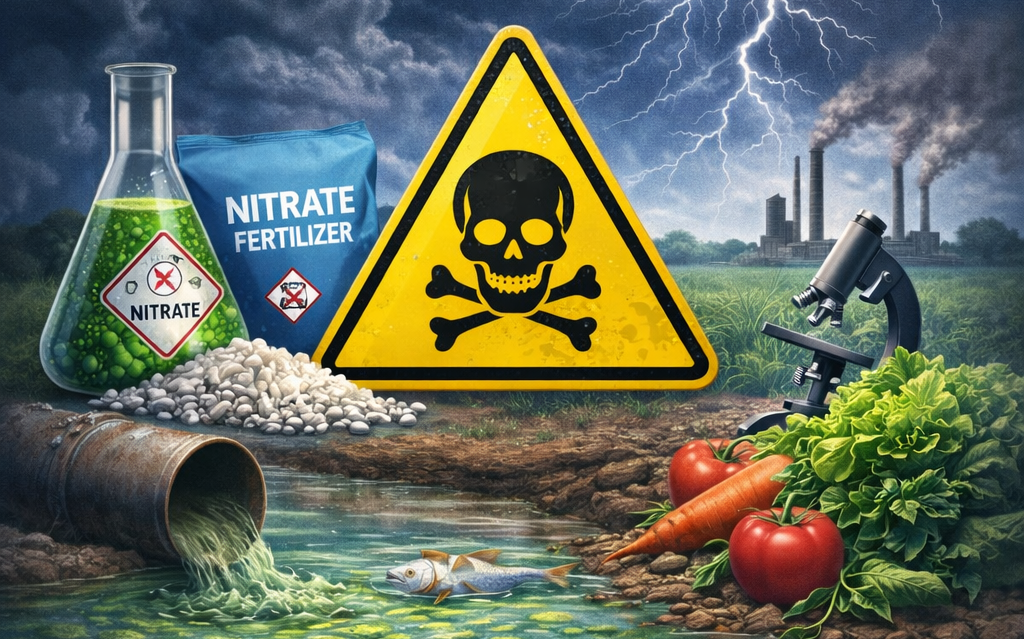
Nitrate compounds, though generally more stable than chlorates or perchlorates, can still become hazardous under certain conditions. Their thermal instability is one of the most significant risks: when exposed to excessive heat or confined under pressure, nitrates can decompose violently, releasing gases that lead to fire or explosion. Ammonium nitrate, for example, can undergo runaway decomposition if contaminated or heated above its critical threshold, especially in enclosed environments.
Another major hazard lies in incompatibility with organic materials and reducing agents. Contact with substances such as oils, fuels, or fine metal powders can trigger uncontrolled oxidation or combustion. Even small traces of contaminants, such as rust, sawdust, or moisture - can accelerate reaction kinetics and destabilize the compound. Therefore, maintaining product purity and strict segregation from reactive substances is essential to minimizing risk.
Storage and Transportation Protocols
Safe handling of nitrate-based oxidizers requires adherence to internationally recognized standards such as OSHA, DOT and UN classifications. These regulations specify packaging, labeling, and hazard communication requirements for oxidizing solids (typically listed under UN1942 for ammonium nitrate and similar entries for related compounds).
Environmental conditions are a key consideration. Temperature and humidity control are vital to prevent caking, decomposition, and unwanted reactions. Storage areas should be cool, dry, and well-ventilated, equipped with non-combustible shelving and grounded electrical systems to prevent sparks. Containers must be kept tightly sealed and clearly marked with hazard labels, while bulk storage should include physical barriers separating oxidizers from flammable or organic substances.
During transportation, nitrate-based oxidizers should be carried in approved containers, segregated from fuels and other reactive materials. Emergency procedures and safety documentation must accompany every shipment to ensure that handlers are prepared to respond to leaks, spills or thermal events.
Case Studies of Industrial Accidents
Tragic incidents underscore the importance of these safety measures. The 2015 Tianjin explosion in China, caused by the improper storage of ammonium nitrate and incompatible chemicals, resulted in massive destruction and over 170 fatalities. Similarly, the 2020 Beirut port explosion - one of the largest non-nuclear blasts in history - was linked to 2,750 tons of improperly stored ammonium nitrate.
These events prompted widespread regulatory reform and renewed global attention to nitrate safety. Key lessons include the need for transparent inventory management, regular inspection of storage facilities, and strict enforcement of separation distances between oxidizers and combustible materials.
Ultimately, while nitrate-based oxidizers remain indispensable for modern industry, their safe handling depends on disciplined management practices, robust infrastructure, and continuous training, ensuring that efficiency never comes at the expense of safety.
Safety Innovations and Technological Advances
As awareness of nitrate hazards grows, industry has accelerated the development and adoption of technologies that both improve operational efficiency and reduce the likelihood of accidents. Innovations span digital monitoring, smarter process control, material engineering, and greener formulation strategies — all designed to keep oxidizers performing reliably while lowering risk.
Smart Monitoring Systems
Internet-of-Things (IoT) sensors and integrated telemetry have transformed how storage sites and transport fleets monitor nitrate-based oxidizers. Distributed temperature sensors, humidity probes, and gas detectors (for nitrogen oxides and other decomposition products) provide continuous, real-time insight into storage conditions. When combined with cloud platforms and secure telemetry, these devices enable automated alarms, remote shutdowns, and immediate intervention before a thermal event develops.
Predictive analytics and machine learning add another layer of protection: by analyzing historical sensor data, weather forecasts, loading patterns, and maintenance logs, predictive models can flag anomalous trends — for example, gradual temperature rise or abnormal off-gassing — long before critical thresholds are reached. Digital twins and simulation tools allow operators to run “what-if” scenarios to optimize ventilation, stacking configurations, and emergency response plans, improving both safety and operational uptime.
Safer Alternatives and Additives
Material science advances have produced additives and formulation techniques that reduce sensitivity without sacrificing performance. Stabilizers, desensitizing salts, coatings, and encapsulation methods can limit surface contamination, control moisture uptake, and lower the risk of accidental initiation during handling. Granulation and binder technologies also improve mechanical robustness and reduce dust generation — a common contributor to accidental reactions.
On the substitution front, manufacturers increasingly deploy controlled-release or slow-release fertilizer chemistries and engineered nitrate blends that deliver agronomic performance with lower handling hazards. Where feasible, non-chlorinated oxidizers or process redesigns that minimize bulk storage of high-risk materials are also used to achieve safer, more sustainable operations.
Taken together, digital monitoring, smarter formulations, and process design form a modern safety ecosystem that preserves the efficiency benefits of nitrate oxidizers while significantly lowering operational risk.
Regulatory Framework and Industry Standards
The handling, storage, and use of nitrate-based oxidizers are governed by a robust regulatory framework designed to protect workers, the public, and the environment. In the United States, OSHA (Occupational Safety and Health Administration) sets standards for workplace safety, including exposure limits, labeling requirements, and emergency response protocols for oxidizing materials. Complementing OSHA, the EPA (Environmental Protection Agency) regulates environmental aspects such as storage spill prevention, waste management, and air emissions related to nitrate compounds.
In Europe, nitrate-based oxidizers are subject to REACH (Registration, Evaluation, Authorization, and Restriction of Chemicals), which ensures that chemicals are thoroughly assessed for safety before widespread use. GHS (Globally Harmonized System of Classification and Labelling of Chemicals) provides standardized hazard communication, including warning symbols, precautionary statements, and consistent labeling to reduce the risk of mishandling.
Internationally, standards such as the UN Recommendations on the Transport of Dangerous Goods classify nitrate salts as oxidizing solids, establishing requirements for packaging, labeling, and transportation. Organizations like ISO (International Organization for Standardization) and NFPA (National Fire Protection Association) provide additional guidance on fire safety, storage conditions, and compatibility with other materials.
Compliance with these frameworks is essential for minimizing risk, ensuring legal adherence, and maintaining operational efficiency. By following established standards, industries can leverage the performance advantages of nitrate-based oxidizers while safeguarding workers, communities, and the environment from potential hazards.
Best Practices for Industrial Implementation
Successful industrial use of nitrate-based oxidizers depends on combining efficiency with stringent safety practices. Comprehensive risk assessments form the foundation, identifying potential hazards such as thermal instability, contamination risks, and reactive incompatibilities. Regular site audits, chemical inventory reviews, and hazard analysis techniques like HAZOP or FMEA help anticipate and mitigate potential incidents before they occur.
Equally important is employee training. All personnel handling or overseeing nitrate-based oxidizers should receive thorough instruction on safe handling, storage protocols, and emergency procedures. Use of personal protective equipment (PPE), including gloves, goggles, and flame-resistant clothing, is mandatory to minimize exposure risks. Staff should also be trained to recognize early warning signs of decomposition or unsafe conditions.
Finally, emergency response planning ensures rapid, coordinated action in the event of a fire, spill, or thermal event. Well-defined procedures for evacuation, containment, and first response, supported by drills and clear communication channels, reduce the severity of accidents and protect personnel and property.
By implementing structured risk assessments, continuous training, appropriate PPE use, and robust emergency planning, industries can harness the performance benefits of nitrate-based oxidizers while maintaining a safe, compliant and efficient operational environment.
Conclusion
Nitrate-based oxidizers are indispensable in modern industry, offering unmatched efficiency in chemical reactions, energy release, and agricultural productivity. Their versatility spans explosives, fertilizers, metallurgy and chemical processing, making them a cornerstone of numerous industrial applications. However, their reactive nature necessitates a strong emphasis on safety: improper handling, storage, or contamination can result in catastrophic consequences.
Balancing performance and risk requires a multifaceted approach. Robust regulatory compliance, comprehensive risk assessments, employee training, and advanced monitoring technologies all contribute to safer operations. Innovations such as predictive analytics, stabilizing additives, and eco-friendly alternatives further enhance both efficiency and security.
Ultimately, industries that integrate these best practices can fully leverage the benefits of nitrate-based oxidizers while minimizing hazards. By prioritizing both operational performance and rigorous safety management, organizations ensure that these powerful chemicals continue to drive progress without compromising people, infrastructure or the environment.
FAQs
Q: What are the most common nitrate-based oxidizers used in industry?
A: The most widely used nitrate-based oxidizers include ammonium nitrate (NH₄NO₃), sodium nitrate (NaNO₃), and potassium nitrate (KNO₃). These compounds serve as oxygen donors in various applications such as explosives, fertilizers, pyrotechnics, metallurgy and chemical synthesis. Their choice depends on factors like reactivity, solubility, thermal stability and specific process requirements.
Q: Why are nitrate-based oxidizers considered hazardous?
A: Nitrate compounds are strong oxidizers, meaning they can accelerate combustion or react violently with fuels, organic materials, or reducing agents. Thermal instability, contamination, and improper storage can trigger decomposition or explosion, posing risks to personnel, infrastructure and the environment.
Q: How can nitrate compounds be stored safely?
A: Safe storage requires cool, dry, and well-ventilated conditions, with segregation from combustible or organic materials. Containers should be tightly sealed, properly labeled, and compliant with standards such as UN classifications. Regular inspections, humidity control, and monitoring for temperature fluctuations are also critical to prevent accidental decomposition.
Q: Are there eco-friendly alternatives to nitrate-based oxidizers?
A: Yes, innovations include controlled-release fertilizers, engineered nitrate blends, and other oxidizers that reduce environmental impact while maintaining performance. Stabilizers and encapsulation techniques can also minimize hazards and improve safety in handling and transport.
Q: What regulatory bodies oversee their use and transportation?
A: In the U.S., OSHA and the EPA set workplace safety and environmental standards. In Europe, REACH regulates chemical safety, while GHS provides standardized labeling. International transport is governed by UN Recommendations on Dangerous Goods, with additional guidance from organizations like ISO and NFPA. Compliance ensures both safety and legal adherence in industrial operations.